

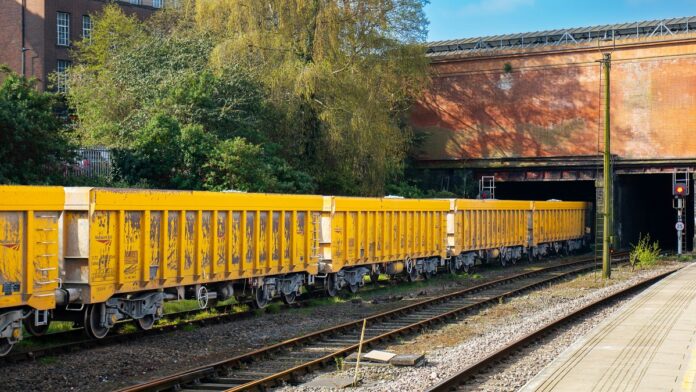
A newly updated rail standard, designed to enhance the safety and punctuality of freight trains, is projected to save the industry £15 million over the next five years, according to the Rail Safety and Standards Board (RSSB).
Published on 1 March 2025, the updated standard, RIS-3781-TOM-Iss2, introduces a crucial new requirement for organisations to meticulously assess the time and resources needed to prepare a train for service. This industry-agreed measure is accompanied by comprehensive guidance on train preparation factors and illustrative examples of Certificates of Readiness.
The standard will empower freight operators to evaluate the suitability of their current procedures, as well as those planned for new traffic flows. It will also facilitate the seamless integration of new wagons and the safe deployment of existing wagons for previously untested loads.
Crucially, the update is expected to significantly reduce the risk of operational incidents, such as derailments, thereby minimising delays for both freight and passenger services. The projected £15 million cost savings over the next five years are a direct result of these efficiency improvements.
Tom Lee, RSSB’s Director of Standards, emphasised the importance of the update. He said: “The safe and economic movement of freight is vital to the country. Learning from incidents and good practice we’ve worked with freight operators and other industry partners to drive improvements that will reduce delays and waste. The industry has agreed that this will lead to savings of at least £15m over the next five years, though probably much more.”
Lee Shann, RSSB’s Senior Rail Operations Specialist, highlighted the collaborative effort behind the new standard. Lee said: “We have worked with freight operating companies, Network Rail, and industry working groups to develop and agree these changes, bringing safety and performance benefits to the rail freight sector.”
RIS-3781-TOM-Iss2 is specifically aimed at freight operating companies, operators of freight terminals and yards, and those responsible for preparing engineering trains. It replaces Issue 1, which was published in March 2021.
This updated standard represents a significant step towards a more efficient, safe, and cost-effective rail freight network in the UK.