


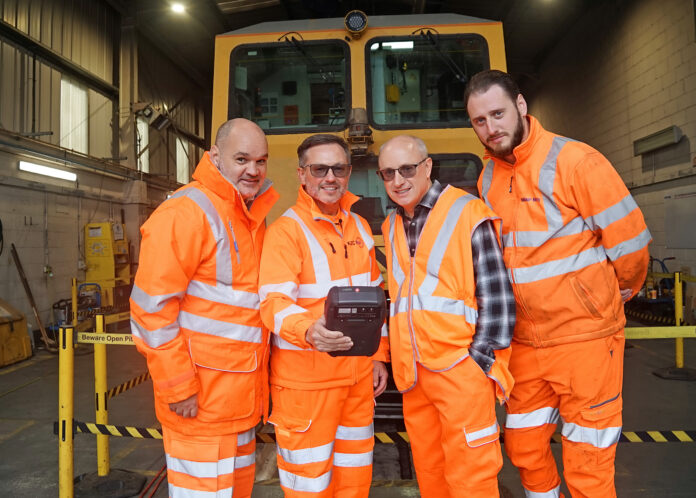
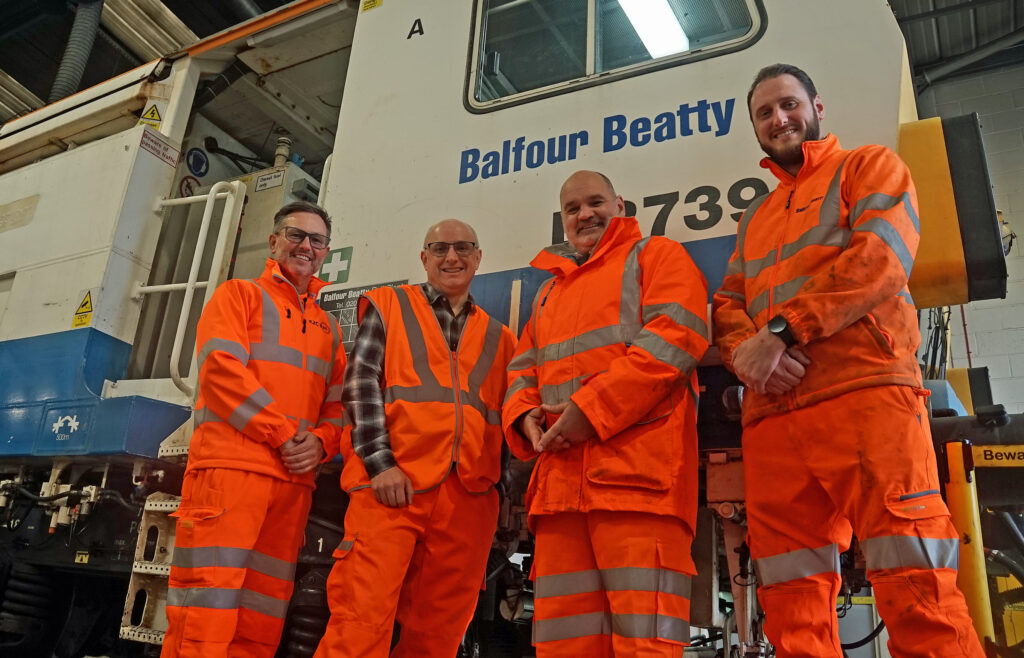
Balfour Beatty has successfully trialled a pioneering hydrogen-powered engine carbon clean (ECC) system on a Plasser and Theurer compact tamper, marking the first time the technology has been applied to rail-mounted plant. The trial demonstrated clear reductions in emissions and improvements in engine efficiency as the company looks to tackle its Scope 1 emissions.
ECC is a patented on-demand hydrogen generator that cleans internal combustion engines by removing carbon build-up. Hydrogen is fed into the air intake, allowing the engine to draw in what it needs, improving fuel efficiency and reducing harmful emissions including CO₂, CO, NOx and N₂O. By simulating a full year of operational use, Balfour Beatty recorded a 15.79% emissions reduction. The company now plans to roll out the technology across its entire tamper fleet.
George Chaplin, Investment & Innovation Manager at Balfour Beatty, said: “ECC is a simple and non-intrusive solution that fits seamlessly into our servicing schedules without disrupting workflows. By extending engine life, reducing maintenance requirements, and lowering fuel consumption, ECC delivers measurable carbon and costs savings while minimising downtime – making it a smart, sustainable investment for our fleet.”
Ben Kattenhorn, CEO of Engine Carbon Clean, added: “The technology is already proven on road vehicles with similar engine types, achieving fuel and CO₂ savings between 8-30%, but working with rail experts K2C Rail (and their partners 1stinrail, part of the industry leading RSK Group, who also support our technology) means the ECC team are also fully aware of rail procedures, so it’s a slick and BAU service. Rail is one of the sectors most under scrutiny, but ECC offers an immediate solution – also restoring engine efficiency and power, extending the lifespan of assets and fully aligning with the new ESG compliance requirements of the International Financial Reporting Standards mandate.”

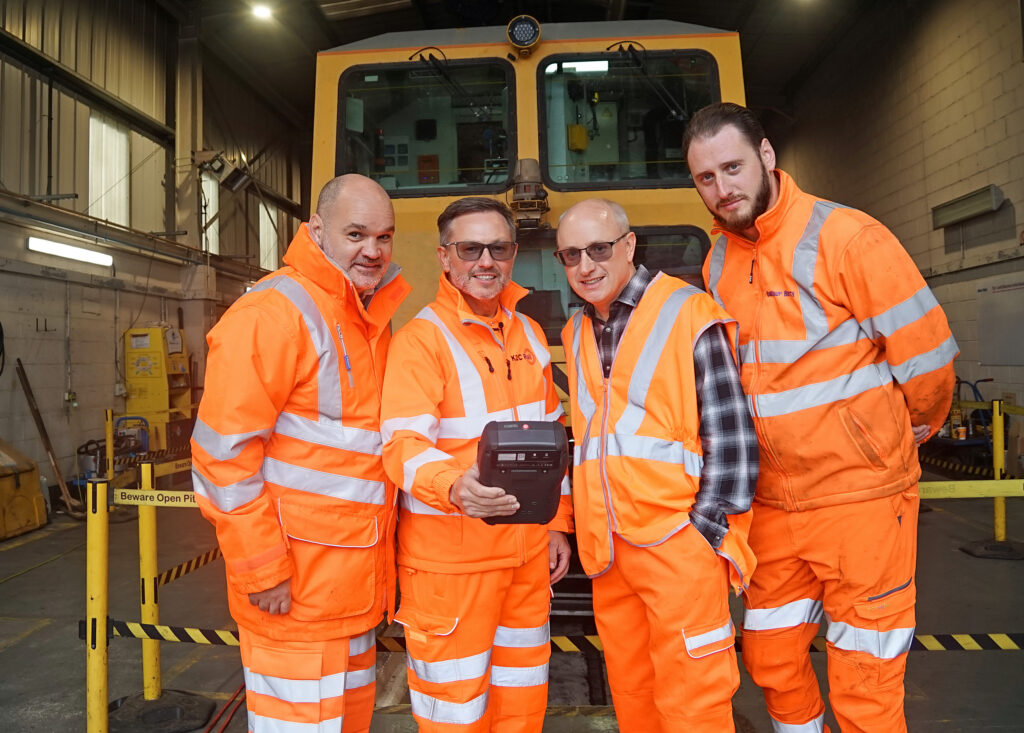
The system produces oxyhydrogen gas via tap water electrolysers, feeding it into the engine to remove carbon deposits throughout the system, including pre-combustion areas and the diesel particulate filter. Clearing these deposits improves airflow, enabling better combustion and restoring manufacturer-level RPM and efficiency.
As a modular system, ECC can clean any internal combustion engine, from generators and heavy plant to locomotives and ship engines. It is compatible with diesel, petrol, HVO, CNG, LNG and biofuels, and does not involve chemical additives, superheating or the storage of compressed hydrogen.
ECC tracks CO₂ levels with an ISO-calibrated emissions tester, recording baseline performance and improvements after multiple cleans. Because CO₂ reductions correlate directly with improved fuel efficiency, operators can measure both emissions savings and lower fuel consumption.
More information on the companies involved can be found at:
https://www.balfourbeatty.com/
https://enginecarbonclean.com/
https://www.1stinrail.co.uk/
https://k2crail.com/


