


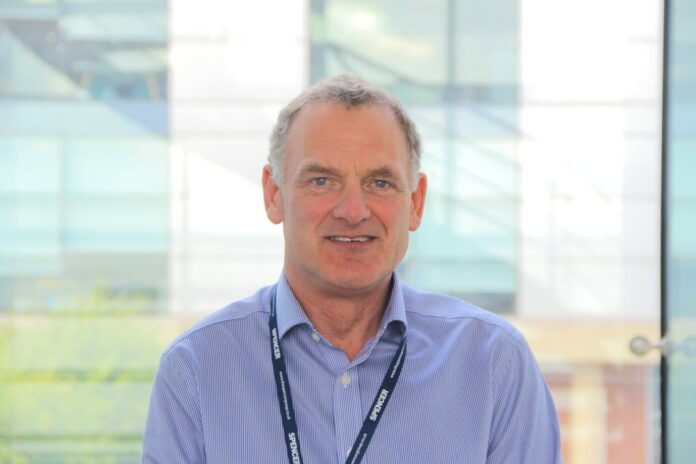
Insight from Mike Halliday, Managing Director – Rail, Spencer Group
The Office for Rail and Road (ORR) Stakeholder Dinner in Leeds brought together a diverse community of leaders and professionals committed to driving the rail industry forward in November. Among them was Mike Halliday, Managing Director of Spencer Rail Engineering, whose three decades of hands-on experience have made him a respected voice across the sector.
Reflecting on the event, Mike shared some insights that highlight where the rail industry is heading, particularly as Great British Railways (GBR) continues to take shape. His reflections also underline the growing importance of meaningful collaboration with Combined Authorities and the critical role that Early Contractor Involvement (ECI) will play in improving outcomes, controlling costs and accelerating investment.
Mike’s Insights
• GBR Transition
The ORR Dinner provided a timely forum for industry leaders to align around the direction of travel for rail reform and the evolving GBR structure. For Spencer Rail Engineering, it was a valuable opportunity to test assumptions and ensure our thinking is aligned with the opportunities and expectations ahead.
A key takeaway from the event was the recognition that Train Operating Companies were well represented, which is understandable given their day-to-day operational focus, while engagement from Combined Authorities was less prominent. These authorities are increasingly influential investors in future rail infrastructure, and their early involvement represents a huge opportunity for the industry: a chance to shape whole-system outcomes, ensure investment aligns with regional priorities, and deliver schemes that genuinely meet local need.
• The Case for Early Engagement
A theme I was keen to emphasise throughout the evening is the industry-wide challenge of rising project costs. Too often, costs begin high and escalate before affordability is fully understood. This is precisely where early engagement across clients, funders, and suppliers, offers significant value.
In discussions with senior ORR colleagues, I highlighted the benefits of involving Combined Authorities much earlier in the development cycle. As key place-based transport leaders, their insights can help shape deliverable, future-proofed solutions from the outset. John Larkinson, ORR CEO, took an interest in this and I am hoping to meet with him in the near future to explore how a more structured approach to early engagement can support better outcomes as GBR takes form.
Events such as this dinner are invaluable because they allow for honest, evidence-based conversations. They cut through fragmented reporting and provide a clearer sense of what matters most to different parts of the industry. It was reassuring to hear that organisations like Alstom and Volker Rail, who echoed the appetite for more collaborative contracting models, earlier supplier input and stronger cost discipline.
The message I consistently reinforced is the transformative potential of Early Contractor Involvement. Testing the affordability before committing to extensive design work avoids wasted effort and prevents projects from becoming undeliverable. Bringing suppliers in early provides richer insight into programme risks and engineering constraints, ultimately enabling smarter, more efficient solutions.
• A Clearer Picture of Industry Priorities
Updates around the transition toward public ownership were not new, but hearing them directly from decision-makers helped reaffirm that our strategic direction is well aligned with national industry priorities. It also underscored the importance of supporting Train Operating Companies and particularly Combined Authorities as they assume greater roles in commissioning and investing in rail infrastructure.
While TOCs naturally centred their discussions on service patterns, pathing and operational performance, there was widespread acknowledgement that station environments, local connectivity and integrated transport solutions rely heavily on partnerships with Combined Authorities. Their vision and investment capability are essential to delivering stations and networks that truly serve communities.
The informal, open atmosphere of the evening enabled meaningful conversations that helped clarify where the industry is heading. It also reaffirmed that Spencer Rail Engineering’s focus on strengthening collaboration with Combined Authorities, alongside championing ECI, is not only timely but strategically vital.


