


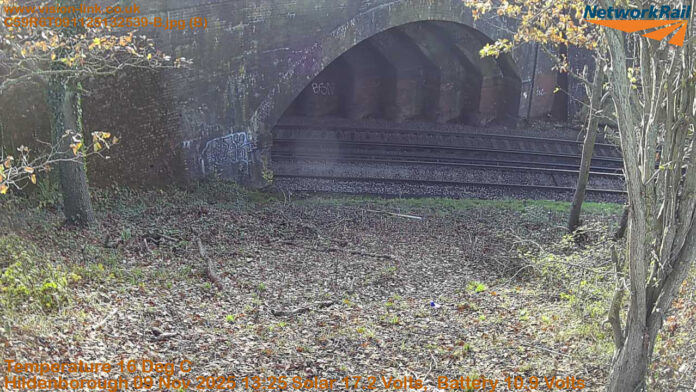
Southeastern Railway is trialling new flood warning camera technology at a series of high-risk locations, aiming to improve decision-making during severe weather and help keep trains running safely and reliably.
The solar-powered cameras, supplied by Vision Link, provide live visual monitoring of track and drainage conditions before, during and after adverse weather events. Already used by organisations including the Environment Agency and Network Rail, the technology will give engineers real-time insight into flooding risks, enabling faster, more informed operational decisions.
Five initial trial sites have been selected at Wadhurst, Hildenborough, Lower Sydenham, Sevenoaks and Selling Tunnel, based on historic flooding incidents and their impact on performance. Cameras have also since been installed at Stonegate. Flooding at Wadhurst in October 2024 alone resulted in more than 4,700 minutes of delay and required multiple infrastructure repairs, underlining the scale of the challenge.
Each location is equipped with a dual-camera system that can be accessed via a web browser or mobile app. Operating 24/7, the cameras provide early warning alerts and live feeds, allowing teams to monitor rising water levels and drainage performance in real time.
By enabling remote assessments during severe weather, the system helps reduce unnecessary site visits and avoid precautionary line closures where conditions allow. This allows teams to prioritise resources more effectively, focus on the highest-risk locations and improve overall operational resilience, while also freeing up capacity to tackle longer-term maintenance work.
Will Shepherd, Senior Network Delivery Manager at Southeastern Railway, said: “This technology gives us real-time insight into what’s happening on the ground, allowing us to prioritise our response and keep trains moving safely. It’s a smart, scalable solution that supports our wider strategy for climate resilience and operational efficiency.
“What excites me most is that the cameras don’t just help us react to flooding; they give us the insight to act before it happens. By spotting when the risk of flooding is increasing, we can intervene early and reduce the chance of disruption.
“Above all, it’s about doing the right thing for our passengers. By improving how we monitor and respond to flooding, we can avoid unnecessary disruption and keep services running, even in challenging conditions.”
Following successful demonstrations and site assessments, the cameras are expected to be fully installed this autumn. The trial will inform decisions on wider deployment, with further flood monitoring tools – including catchpit sensors and flood level trackers – under consideration. A further six flood warning cameras are also expected to be installed in the near future.


