


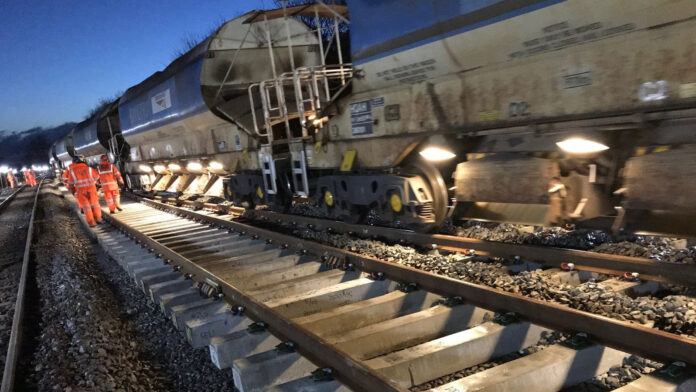
Network Rail has signaled a £5 billion program to renew its Rail Systems Alliances for Control Period 8 (2029–34) and extending into CP9 (to 2039), according to the GOV.uk portal.
These alliances – long-term partnerships between Network Rail and consortia of suppliers – will continue to deliver the bulk of track renewals and related works across the network. The current alliance contracts (established around CP6) are due to expire by mid-2029, making way for “the next generation” of agreements to mobilise in 2028 and go live in 2029.
Under the new plan, Network Rail is seeking suppliers to carry on track works (plain line and switches/crossings) along with associated civils, electrification, and signalling tasks, within an alliance framework focused on collaboration and efficiency. This renewal is not a mere rebid of the status quo – it comes with expanded scope and strategic priorities that reflect the rail sector’s evolving needs going into the 2030s.
Supply Chain Impact: Incumbents vs. New Entrants
The supply chain implications of this £5bn alliance renewal are significant. The incumbent alliance partners – for example, Colas Rail (with AECOM) in the South of England and the Babcock/Arup/Arcadis joint venture in Scotland – have spent the last decade delivering track and systems renewals under the existing contracts. These firms have deep experience and established delivery teams, which could position them strongly for the rebid. Their track records in collaborative working and meeting Network Rail’s objectives will come under scrutiny. Notably, when the CP6 alliances were tendered, Network Rail stressed that bidders must show “highly innovative approaches, and a demonstrable track record of success in collaborative environments”. Incumbents can point to their alliance experience to meet this expectation – but they must also avoid complacency.
At the same time, new entrants and competing consortia have an opening to challenge the status quo. The sheer scale and long duration (up to 11 years) of the CP8–9 alliances may attract major international players or new joint ventures that bring fresh ideas, technologies, and potentially lower unit costs. There is mounting pressure to improve affordability in UK renewals – a “ongoing affordability crisis” has been acknowledged within Network Rail, spurring collaborative efforts to standardize practices and cut costs across regions.
This environment could favour bidders who can demonstrate step-changes in efficiency (for example, greater mechanisation of track work, digital project delivery, or innovative contracting). The alliance model allows – even encourages – combining capabilities (designers, civils contractors, rail systems specialists); we may see new pairings or consortium structures emerge. Integration requirements (discussed below) also mean suppliers strong in signalling or electrification might join traditionally track-focused teams. In short, the rebid will test incumbents’ performance while giving others a chance to enter a large market – a dynamic likely to sharpen competition and drive innovation in the supply chain.
Strategic Priorities: Integration, GBR Transition, Sustainability
The official procurement notice highlights several strategic priorities for the renewed alliances, indicating how CP8 delivery will differ from the past:
- Multi‑Discipline Integration: The new alliances are explicitly expected to “integrat[e] with signalling and electrification works” alongside core track renewals. This marks a shift from siloed delivery to a more holistic approach. Practically, it means track renewal programs must be planned and executed in lock-step with signaling upgrades or OLE (overhead line) works in the same corridors. For suppliers, this requires broader capability or closer coordination with other specialists. We can already see this trend in Network Rail’s Southern region, which has pioneered a Southern Integrated Delivery alliance incorporating track, civils, E&P (electrification & plant), and signalling under one enterprise arrangement. While the CP8 Rail Systems Alliances may remain “track-focused”, the integration mandate signals an expectation of seamless collaboration across disciplines to reduce rework and passenger disruption. Alliance partners will need strong systems integration skills and a mindset of working beyond traditional boundaries.
- GBR Transition Compliance: The timing of these alliances aligns with the rail industry’s transition to Great British Railways (GBR). The notice calls for “compliance with GBR transition requirements” – essentially ensuring the contracts support the forthcoming structural reforms. Although details are sparse, this likely means the alliance model and terms must be flexible to novate or adapt when GBR becomes the client in place of Network Rail. It may also entail aligning with GBR’s focus on whole-industry outcomes and passenger benefits.
For example, GBR is expected to emphasise performance and integration of track and train operations; alliance suppliers might face new key performance indicators (KPIs) tied to service reliability or lifecycle cost, not just asset handover. Strategically, bidders should design their delivery approach to be “future-proof” for the GBR era – adopting open data, standard interfaces, and collaborative governance that meshes with a broader GBR system authority.
- Sustainability Objectives: Sustainability is a core priority baked into the CP8 alliance plan. The next contracts must deliver on environmental and social sustainability goals, in line with government and industry targets. This translates to reducing carbon and waste in construction (for instance, using low-carbon materials, recycling ballast, or leveraging rail-mounted plant to minimise road haulage) and improving energy efficiency. It also means focusing on the outcomes of a greener railway – for example, facilitating electrification (which the alliances will support through track-associated traction power works) and enhancing climate resilience of track infrastructure. Alliance bidders will be expected to have credible carbon reduction plans and innovations (the “specialist plant and equipment” noted in the scope likely includes newer, cleaner technology). Additionally, social sustainability – skills development, local SME engagement, diversity and inclusion – will factor into how alliances are evaluated and managed. In essence, the supply chain must embed sustainability into both what they deliver and how they deliver it.
Commercial Model: Uncertainty and Opportunity
One notable aspect of the renewal plan is that the detailed commercial model is being left open until the tender stage. Unlike some procurements where the contract form and risk/reward mechanisms are predefined, Network Rail is deferring this decision. For the supply chain, this creates both uncertainty and opportunity. On one hand, bidders must prepare for various alliance commercial frameworks – whether a classic target-cost alliancing with pain/gain share, or a more radical enterprise model (such as the Project 13-aligned approach in Southern region, which ties profit to performance/outcomes). The eventual model could significantly affect contractors’ risk profile and returns, so they will be watching closely. On the other hand, the fact that the model is not set in stone implies Network Rail is open to industry input on “what good looks like” in the next alliances. During the pre-procurement engagement, suppliers (especially incumbents with lessons learned) have a chance to shape the commercial terms – for example, advocating for mechanisms that incentivize long-term innovation, or adjusting risk allocation on things like inflation and ground conditions over an 11-year span.
From a strategic viewpoint, keeping the commercial model flexible may be intended to ensure alignment with GBR’s eventual guidance or funding frameworks. It also suggests that Network Rail recognises the need to refine its alliance model from CP6/7 experience – perhaps to drive better cost control and collaboration. Bidders should be prepared for potentially new performance-based payment structures or more stringent cost transparency requirements. In any case, all parties will need to remain agile. The delay in defining the model means alliance partners must build robust relationships and trust, ready to adapt to the agreed commercial framework once it is unveiled in the tender. Those who engage constructively during the market dialogue can position themselves to hit the ground running when formal tenders arrive (expected in 2027).
Engaging SMEs and Tier-2 Suppliers Early
Large Tier-1 contractors and designers will inevitably lead the Alliance consortia, but small and medium-sized enterprises (SMEs) and specialist Tier-2 suppliers have a crucial role to play – and opportunities to benefit. The notice explicitly flags the procurement’s “particular suitability” for SMEs and even VCSEs, reflecting Network Rail’s commitment to broader supply chain participation. In practical terms, this means the alliance model and work structure should enable involvement of smaller firms in delivering the workbank. Tier-1 bidders will be required (informally if not formally) to demonstrate how they will draw on SMEs for niche expertise, innovation, and capacity. In the Southern Integrated Delivery model, for instance, Network Rail created an “Eco-system” of suppliers outside the four main partners – “recognising that the key to unlocking efficiencies lies with the SME community”. We can expect a similar ethos in the CP8 alliances: the primary alliance partners will likely establish extensive subcontracting frameworks and innovation programs to tap into the wider industry.
For SME and Tier-2 suppliers, the message is to get involved early. This means engaging in Network Rail’s upcoming market briefing events and ensuring your company is registered on the sourcing portal (as invited in the PIN). Early engagement allows SMEs to understand the pipeline and position themselves as either part of a bidder’s team or as future subcontractors in the alliance delivery. Key things to watch in pre-procurement: how the work might be packaged or phased (to align your offerings), what performance or safety standards will be expected (so you can gear up to meet them), and whether any innovation competitions or trials are hinted (alliances might test new tech in CP7 that could scale in CP8 – an opportunity for tech-focused SMEs). It’s also wise for smaller suppliers to collaborate – for example, forming clusters or joint ventures to offer a more compelling package to the big players.
Market shaping is a two-way street. Network Rail is keen on industry feedback before finalizing the tender. SMEs and regional contractors should seize this chance to voice how the alliances could improve supply chain access – be it through lotting strategy, fair payment terms, or commitments to use local suppliers. While individual small firms won’t dictate contract structure, collectively the supply chain’s input can encourage provisions that make the environment more SME-friendly (for instance, capped liability for subcontractors or innovation funding pots within the alliance). By engaging now, Tier-2 suppliers can also build relationships with the likely Tier-1 bidders – many of whom will start forming their alliance teams well in advance. In short, proactive SMEs that align their capabilities with the alliance priorities (e.g. offering a sustainable solution, a digital tool for integrated planning, or a specialist plant for efficient renewals) stand to secure a place in the long-term delivery ecosystem.
Collaboration, Delivery, and the Road Ahead
In summary, Network Rail’s Rail Systems Alliances renewal for CP8–9 represents a blend of continuity and change for the UK rail supply chain. It continues the collaborative alliance approach that has delivered track renewals over the past decade, but raises the bar with broader integration and ambitious outcomes (from GBR reform alignment to sustainability). For rail professionals, the implications are clear: delivery will increasingly demand cross-disciplinary teamwork, adaptability to new commercial incentives, and relentless efficiency. The supply chain – incumbents and newcomers alike – must gear up for a highly competitive tender, one where demonstrating value through excellence and innovation is paramount. Those firms that can internalise Network Rail’s priorities and contribute to its long-term vision (a safer, greener, more integrated railway) will be best placed to thrive in these alliances. Equally, Network Rail must manage the transition carefully: ensuring knowledge transfer from old to new alliances, preserving effective working practices, and incorporating lessons (on cost, risk and collaboration) from CP6/7.
Ultimately, the renewed Rail Systems Alliances offer a framework to “deliver value for money for our devolved route customers” through partnership – but realizing that promise will require all stakeholders, big and small, to align their efforts. With early market engagement underway and tendering on the horizon, now is the time for the industry to actively shape how these alliances can succeed. The next decade of UK rail renewals will be defined by how well the supply chain comes together under this alliance model to meet the challenges of integration, reform, and sustainability in CP8 and beyond.
Image credit: Network Rail
Network Rail Track Focused Railway Systems Contract – Find a Tender
Two alliances set for £5bn railway work bonanza | SSA LTD.
New alliances to be formed as £5bn railway track work tender issued


