


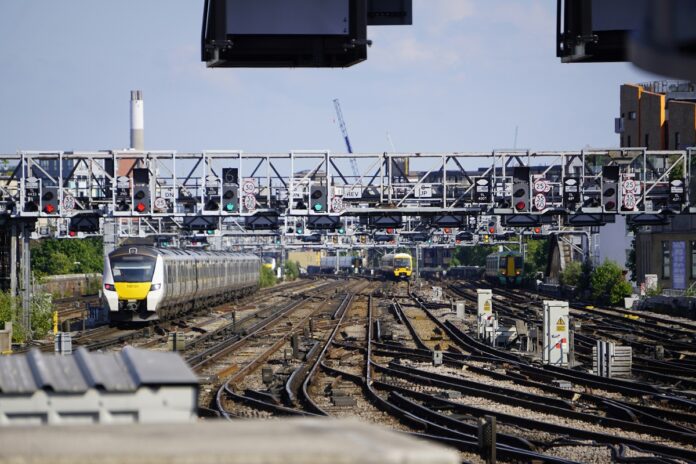
The rail industry has agreed to phase out signal post telephones in future re-signalling schemes, marking a shift away from legacy infrastructure towards modern communication systems.
The decision, taken by RSSB’s Industry Leadership Group, follows a request from Network Rail to stop installing the lineside telephones, beginning with its Fife re-signalling project.
Signal post telephones have historically been used as a secondary communication method for train drivers, but analysis by RSSB found they are now rarely used and offer limited safety benefit compared to newer alternatives.
The industry will instead adopt modern solutions, including portable communication devices for drivers and the use of dual SIM technology to allow on-board GSM-R systems to connect to alternative mobile networks.
Network Rail currently maintains around 32,000 signal post telephones across the network, at an annual cost of approximately £22.5 million. Additional costs are incurred through installation and maintenance as part of re-signalling programmes.
Professor Clive Roberts, Independent Chair of the Industry Leadership Group, said the move reflects the changing needs of the railway.
“Signal post telephones were designed for a very different railway. The evidence is clear that they are no longer the most effective or proportionate way to provide secondary communication,” he said.
Tom Lee, RSSB’s Director of Standards, said the decision supports a broader shift towards more efficient, risk-based approaches.
“By focusing on what genuinely supports safety and operational effectiveness today, we can remove barriers to adopting changes in technology and operating practices, eliminating unnecessary cost and creating space for better, more flexible solutions,” he said.
Network Rail’s Group Safety and Engineering Director, Martin Frobisher, added that modern communications remove the need for drivers to leave the cab to use trackside equipment.
The change is expected to reduce infrastructure and maintenance costs while improving safety by limiting the need for staff to access the trackside environment.


