


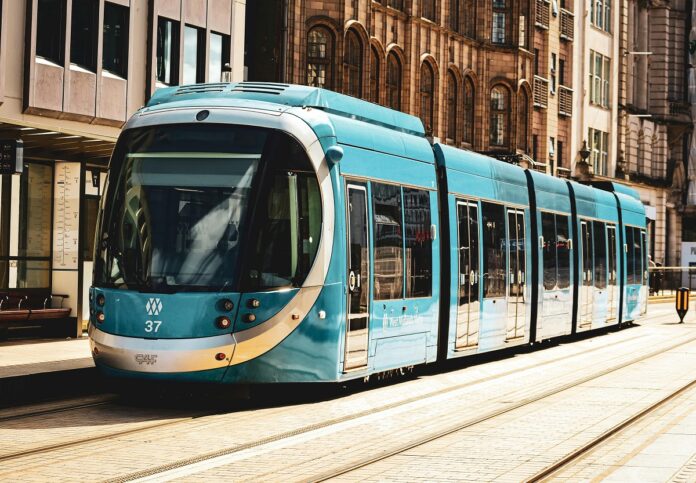
The launch of the government’s new Mass Transit Taskforce marks more than another transport policy announcement. For rail industry professionals, it signals the start of a potentially significant shift in how urban transport schemes are planned, funded and delivered across the UK.
While the headline focus is on trams, light rail and high-frequency bus systems, the implications stretch deep into the wider rail and transport supply chain. From infrastructure delivery and systems integration to digital ticketing, civils, consultancy and operations, the taskforce could reshape where investment flows over the next decade and which businesses are best positioned to capture it.
At its core, the announcement reflects growing recognition within government that existing delivery models for urban transport are too slow, too fragmented and too difficult to finance. The fact that ministers have now created a dedicated taskforce to identify barriers suggests Whitehall understands that demand for mass transit expansion is accelerating faster than current systems can support.
A Policy Shift Towards Urban Connectivity
The taskforce arrives at a time when regional mayors are increasingly pushing for integrated transport systems capable of driving economic growth, housing delivery and decarbonisation. The government has committed £15.6 billion through Transport for City Regions settlements and is now looking to pair that funding with reforms designed to speed up delivery.
The emphasis throughout the announcement is notable. Ministers repeatedly frame mass transit not simply as transport infrastructure, but as economic infrastructure.
That distinction is important because it changes how schemes are likely to be prioritised and evaluated. Future projects may be judged less on traditional transport cost-benefit calculations alone and more on wider regeneration impacts, labour mobility, housing growth and regional productivity.
For rail businesses, particularly SMEs, this broadens the opportunity landscape considerably.
Historically, large transport projects have often concentrated procurement power among a relatively small group of Tier 1 contractors and multinational suppliers. But urban mass transit schemes typically require far wider local delivery ecosystems, including SMEs specialising in civils, signalling, electrification, station development, ticketing technology, customer systems, accessibility, environmental consultancy and maintenance support.
If delivery barriers are genuinely reduced, more schemes could progress simultaneously across multiple city regions rather than sequentially over decades. That could create sustained demand pipelines rather than isolated project spikes.
Devolution Means Local Relationships Matter More
One of the most significant elements of the announcement may ultimately be the proposed devolution of Transport and Works Act Order powers to mayors.
This is not merely administrative reform. It signals a further transfer of transport decision-making away from central government and towards regional leadership.
For rail professionals, that means future business development strategies may increasingly depend on relationships with combined authorities, mayoral offices and local transport bodies rather than Westminster departments alone.
The UK rail sector has historically operated through highly centralised structures. But integrated transport systems require local political alignment, regional planning integration and place-based delivery strategies. Businesses that understand local priorities, economic plans and regional transport visions may gain competitive advantage over firms relying solely on national procurement cycles.
The comments from regional mayors reinforce this direction clearly. Leaders in West Yorkshire, the North East, Liverpool City Region and the West of England all positioned mass transit as central to wider economic transformation rather than standalone transport upgrades.
That creates both opportunity and complexity for suppliers.
The opportunity lies in multiple regions pursuing ambitious programmes simultaneously. The complexity lies in differing political priorities, procurement approaches and local delivery models emerging across the country.
Rail Must Avoid Being Sidelined
Although rail professionals will welcome the broader investment narrative, there is also a strategic risk embedded within the announcement.
The government’s language increasingly focuses on “mass transit” rather than rail specifically. This reflects a wider modal integration agenda where buses, tram systems, light rail and active travel are viewed collectively rather than as separate transport silos.
For traditional heavy rail businesses, that could mean increased competition for public investment and policy attention.
In practical terms, future urban mobility strategies may prioritise lower-cost rapid transit systems over expensive conventional rail expansion. Bus rapid transit, tram-train systems and integrated contactless networks could increasingly be viewed as faster and more politically deliverable solutions.
Liverpool City Region Mayor Steve Rotheram’s comments are particularly revealing here, highlighting ambitions for rapid transit ahead of Euro 2028 and emphasising practical delivery over long planning horizons.
That delivery pressure may favour agile, scalable systems rather than large conventional rail schemes with lengthy approval timelines.
For parts of the rail supply chain, diversification into broader urban mobility markets may therefore become increasingly important.
Integration Will Define Future Winners
Perhaps the clearest message from the announcement is that integration is now central government policy.
The taskforce sits alongside the government’s Better Connected strategy, expanded contactless ticketing ambitions and wider devolution agenda.
This suggests future procurement and infrastructure decisions will increasingly favour systems capable of operating across multiple transport modes and authorities.
For suppliers, interoperability may become as commercially important as technical capability.
Businesses offering standalone solutions without integration capability could find themselves disadvantaged as authorities seek joined-up transport ecosystems. Conversely, firms specialising in digital integration, passenger data systems, smart ticketing, mobility-as-a-service platforms and operational coordination may see growing demand.
The rail sector has often struggled historically with fragmented systems, legacy technology and institutional silos. The government’s new direction appears designed explicitly to overcome those barriers at city-region level.
That may ultimately create pressure for wider reform across rail itself.
Planning Reform Could Unlock Long-Delayed Schemes
The taskforce’s focus on planning, land acquisition and fragmented funding reflects longstanding frustrations across the industry.
Many urban transport projects stall not because of lack of political ambition, but because of delivery complexity. Long approval processes, uncertain funding structures and difficult land negotiations routinely add years to schemes.
If the taskforce succeeds in streamlining these processes, the effects could extend beyond trams and light rail into wider transport infrastructure delivery.
However, rail professionals will also recognise the challenge involved.
The UK has announced numerous transport reform initiatives over the past two decades, yet delivery bottlenecks persist. The success of this taskforce will depend less on identifying problems — which are already widely understood — and more on whether government is willing to implement structural reforms that simplify approval and funding mechanisms.
The six-month timeline for initial recommendations suggests ministers want visible progress quickly.
Industry will watch closely to see whether that translates into meaningful delivery reform or simply another layer of strategic review.
SMEs Could Benefit Most — If They Move Early
For SMEs operating in the rail and transport supply chain, the announcement may represent an early warning as much as an opportunity.
If multiple city regions begin accelerating mass transit delivery programmes simultaneously, competition for capability, skills and specialist expertise is likely to intensify rapidly.
Businesses waiting for formal procurement notices may already be behind.
Early engagement with combined authorities, local growth strategies and emerging transport plans could prove essential. Firms that position themselves now around integration, decarbonisation, digital systems and urban mobility delivery may find themselves aligned with where investment is heading.
The broader shift is increasingly clear: transport policy is moving towards integrated regional mobility systems rather than isolated infrastructure projects.
For the rail industry, the challenge will be ensuring it remains central to that future rather than simply adjacent to it.


