


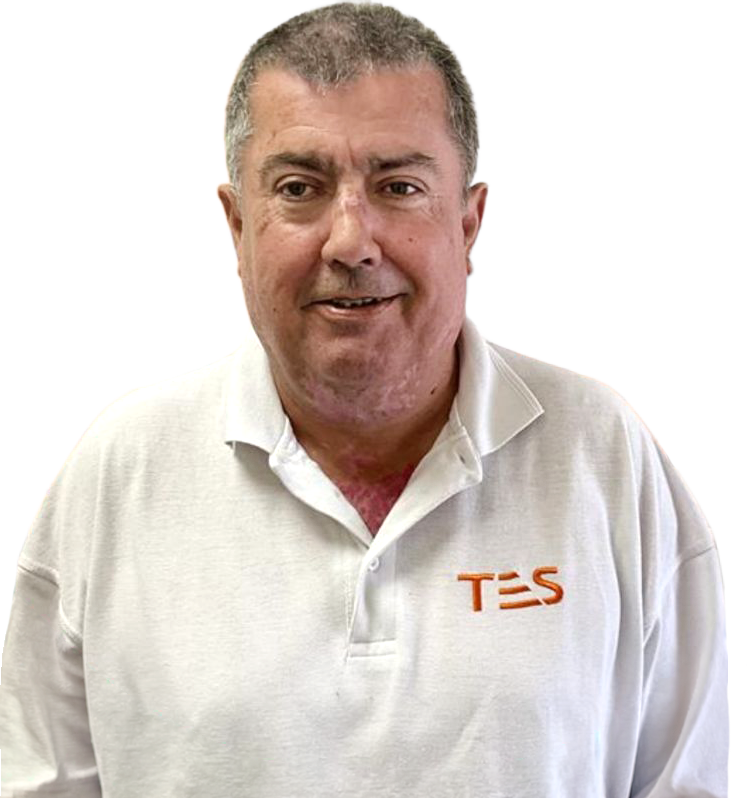
Mick Kiely, Fleet & Facilities Manager at TES 2000 and Deputy Chair of the RSSB Road Safety Group, attended the Rail Industry Road Safety Conference 2026 ahead of Road Safety Week in July. He writes about why road safety in rail is personal, and why the industry cannot afford to treat it as someone else’s concern.
Seventeen years ago, I was an operations manager at a rail contractor when a colleague lost his life in a road traffic collision. It wasn’t his fault. Two drivers ran a red light and hit him. But when I arrived at the scene as the on-call manager, I discovered he hadn’t even been in his own vehicle. He’d swapped vans with someone else on site, an informal arrangement that meant police were heading to the wrong family’s door. I was able to redirect them. Then I had to go with my director to sit with the right family, with young children while a police officer explained that their dad wasn’t coming home.
That night reshaped the rest of my career. I started taking responsibility for fleet management in that role, carried it into every company I joined after, and eight years ago I moved into fleet full time. When I joined TES six years ago, rebuilding the road safety culture here from the ground up became my focus.
On Thursday 25 June, I attended the Rail Industry Road Safety Conference at Network Rail’s headquarters in Milton Keynes, in my capacity as Deputy Chair of the RSSB Road Safety Group. Organised by Network Rail and supported by RSSB ahead of Road Safety Week in July, the conference brought together fleet managers, safety professionals, and senior leaders from across the sector under one theme: Safe Vehicle. TES’s Managing Director, Bianca Molloy, joined a leadership panel on the future of road risk in rail. It was the first event of its kind, and it was overdue.
Data Without Action Changes Nothing
When I joined TES, trackers were already fitted across the fleet. But having data and doing something with it are very different things, and the gap between them is where risk lives. I used the first year to study what the data was actually telling us, rewrote the driver handbook, removed private use of company vehicles entirely, and introduced a driver app covering daily walkaround checks, toolbox talks, and handbook access. Removing private use alone cut fuel costs by 40% in year one, and more importantly, it reduced road exposure.
I also brought in Safer Essex Roads Partnership, mostly staffed by ex-road police officers, to run a corporate manslaughter briefing with our management team. Around 95% of people in that room said afterwards that they had not understood the extent of their personal liability. Once they did, they engaged differently with drivers and supported the programme far more actively. That shift in management culture was as significant as any system we introduced.
The results, independently validated through our work with Driving for Better Business, speak for themselves:
- 96% reduction in speeding fines
- 45% reduction in vehicle collisions in under 18 months
- 35% reduction in fleet insurance premium
- 20% reduction in fuel costs through more considered driving behaviour
- Recorded speeding events down to 180 per month
- £700 less per vehicle annually than comparable rail companies
- We won Company Safe Driver of the Year, two years running
The Risk Rail Contractors Underestimate Most
Speeding gets the most attention in road safety conversations, but for rail contractors, fatigue is the harder problem. Around 90% of our operational shifts run at night or over weekends. Drivers are completing physically demanding work on track and then getting behind the wheel in the early hours to drive home, often for an hour or more.
What makes this particularly difficult is that we have no visibility of what a driver’s day looked like before they arrived for the shift. Were they up with children while a partner worked? Did they sleep? Night workers often carry that invisible burden, and by the time they are heading home in the early hours, reserves are low. The journey home after a night shift is one of the highest-risk moments in a rail worker’s day, and as an industry we do not talk about it enough.
At TES, we use a fatigue calculator and run a telematics system that flags vehicle sway in real time. We have spoken to drivers directly when an alert has triggered, and it does make a difference in the moment. But the deeper answer is cultural. Drivers need to feel that stopping is acceptable, that their employer will not question a delay, and that getting home an hour later is always the right call.
Embracing, Not Ignoring, Technology
Modern vehicles have genuinely impressive safety technology. Lane departure assist, automatic emergency braking, forward collision warnings. If drivers left these systems active, we would see significantly fewer accidents. I never switch mine off, and the difference is noticeable. Heading to work for an early start recently, a deer jumped out on the A12 at around 5am. The vehicle braked automatically and stopped. In a vehicle without those systems, or with them turned off, the outcome would have been very different.
One thing I will keep raising, is the attitude that still exists in parts of the supply chain around fleet responsibility. Smaller rail companies in particular often treat road safety as the fleet person’s concern. I have spoken to MDs and health and safety leads who, when you raise it, point to their fleet administrator and say it has nothing to do with them. That attitude carries real legal risk they may not fully appreciate.
We have seen directors in other companies face fines of £750,000 and suspended jail sentences following road fatalities. Contracts with Network Rail have been lost entirely. Road traffic collisions remain outside RIDDOR reporting requirements, although work is ongoing to change that. Until it does, the absence of a reporting obligation makes it easier for companies to avoid confronting the scale of the risk.
It’s a commitment of mine to develop a Manager’s Handbook covering the responsibilities that come with managing people who drive for work. A manager’s equivalent to the driver handbook does not yet exist in any widely adopted form, but I hope to see that change by 2027.
The Journey Home Matters as Much as the Job
Building a road safety culture at TES took the best part of two and a half years. Some drivers pushed back on dash cams and walkaround checks. But the policy was straightforward: sign up to our standards or you do not drive a company vehicle.
Road Safety Week in July is a prompt for every rail company to ask honestly whether their people are getting home safely after every shift. The railway industry takes on-track safety seriously, and the same rigour needs to apply to what happens on the roads before and after. Work Safe, Drive Safe, Home Safe is a standard worth holding the whole industry to.
TES 2000 is a family-run railway engineering and safety-critical contractor based in Colchester, providing possession management, OHL construction and isolations, permanent way maintenance, technical projects, and training services across Anglia, Sussex, and the North East.
Find out more at www.tes2000.co.uk.


