


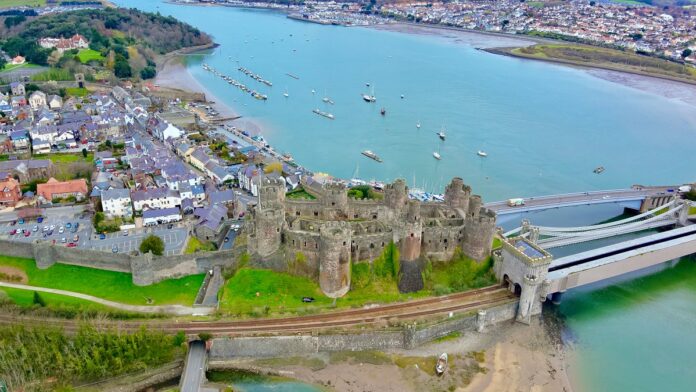
More than £25m is to be invested in the North Wales Coast railway during an intensive four-week engineering programme designed to improve the reliability, capacity and safety of one of the region’s most important passenger and freight routes.
Network Rail will close sections of the railway between Chester and Holyhead from 9 January to 6 February 2027, allowing engineers to undertake a coordinated package of track, drainage, station, level crossing and infrastructure works.
The programme will tackle assets that in some locations have been in place for more than 50 years, including track dating from the 1970s through Conwy Tubular Railway Bridge and Bodorgan Tunnel.
Network Rail says concentrating years’ worth of work into a single blockade will allow the programme to be delivered more efficiently while reducing the need for repeated weekend closures in subsequent months and years.
The investment also comes after the introduction of the new North Wales timetable in May 2026, which increased Transport for Wales services by 50%, putting additional emphasis on the reliability and capacity of the underlying infrastructure.
Four-week blockade across North Wales
For the first three weeks of the programme, the railway will close between Chester and Holyhead, including the Conwy Valley line and the route between Llandudno Junction and Llandudno.
During the fourth week, the closure will be reduced to the section between Llandudno Junction and Holyhead.
Network Rail said engineering teams have already reduced the planned Chester to Llandudno Junction closure from four weeks to three and are continuing to work with industry partners to limit the disruption.
Rail replacement services will operate, with detailed arrangements for passengers due to be confirmed in autumn 2026.
The scale of the blockade will allow multiple work sites to operate across the route simultaneously, combining major renewals with additional maintenance that would otherwise require separate access to the railway.
Track dating from the 1970s to be replaced
Among the most significant interventions will be track renewal through the Grade I-listed Conwy Tubular Railway Bridge, where the existing track dates from 1978.
At Bodorgan Tunnel, engineers will carry out major track and drainage improvements, replacing infrastructure dating from 1972 and undertaking work intended to reduce the risk of flooding.
Track renewal and ground improvements are also planned at Penmaenbach, where sections of railway were last renewed in 1986.
Further track and points work will take place at Holyhead and Llandudno, alongside platform improvements at Llandudno Junction and work at four level crossings east of Bangor.
Around £1.4m will also be spent on vegetation management across nine locations, with wider maintenance activity taking place throughout the route.
Two new fully accessible footbridges will be installed at Prestatyn and Abergele, enabling four high-risk level crossings to be closed.
22 engineering trains to support blockade
The logistics required to deliver the programme will be substantial.
Network Rail plans to use 22 engineering trains alongside specialist on-track machinery to supply materials and remove spoil from the different work sites.
More than 3,000 concrete sleepers and approximately 9,000 tonnes of ballast will be brought onto the railway.
Around 9,800 tonnes of spoil will also be removed, with the material destined for recycling and reuse on future railway projects.
Emma Osborn, Passenger Strategy Director at Network Rail’s Wales and Borders route, said: “This is a once-in-a-generation investment in the North Wales Coast railway and a huge opportunity to renew and improve infrastructure right across this vital route.
“Investment on this scale inevitably means some temporary disruption while we carry out the work, and we recognise closing the railway will have an impact on customers and communities.
“But by bringing years’ worth of complex work together into one intensive programme, we can deliver it more safely and efficiently, while avoiding a prolonged series of disruptive weekend closures.
“The long-term benefits for passengers and freight customers will far outweigh this temporary disruption, with a safer, more reliable railway that is better equipped to support the increased number of services now running across North Wales.”
Supporting a busier railway
The programme follows a substantial increase in the number of passenger services operating across North Wales.
Transport for Wales introduced its new timetable in May, delivering what it described as the biggest timetable improvement in North Wales for a generation and increasing its services by 50%.
The additional trains make the condition and reliability of the infrastructure increasingly important. The January blockade is therefore being used not only to deliver major renewals but to undertake additional maintenance while services are suspended.
Colin Lea, Planning & Performance Director for Transport for Wales, said: “As we see passenger numbers and service frequencies across North Wales grow, working alongside our partners at Network Rail is essential to ensure our infrastructure can support that demand.
“Essential track maintenance, tunnel drainage, and new accessible footbridges will help deliver a more reliable service and better stations for the communities we serve.
“We know railway closures are disruptive to our passengers, and we appreciate their patience. We remain committed to keeping North Wales moving throughout January, and full details on alternative travel arrangements will be shared this Autumn.”
Avanti West Coast services will also be affected by the blockade.
Chris Liptrot, Operations Director at Avanti West Coast, said: “While Network Rail carries out these improvements, there will be changes to services on our North Wales route.
“We are working closely with Network Rail and our industry partners to ensure customers are kept informed about how their journeys may be affected.”
Intensive access strategy
Beyond the individual renewals, the programme represents a significant example of the industry’s use of longer, intensive blockades to tackle multiple infrastructure requirements at the same time.
Four weeks without normal services will create substantial disruption, but it also gives engineering teams an opportunity to undertake work across numerous sites without repeatedly establishing and handing back possessions over a succession of weekends.
That is particularly important on the North Wales Coast route, where passenger growth and increased service frequencies are placing greater demands on infrastructure while the railway continues to provide an important corridor for freight.
With assets dating back several decades among those being replaced, the January programme will combine immediate maintenance requirements with longer-term renewal of the route.
The challenge for Network Rail and operators will be managing the short-term impact of a lengthy closure while using the access available to complete as much work as possible. If delivered as planned, the blockade should leave the North Wales Coast railway better equipped to accommodate the increased level of passenger and freight traffic now expected of it.


