


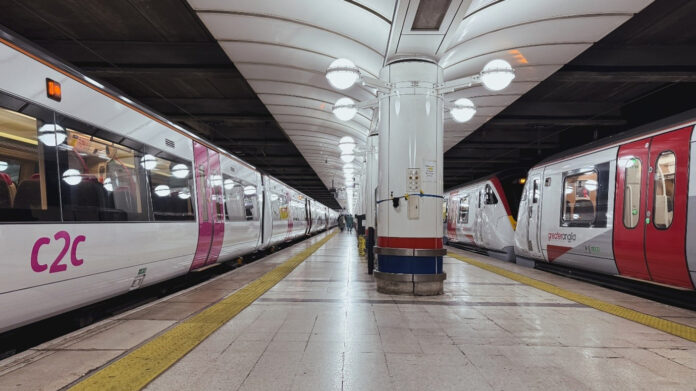
A new integrated leadership team has been launched across c2c, Greater Anglia and Network Rail Anglia in a major step towards creating a more joined-up railway for passengers and freight across the East of England.
The move brings track and train operations together under one management structure, marking one of the clearest signs yet of how Great British Railways (GBR) will begin reshaping the industry ahead of full implementation.
The new structure is designed to improve coordination across the Anglia network, enabling faster operational decision-making, more effective planning of engineering work and a stronger focus on minimising disruption for passengers and freight customers alike.
Rail leaders say the approach will help keep more of the railway open during infrastructure work while improving long-term planning and reliability across one of the country’s busiest and best-performing rail regions.
The integration builds on strong recent performance from both operators. Greater Anglia and c2c currently rank among the UK’s best-performing train operators, each achieving punctuality figures above 91% alongside some of the lowest cancellation rates nationally. Network Rail Anglia has also consistently delivered strong operational performance across the route.
The Anglia network also plays a critical role in the national freight economy, connecting key ports and logistics hubs across the East of England. Industry leaders say the new structure will support closer collaboration with freight operators, Transport for London and other rail partners to strengthen regional connectivity.
Rail Minister Lord Hendy said the move demonstrated how public ownership reforms are beginning to reshape the railway ahead of GBR.
“Great British Railways will bring the management of train and track together, a vital part of ending the fragmentation that passengers have dealt with for far too long,” he said.
“As we move towards GBR, leaders will work together to put passengers and freight at the centre of all planning and decision-making.”
Jamie Burles, who will lead the integrated Anglia railway structure, said the region was already starting “from a position of strength”.
“This is about building on that success and moving into the next phase, with joint objectives and joint solutions,” he said.
“By bringing track and train together under one leadership team, we can plan better, respond faster and deliver an even more reliable railway for passengers.”
The integrated model mirrors approaches already being adopted elsewhere on the network, including at South Eastern Railway and South Western Railway, where publicly owned operators have been working more closely with Network Rail.
The Government has repeatedly pointed to these early integration models as evidence of how GBR intends to simplify railway management, reduce fragmentation and improve accountability.
For rail businesses, the Anglia integration is likely to be closely watched as a live example of how future GBR structures could operate in practice.
The closer alignment between infrastructure and operations may create opportunities for more coordinated delivery across maintenance, renewals, digital systems, passenger information and timetable planning. Suppliers working across multiple parts of the railway may increasingly find procurement, operational planning and project delivery becoming more aligned under unified regional leadership structures.
The freight sector will also be paying close attention. Anglia’s railway carries substantial freight traffic linked to ports including Felixstowe and London Gateway, and greater operational integration could help improve capacity management and resilience across mixed-use routes.
For passengers, there will be no immediate changes to branding, services or ticketing arrangements. c2c and Greater Anglia will continue operating as separate services while integration work progresses behind the scenes.
However, the launch of the unified leadership team signals another significant step towards the Government’s longer-term ambition of replacing the current fragmented rail structure with a more centrally coordinated railway under Great British Railways.


