


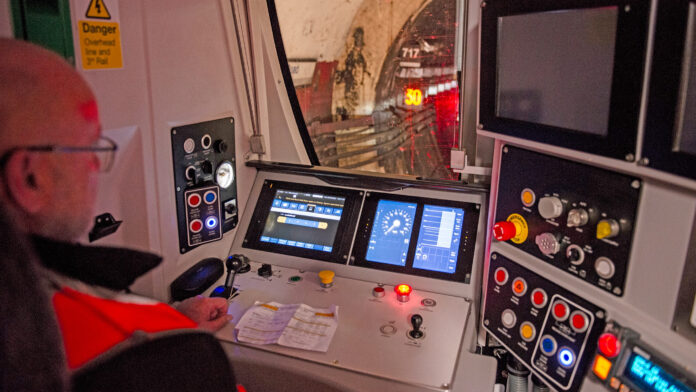
A significant milestone has been reached on the Great Northern route to Moorgate, with the full implementation of European Train Control System (ETCS) technology.
ETCS is a state-of-the-art digital signalling system that enables continuous communication between trains and the trackside infrastructure, enhancing the reliability and punctuality of train services. By eliminating the need for traditional trackside signals, ETCS empowers drivers to receive real-time speed and braking instructions directly in their cabs.
The successful deployment of ETCS on the Northern City Line, the section between Moorgate and Finsbury Park, marks a crucial step in the £1.4 billion East Coast Digital Programme. This government-funded initiative aims to modernize the UK’s rail network and improve passenger experience.
Govia Thameslink Railway (GTR) has been instrumental in training its Great Northern drivers to operate trains using ETCS. The first passenger service utilising the new technology commenced a year ago, and the system is now fully operational across the entire route.
The successful implementation of ETCS on the Great Northern route lays the groundwork for future expansion of digital signalling on the East Coast Main Line, specifically between King’s Cross and Grantham. This broader adoption will contribute to the ongoing modernisation of the UK’s rail network.
Ed Akers, Network Rail’s industry partnership director for ECDP, said: “This is a great achievement on what will become the first commuter railway in the country to operate without any physical signals. I’d like to thank all the signallers, drivers, engineers and planners across our whole partnership who have worked hard to make the Northern City Line project a success.
“Introducing digital signalling on this route has provided many learnings and invaluable experience as we prepare to introduce digital signalling to the East Coast Main Line, creating a higher performing railway for the many passengers and freight customers who depend on it.”
Oliver Turner, head of digital signalling (Head of ERTMS) at GTR, said: “Digital signalling is better for passengers because it means we can run a more consistent, more punctual service.
“It’s hard to overstate the challenge of moving to ETCS and, now, reaching point where every train on our route into Moorgate is controlled this way. It is a huge achievement both for Great Northern and our parent company GTR and also for the railway as a whole because this has been a massive collaborative effort from so many different industry partners.
“We are pleased with how the new system is working and we are working with Network Rail and Siemens Mobility colleagues to continually review and improve how we are operating it.”


