


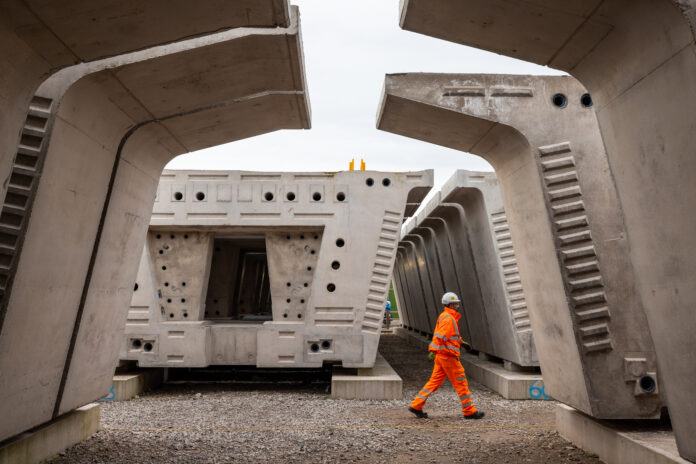
The final deck segments for HS2’s Delta Junction, a major triangular network of viaducts outside Birmingham, have been manufactured after more than 2,700 sections were produced at a purpose-built facility in Warwickshire.
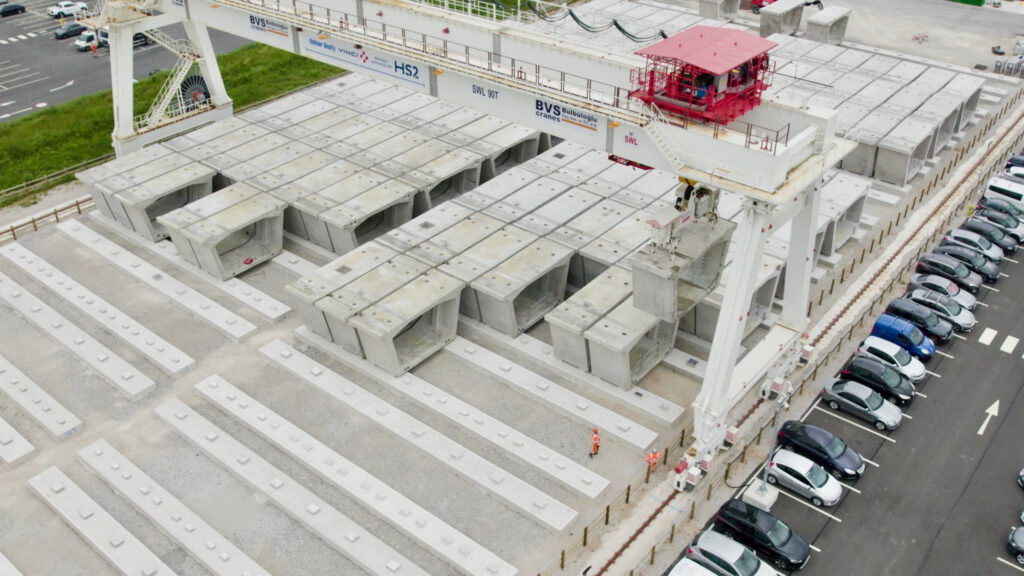
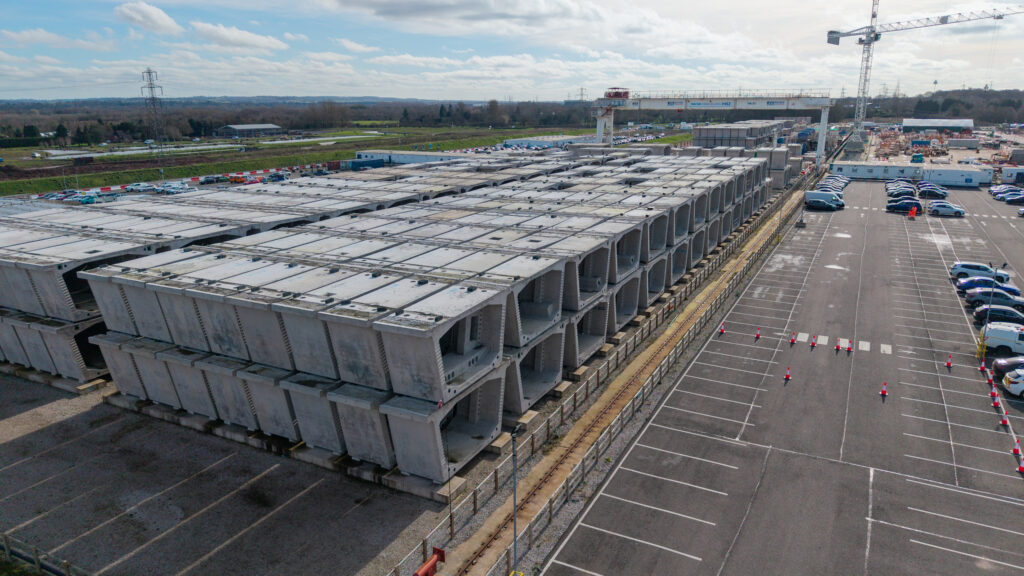
Each of the 2,742 precast concrete segments, weighing between 50 and 85 tonnes, was produced at a temporary manufacturing yard near the M42 at Kingsbury before being transported to nearby construction sites. Once on site, the sections are lifted into place to form the viaduct decks that will carry high-speed trains across the junction.
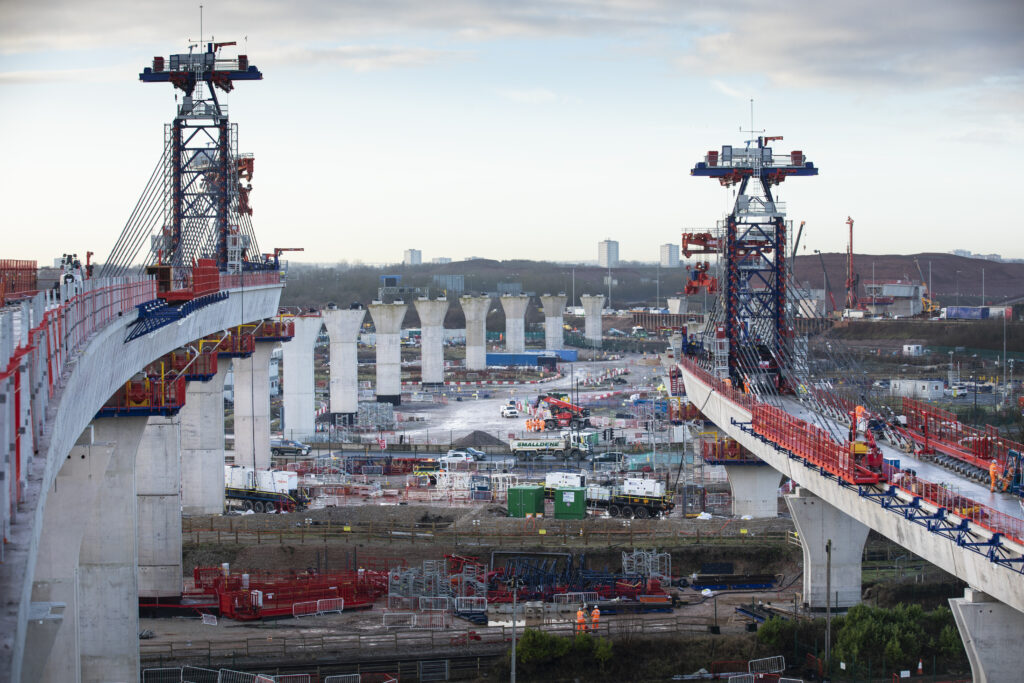
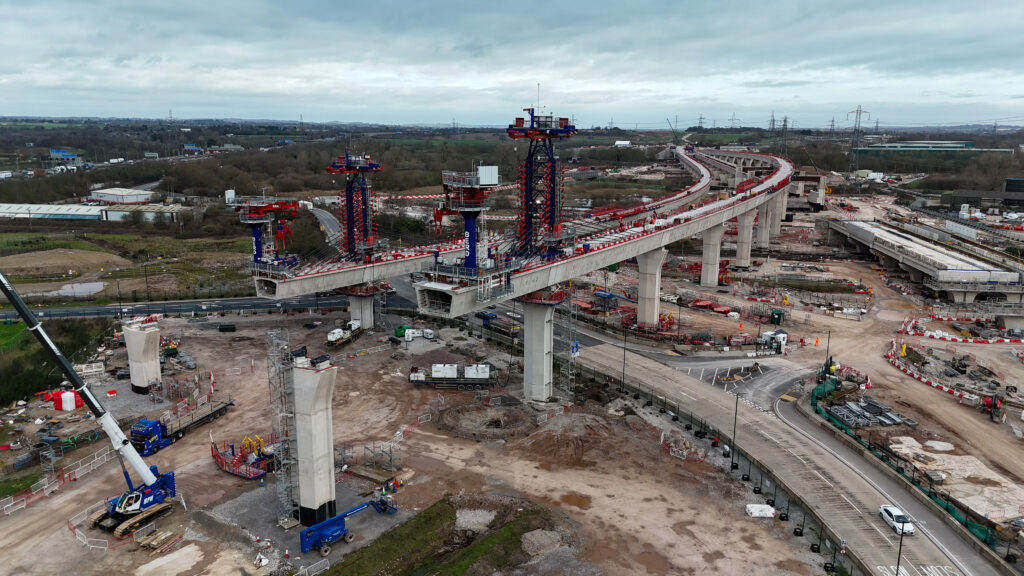
The Delta Junction is one of the most complex sections of the HS2 route, carrying the railway over a dense network of motorways, roads, railways, rivers and floodplains. The precast segments are being used to construct viaduct structures at Coleshill and Water Orton/River Thame.
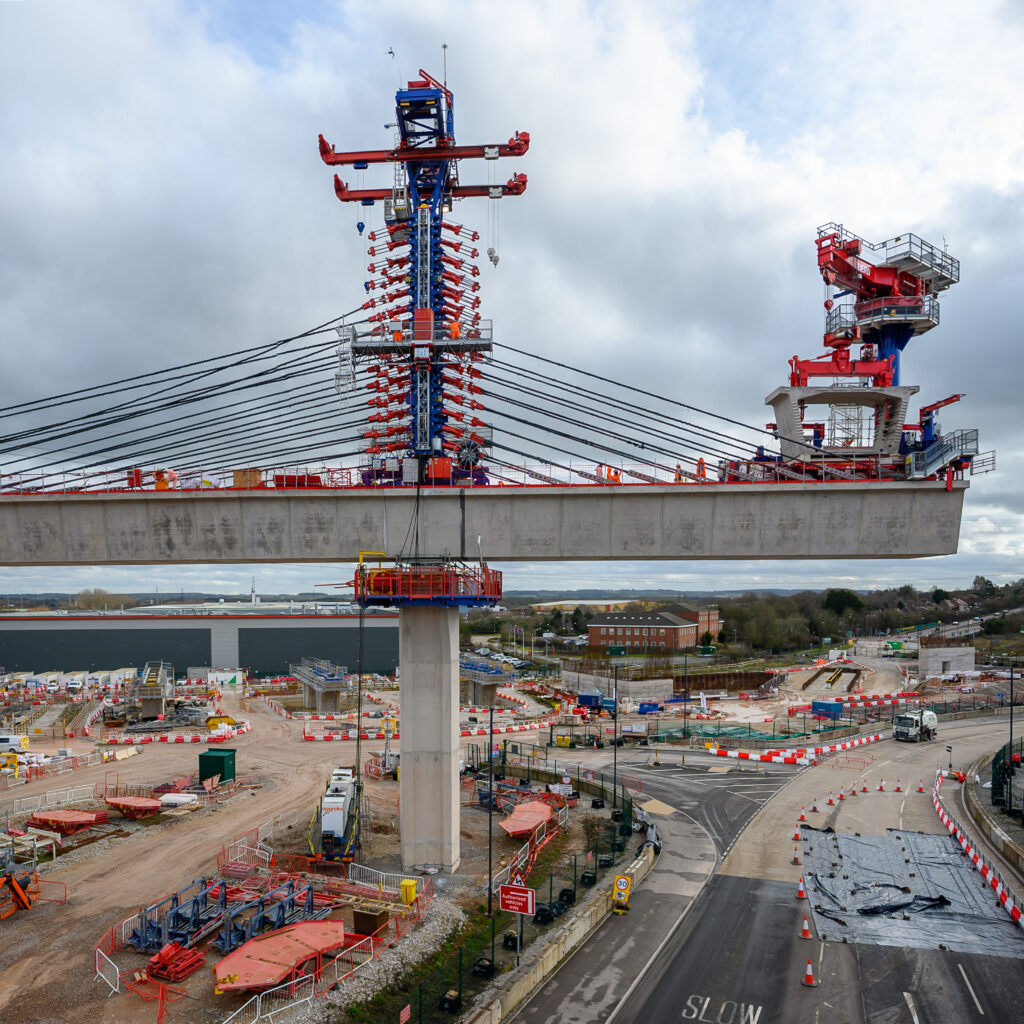
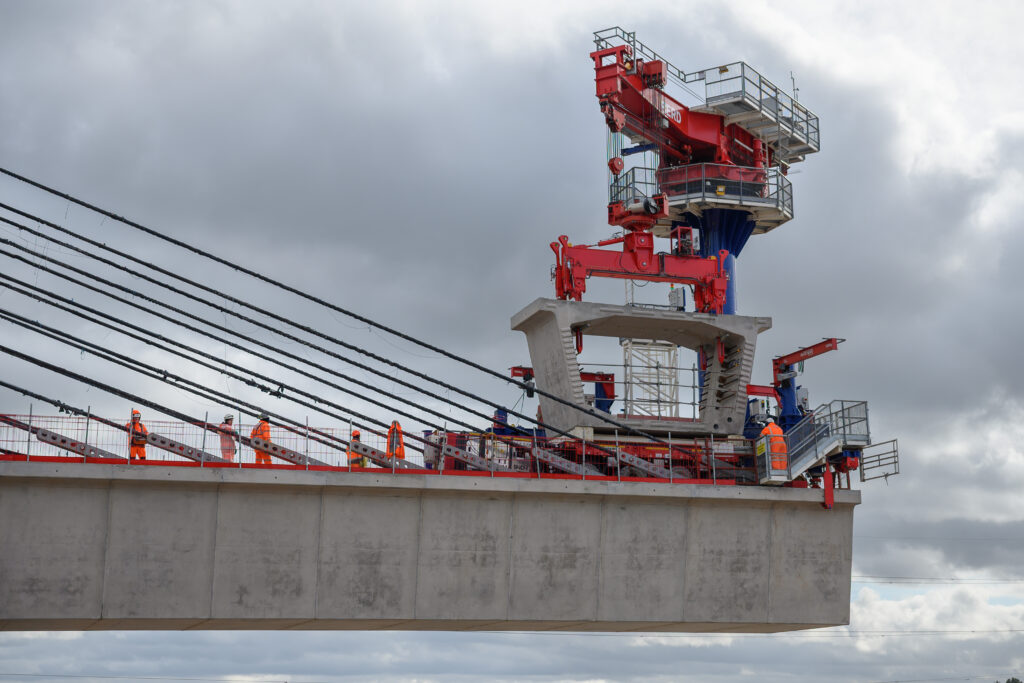
Around three quarters of the segments have already been installed, with deck assembly recently completed for the Coleshill viaducts and key spans finished for the Water Orton 1 and 2 viaducts, which cross the busy A446.
HS2 Ltd’s Head of Delivery, Caroline Warrington, said:
“Casting these enormous segments on site, close to the viaducts, helps us deliver a quality product and reduce disruption for road users. It’s great to see the final segments complete and I’d like to thank everyone involved in the manufacturing process.
“With this part of the work finished, the team can begin to focus on the deck slabs for the approach viaducts which will carry the railway into central Birmingham.”
Large-scale manufacturing operation
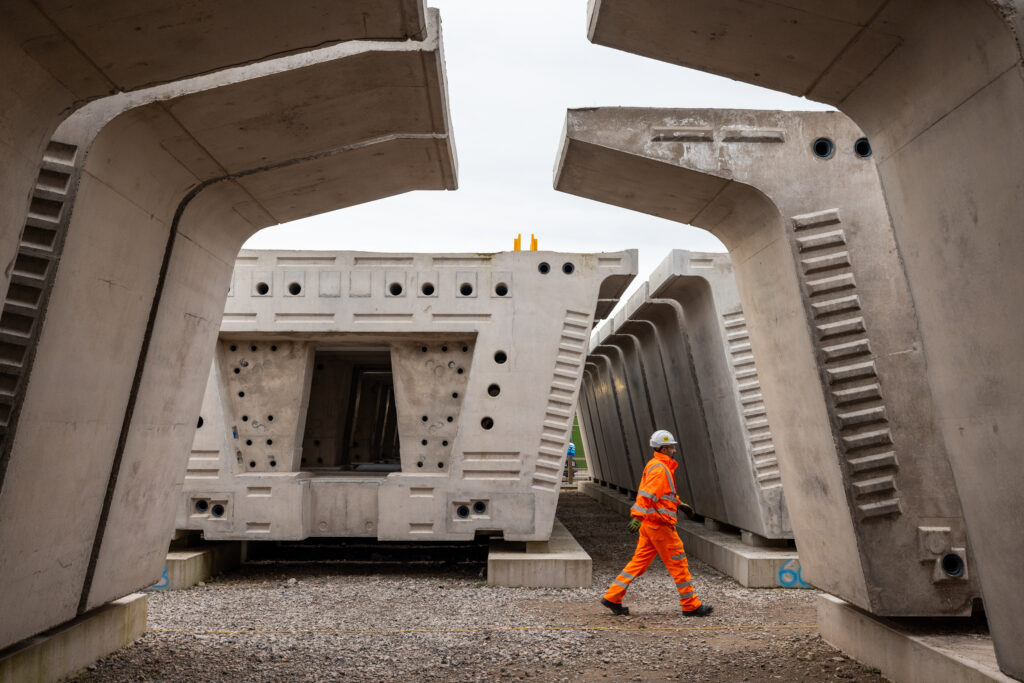
The precast facility has operated for the past three and a half years, producing up to eight segments per day. The structures measure around 3.5 metres in height and are manufactured in widths of 7 metres or 11 metres, depending on whether they support single or double track sections.
Together, the segments will form more than 6.5 kilometres of viaduct decks.
The work is being delivered by HS2’s West Midlands main works contractor, Balfour Beatty VINCI (BBV), which has also established a Skills Academy at the site to support local employment and training opportunities.
At the peak of activity, more than 500 people were employed across the 55,000 square metre manufacturing yard and the surrounding viaduct construction sites.
BBV’s team leader for the Kingsbury facility, Laura Arrieta, said:
“Watching the final segment roll off the production line at our precast yard in Warwickshire was a huge moment for the team. We’ve successfully delivered 2,742 viaduct segments over three-and-a-half years – an incredible achievement that we can all be proud of.
“This outdoor facility will now be repurposed to produce over 1,200 concrete deck slabs that will help form the Curzon Approach viaducts, using the same highly skilled and experienced team.”
Building the viaduct network
The viaduct structures are assembled using a cantilever construction process, with temporary steel cables supporting the segments until each span is completed. Permanent post-tensioned cables are then installed through the hollow centre of the structure to strengthen the viaduct before the process continues to the next span.
The viaduct network will eventually connect HS2 services to Birmingham Curzon Street station, forming a key part of the 140-mile high-speed route between London and Birmingham.
Despite the milestone, significant construction work remains across the route as the project continues under a wider review being led by HS2 Ltd Chief Executive Mark Wild, aimed at ensuring the railway is delivered as efficiently as possible and at the lowest reasonable cost.