


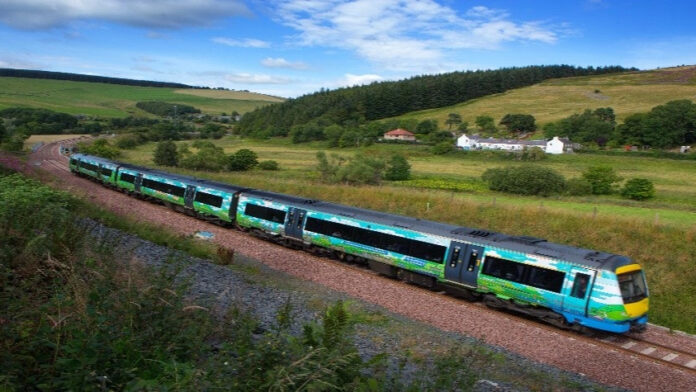
The first physical works to electrify the Borders Railway are now under way, marking a significant step in Scotland’s wider rail decarbonisation programme.
Backed by a £342m Scottish Government investment announced last September, the scheme will electrify routes in Fife and the Borders and introduce new battery-electric trains. The objective is clear: cut carbon emissions, improve air quality, reduce operating costs and enhance the passenger experience on one of Scotland’s most successful reopened lines.
From 21 February, Network Rail engineers will begin preparatory activity ahead of piling between Newcraighall and Shawfair, and from Bowshank Tunnel to Tweedbank. Piling is a critical early stage, installing the foundations that will support the masts and cantilevers for overhead line equipment. In time, this will enable electric services to operate between Edinburgh and Tweedbank.
The Borders Railway was rebuilt with electrification in mind, a strategic decision that now pays dividends. Unlike many Victorian routes, the line does not require widespread bridge reconstruction or track lowering. That design foresight reduces cost, complexity and community impact.
Nevertheless, the work requires access to the railway when trains are not running. Three weekend closures are scheduled in March, with replacement buses operating while engineering takes place. Some overnight working will also be required to maximise productivity during possessions.
For passengers and freight stakeholders alike, the scheme represents more than infrastructure upgrade. Since reopening, the Borders Railway has carried over 13 million journeys and supported housing and commercial growth along the corridor. Electrification strengthens its long-term viability, ensuring capacity, performance and sustainability keep pace with demand.
For the supply chain, this marks another live example of Scotland’s rolling electrification programme moving from policy into delivery. With battery-electric integration also part of the strategy, it reflects a pragmatic approach: targeted wiring where it delivers best value, supported by emerging traction technology.
In policy terms, the project reinforces Scotland’s commitment to rail as a central pillar of its net zero ambitions. Electrification remains the most effective route to deep decarbonisation on intensively used corridors, particularly where growth is forecast.
The work now under way may be early-stage piling, but strategically it signals momentum. The Borders line was rebuilt once to reconnect communities. This next phase is about modernising it for the decades ahead: cleaner traction, lower operating costs and a railway aligned with Scotland’s climate and growth objectives.


