


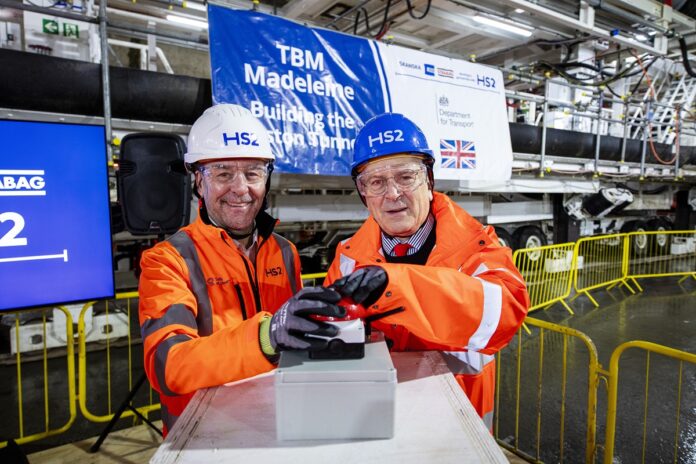
HS2 has reached a major milestone as construction of the Euston Tunnel officially began today, marking the high-speed railway’s advance into the heart of London.
At a launch event at Old Oak Common station, Rail Minister Lord Peter Hendy and Chief Secretary to the Prime Minister Darren Jones switched on the first of two tunnel boring machines (TBMs), starting a 4.5-mile journey beneath the capital to Euston. The 1,624-tonne machine will operate around the clock, excavating at an average rate of 16 metres per day.
The Euston Tunnel is a critical next phase of the HS2 programme. Once complete, it will enable high-speed services to run directly into a new central London terminus, unlocking the full capacity and economic benefits of the railway. The tunnel is also a cornerstone of the wider regeneration of the Euston area, supporting new homes, jobs and long-term investment.
Lord Hendy said the start of tunnelling was both a symbolic and practical step forward for the project, bringing HS2 closer to central London and reinforcing its role in driving growth and connectivity. Darren Jones added that the milestone built on a series of major infrastructure achievements delivered ahead of schedule last year, helping to strengthen links between Britain’s cities.
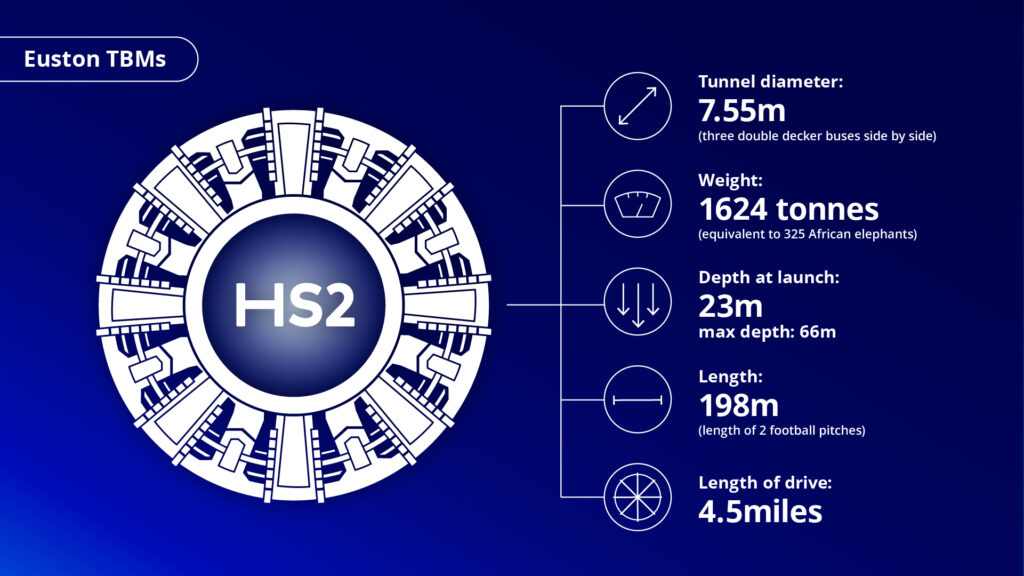
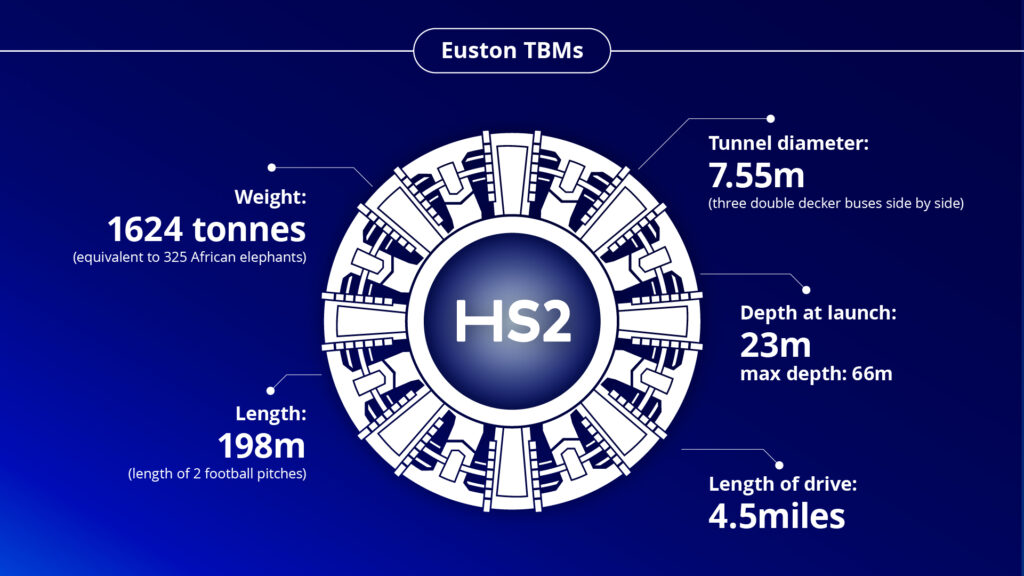
The launch comes as HS2 enters an advanced stage of a comprehensive programme reset, led by HS2 Ltd Chief Executive Mark Wild, aimed at sequencing construction more effectively and providing certainty on costs and delivery. HS2 will open in stages, with initial services running between Old Oak Common and Birmingham Curzon Street, before extending to Euston at a later date.
Mark Wild said the start of tunnelling demonstrated confidence in HS2 being delivered into central London and underlined progress made over the past year to stabilise and refocus the programme. He described the works as laying strong foundations for completing HS2 safely, efficiently and with lasting benefits for passengers and the economy.
Delivery of the new HS2 station at Euston will be overseen by a new Euston Delivery Company, which will be responsible for an integrated transport hub encompassing the HS2 station, the redevelopment of the existing mainline station, London Underground upgrades and significant commercial development across the wider Euston campus.
Independent research commissioned by Camden Council in 2024 estimated that a locally led regeneration of Euston could contribute £41 billion to the UK economy by 2053 and support around 34,000 jobs. Camden Council leader Cllr Richard Olszewski said the start of tunnelling added momentum and confidence to plans to transform Euston into a major driver of national and local growth.
The TBM, manufactured by Herrenknecht in Germany, has been assembled in the vast underground box at Old Oak Common by HS2’s London tunnels contractor, the Skanska Costain STRABAG joint venture (SCS JV). The machine functions as a moving underground factory, excavating, installing pre-cast concrete tunnel rings and grouting them into place as it progresses.
Construction logistics are supported by the Atlas Road Logistics Tunnel, completed in early 2024, which enables materials to be delivered and more than 1.5 million tonnes of excavated spoil to be removed efficiently. All spoil will be transported by rail from the Willesden logistics hub for reuse on projects elsewhere in the UK, eliminating more than 70,000 lorry movements from local roads.
Richard Adams, Managing Director of SCS JV, said the start of the final tunnel drives to Euston was a proud moment for the project, highlighting the use of rail-based logistics and continuous working to minimise disruption and deliver safely.
In keeping with tradition, the first TBM has been named Madeleine, after Madeleine Nobbs, former president of the Women’s Engineering Society and a pioneering building services engineer.
The Euston Tunnel will complete the full 27.5 miles of deep-bore tunnelling between London and Birmingham on HS2. With 23 miles already finished, today’s launch represents a decisive step towards completing the most complex underground section of Britain’s new high-speed railway.