


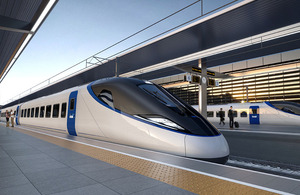
The government has tasked HS2 Ltd with exploring options to simplify the project’s design, including reducing top speeds, in a move aimed at cutting costs and accelerating delivery.
Announced on 23 March 2026, the decision forms part of a wider reset of the high-speed rail programme, with HS2 Chief Executive Mark Wild asked to report back to the Transport Secretary this summer with proposals.
At the centre of the review is whether the railway needs to operate at its originally planned 360km/h, or whether adopting a lower, more conventional high-speed standard could deliver similar benefits at significantly lower cost.
Transport Secretary Heidi Alexander said:
“This government is determined to deliver HS2 as effectively and efficiently as possible. In doing so, I will look at every opportunity to claw back construction time, save taxpayers money and ensure the project delivers for the country.
“I share the public’s anger about the waste and mess of the past which is why this government is pulling HS2 out of its sclerosis and setting it on a more sensible course. We’re getting a grip, controlling costs, and getting on with delivering the transport infrastructure this country needs.”
Rethinking speed to unlock efficiency
HS2 was originally designed to run at 360km/h, making it the fastest conventional railway in the world. However, no existing network globally operates at that speed, meaning bespoke infrastructure and testing requirements would be needed.
Under the revised approach, HS2 Ltd will assess the case for speeds closer to 300–320km/h, aligning with established high-speed systems such as HS1, France’s TGV and Japan’s Shinkansen.
Crucially, officials believe this change would have minimal impact on journey times, while offering the potential to:
- Reduce construction complexity
- Lower capital costs
- Enable earlier testing and commissioning
- Accelerate overall delivery timelines
Focus on delivery, not maximum speed
The shift reflects a broader repositioning of HS2 away from headline speed and towards capacity, reliability and economic impact.
Mark Wild, Chief Executive of HS2 Ltd, said:
“I made a commitment to the Transport Secretary that I would regain control of HS2 and bring an end to the project’s cost increases and delays.
“With performance moving in the right direction, driven by the hard work of 30,000 people on the ground, we are rightly exploring options to create further efficiencies.
“Speed has never been the primary objective. This railway will deliver better journeys, more capacity on the network, and economic growth – all of which are vital to the country’s future prosperity.”
Progress amid reset
The review comes as HS2 reports improved delivery performance under its reset programme. Over the past year, the project has achieved several major milestones ahead of schedule, including:
- Completion of excavation on the Bromford Tunnel, marking the end of deep tunnelling on the initial phase
- Installation of a 14,500-tonne box structure beneath the A46
- Progress on the Euston Tunnel, with both TBMs now in operation
- Completion of the Northolt Tunnel excavation, three months early
- Ongoing delivery of key structures including Greatworth Tunnel
Around 30,000 workers and thousands of UK businesses are currently involved in the project, which is expected to contribute £20 billion to the economy and unlock 63,000 new homes over the next decade.
Next steps
HS2 Ltd will now carry out detailed analysis of alternative delivery options, with findings due to be presented to government in the summer alongside updated cost and schedule estimates.
The outcome of this work will be critical in determining how the project moves forward, as the government seeks to balance ambition with deliverability and restore confidence in one of the UK’s largest infrastructure programmes.
Image credit: HS2


