


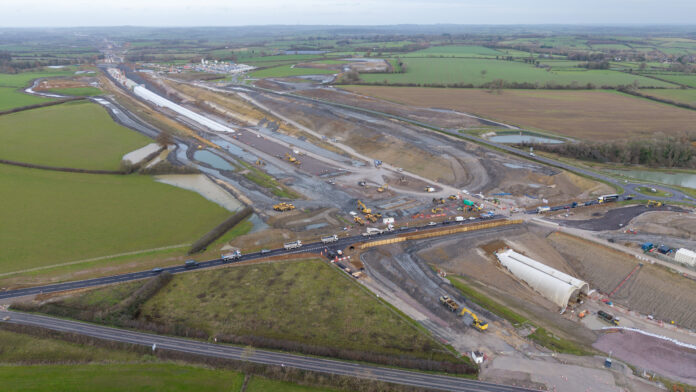
Work on HS2’s longest green tunnel has taken a major step forward with the temporary realignment of the B4525, creating the space needed for the next phase of excavation at Greatworth in West Northamptonshire.
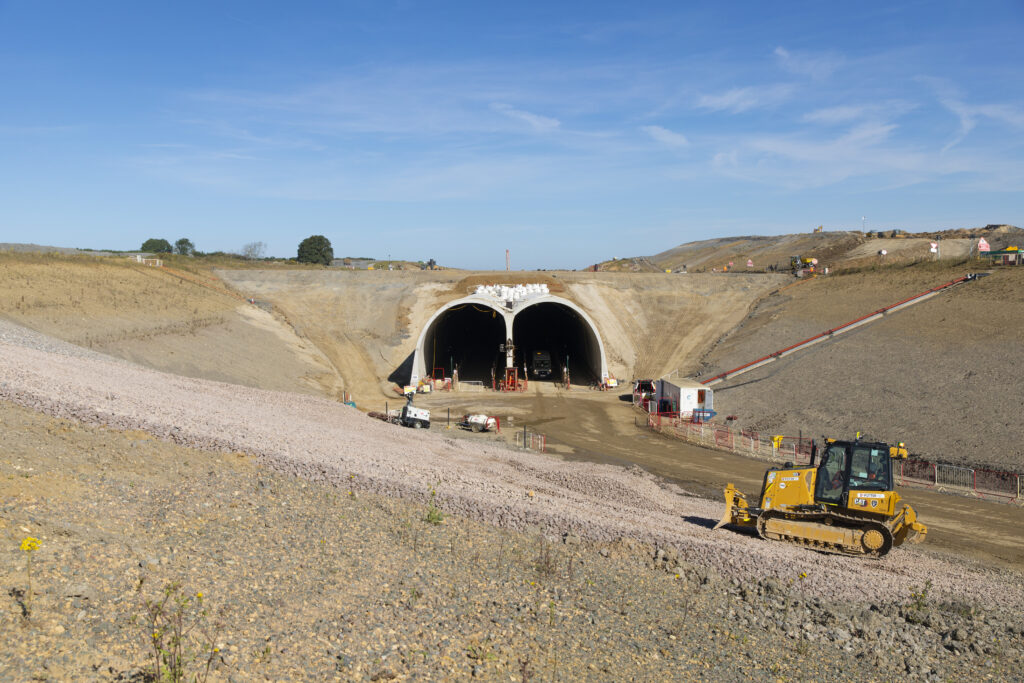
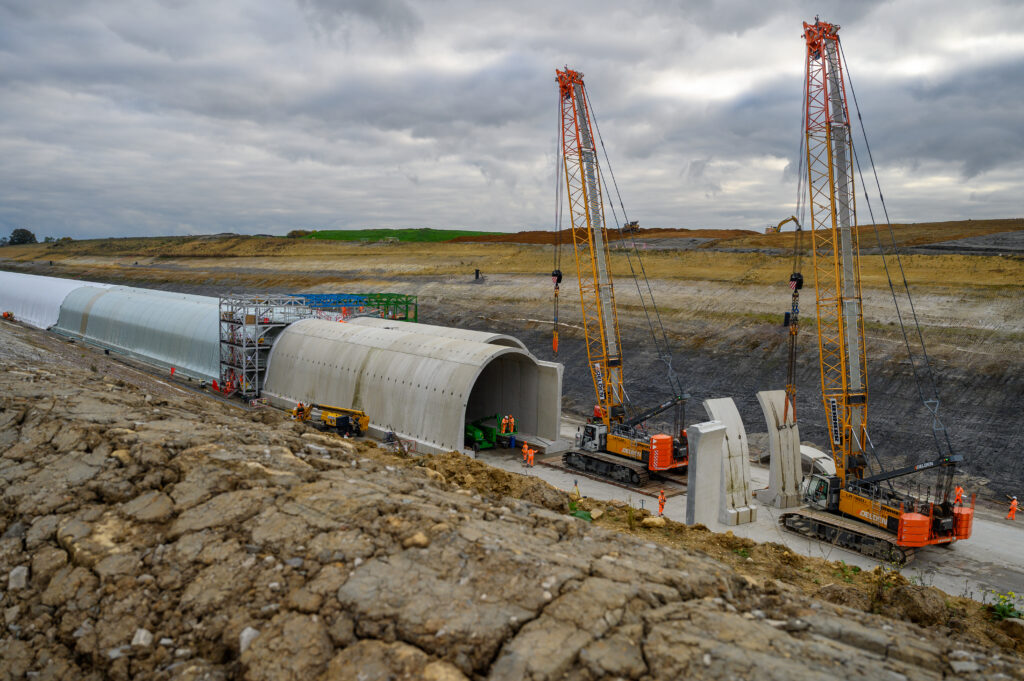
The 2.7-kilometre cut-and-cover tunnel is being built in a shallow cutting, with excavated earth placed back over the top so the finished structure blends naturally into the landscape. Engineers have already assembled the first kilometre of the precast concrete tunnel, designed in an ‘M’ shape to carry northbound and southbound tracks in separate halves.
The road realignment allows work to progress on the next stage of construction, supported by a series of process improvements developed after challenges at the nearby Chipping Warden green tunnel. Early productivity at Chipping Warden fell short of forecasts, prompting HS2 Ltd and main works contractor EKFB to overhaul the methodology. As a result, installation has more than doubled to around five or six segments per day.
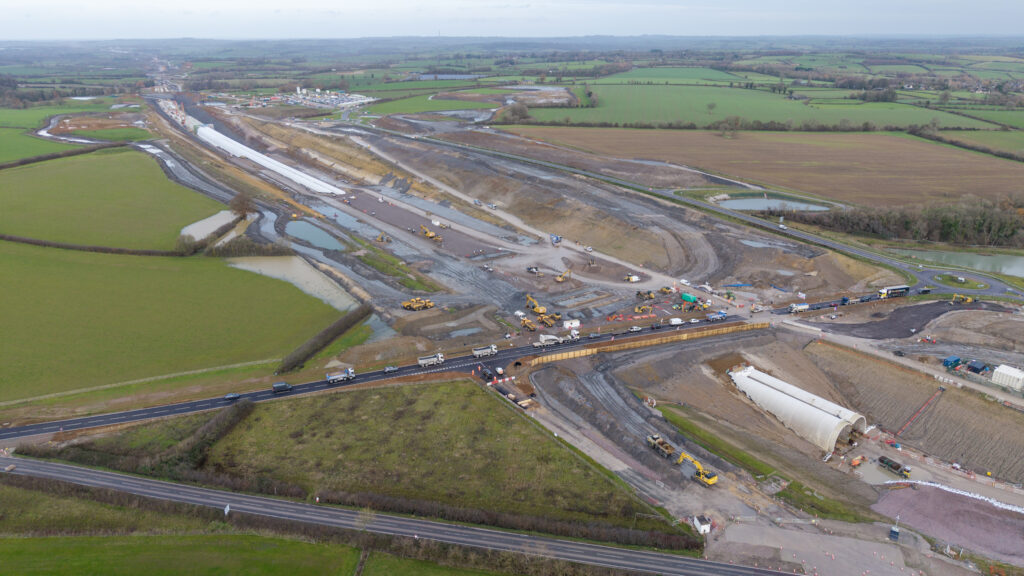
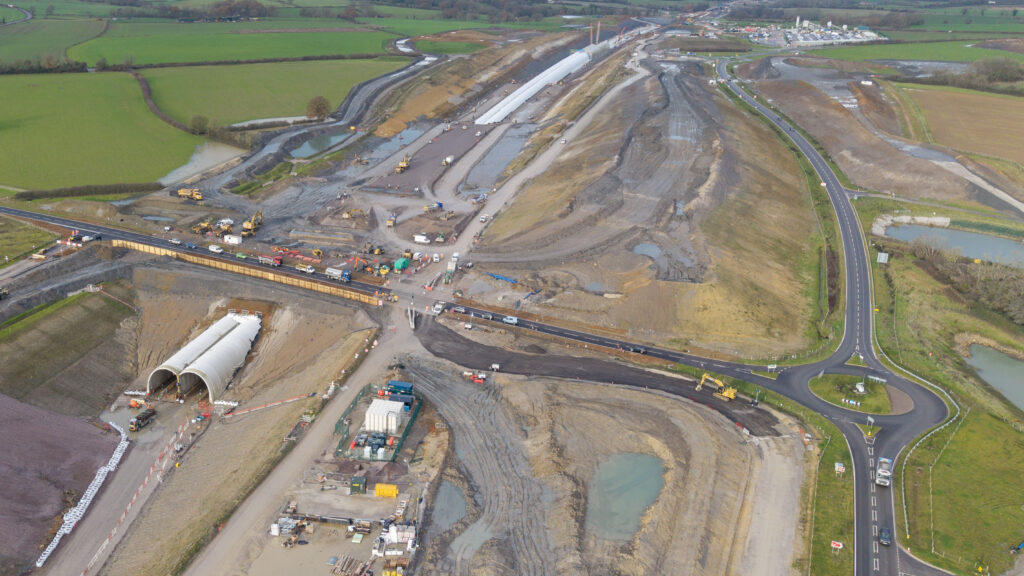
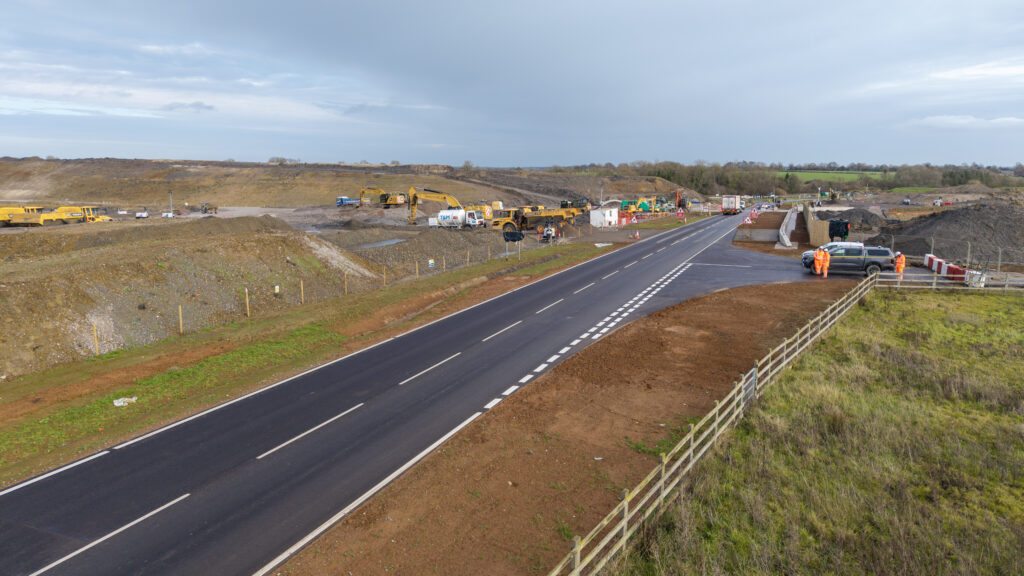
Sam Arrowsmith, HS2 Ltd’s project manager, said: “I’m really pleased to see the temporary realignment of the B4525 open to drivers. This major milestone means that we can keep local traffic moving while we deliver the next stage of the Greatworth green tunnel.
Once complete, the tunnel will help protect the rural landscape and reduce disruption for people living nearby. We’ve still got a long way to go, but the lessons from Chipping Warden have helped us significantly increased productivity and I’d like to thank everyone who’s worked so hard to get us to this point.”
The construction sequence continues to be refined. Excavation is followed by a concrete blinding layer, now reinforced with roll-out steel mats that speed up placement. Each ‘M’ shaped tunnel unit is formed from five precast segments, with logistics and installation procedures continuously improved to reduce downtime. Prefabricated reinforcement cages and revised concrete delivery routes have doubled the pace of the invert slab construction. The upper valley of each unit is filled with aerated concrete, offering a faster and more consistent solution than aggregate.
Many of these techniques were tested at Chipping Warden in an offline trial area before being applied on the live programme. The combined improvements have significantly reduced the complexity at the tunnel face and built resilience into the construction schedule.
EKFB senior engineer Chris Barrett said:
“Implementing the construction improvements and learnings from the Chipping Warden tunnel has allowed us to accelerate the unit installation of the Greatworth tunnel. This means that we can re-open roads and further connect our communities. Opening these roads unlocks the next phase of excavation work on the tunnel which will allow us to progress with construction through the winter months.”
HS2 trains will travel underground for 32 miles of the route, including major bored tunnels under the Chilterns and approaches to London and Birmingham, as well as five green tunnels like Greatworth. Lessons from the work at Chipping Warden and Greatworth are now being applied at Wendover. Two shorter green tunnels at Copthall and Burton Green use a different cast-in-situ method.
While the project continues to make visible progress across many sites, some civil engineering is behind schedule. HS2 Ltd chief executive Mark Wild is leading a reset of the programme to deliver the railway as efficiently and cost-effectively as possible.