


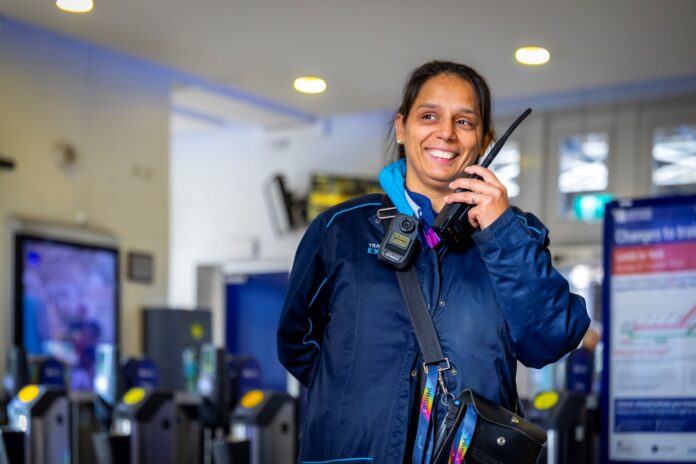
More than 4,700 body-worn camera (BWC) kits are now in use across publicly owned train operators, as the rail industry steps up efforts to improve safety, deter anti-social behaviour and support criminal investigations.
Operators including c2c, Greater Anglia, LNER, Northern, Southeastern, South Western Railway and TransPennine Express have deployed thousands of devices to frontline staff such as conductors, station teams, revenue protection officers and onboard hosts.
Northern has invested in more than 1,300 cameras, while TransPennine Express is expanding its deployment to 700 devices, including upgrades to newer models and wider use across catering teams. South Western Railway has rolled out 848 units, c2c has equipped staff with 370, and Southeastern has a further 1,522 kits in the pipeline. Once fully deployed, this will take the total across publicly owned operators to around 4,740.
The cameras are being used to reduce assaults and abuse against staff, de-escalate confrontational situations, capture clear audio-visual evidence to support British Transport Police (BTP) investigations, and reassure passengers. Operators also report benefits in tackling fare evasion and anti-social behaviour, particularly in known hotspots.
Phil Jones, Crime Reduction Manager at Northern, said body-worn cameras offer advantages that fixed CCTV cannot. He noted that their visible presence often deters offending, while recorded footage provides vital evidence and transparency when incidents do occur. Ultimately, he said, the technology is about protecting staff and improving passenger confidence.
British Transport Police has welcomed the expanded use of BWCs, describing them as an important part of a zero-tolerance approach to abuse and aggression towards rail staff. BTP says body-worn video often provides clearer context than static CCTV, helping accurately capture what happened and supporting successful prosecutions.
Train operators continue to work closely with BTP to share incident data, identify trends and target policing activity more effectively. Together, they see body-worn cameras as a practical, visible tool in making the railway a safer place for both staff and passengers.