

As the UK rail industry enters 2026, the narrative has shifted from transformation to disciplined execution. While the vision of a unified, modern network under Great British Railways (GBR) remains intact, the current reality is defined by financial restraint, targeted delivery, and the need for credible performance under constrained conditions.
In Rail Industry Connect’s White Paper – UK Rail Industry in Early 2026: From Ambition to Execution, we delve into industry insight and understand what different parts of the supply chain can take away from 2026.
Investment Discipline and Delivery Efficiency
The post-pandemic landscape has narrowed public funding flexibility. Rising construction costs and inflation mean that even steady investment levels buy less output than in previous years. The shift is stark: enhancement projects are proceeding more cautiously, prioritising renewals, safety, and value-led upgrades over expansion. With efficiency high on the agenda, Network Rail has launched a Management Efficiency Programme aimed at reducing internal cost pressures. This signals to suppliers that delivery certainty, affordability and tangible outcomes are the new currency for winning work.
Reform in Motion, but Gradual
The Railways Bill is advancing through Parliament, laying the legislative foundation for GBR to become the central guiding mind of UK rail. The GBR brand has already launched, and major operators are transitioning into public ownership. However, this is a transitional year – procurement models, project delivery structures, and governance responsibilities remain largely unchanged until at least 2027. For now, contractors should not expect an overhaul in how work is let but should keep a close watch on reform developments that may reshape collaboration and regional planning in the years ahead.
Changing Travel Demand, Smarter Capacity Planning
Rail usage is recovering but reshaping. Commuter peaks are subdued, while leisure and off-peak travel are growing. This shift demands a rethinking of capacity: rather than building for historic demand patterns, the focus is now on all-day reliability, strategic use of freed capacity, and flexible upgrades. Projects such as the Transpennine Route Upgrade and East West Rail continue steadily, while large-scale investments like HS2 and Northern Powerhouse Rail remain politically committed to but incrementally phased.
Pipeline Visibility vs. Market Confidence
Despite thousands of active contracts and a pipeline of over £40bn, suppliers report cautious optimism. Much of the funding is allocated to existing frameworks, with limited new tenders surfacing rapidly. Tier 1 contractors with work are likely to retain it, but those seeking new opportunities must focus on smaller enhancements or early engagement activities. SMEs face persistent access challenges, often relying on niche offerings or subcontracting. Procurement reforms under GBR could improve this landscape longer term, but immediate changes are limited.
What Businesses Should Do Now
- Tier 1s: Emphasise cost control, on-time delivery, and adaptability. Participate early in planning to shape value.
- SMEs: Align to niche efficiencies – digital tools, safety innovations, low-carbon options and partner up for visibility.
- Consultancies: Focus on advising clients through budget prioritisation, integrated planning, and aligning to GBR’s strategic goals.
- All stakeholders: Use 2026’s industry events, consultations, and forums to gather intelligence, influence direction, and forge partnerships.
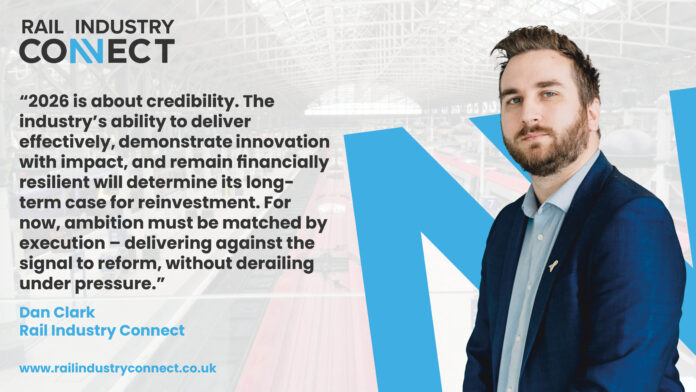
2026 is about credibility. The industry’s ability to deliver effectively, demonstrate innovation with impact, and remain financially resilient will determine its long-term case for reinvestment. For now, ambition must be matched by execution – delivering against the signal to reform, without derailing under pressure.