


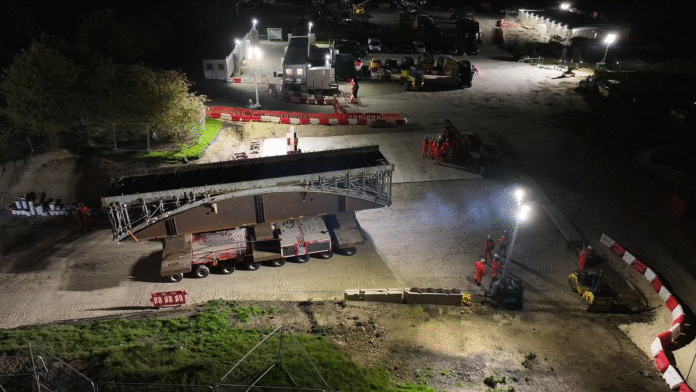
A historically significant engineering feat took place last weekend as Crawshaw Woods Bridge, the oldest in-situ cast-iron railway bridge in the world still in use over a live railway, was carefully moved as part of the multi-billion-pound Transpennine Route Upgrade (TRU).
The Grade II listed structure, opened in 1834, was temporarily shifted to allow for critical height increases needed to electrify the main line between York, Leeds, and Manchester.
Meticulous Manoeuvring for Preservation
Engineers undertook the complex operation over the weekend of October 11-12. A bespoke arched framework was constructed to support the 191-year-old bridge, before it was slowly manoeuvred in one piece using a specialist 128-wheel self-propelled modular vehicle.
Following the successful relocation, the railway line was swiftly restored and reopened to trains on schedule on the Monday morning.
The essential work involves adding additional layers of stone to the bridge’s abutments to raise its height by 1.5 metres. This increase will create the necessary clearance for the electrification of the Transpennine main line, enabling the future operation of faster, greener, and quieter electric trains.
The cast iron arched girders, bridge deck, parapets, and original iron railings will now be repaired and renovated off-site before the restored structure is carefully reinstated in Spring 2026.
Honouring Heritage for a Modern Railway
The bridge’s movement and renovation align with the national Railway200 celebrations, which mark two centuries of rail history. Crawshaw Woods Bridge is recognised by Historic England as one of the most significant structures on the Transpennine route, having spanned the reign of eight monarchs and served the region from the Industrial Revolution to two World Wars.
Lucy Grogan, sponsor for TRU, said: “Great care has gone into the upgrade of Crawshaw Woods Bridge. It’s Grade II listed status and title as the world’s oldest cast-iron bridge over a railway meant that, like other structures of historic importance across the route, extra factors are considered when carrying out vital upgrades. It is fitting that this work has started during Railway200, which is celebrating rail’s remarkable past, its role today, and its importance to a sustainable future. We are taking great care to preserve the bridge’s character while making space for a modern, electrified railway.”


