


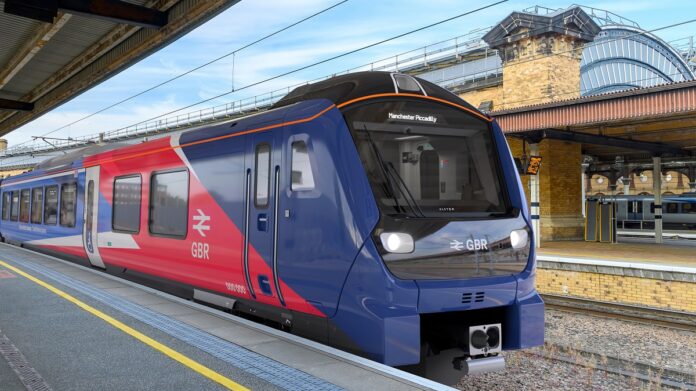
A £1bn fleet of 29 battery-electric trains has been ordered for TransPennine Express, combining new rolling stock with the infrastructure investment being delivered through the £11bn Transpennine Route Upgrade (TRU).
The new Alstom Adessia Stream trains will be built at Litchurch Lane in Derby and are scheduled to enter passenger service from winter 2034. They will be among the first battery-electric trains to operate on the UK main line and will ultimately form part of the fleet operated under Great British Railways.
The order is intended to provide additional capacity and improved accessibility while taking advantage of the electrification being delivered between Manchester and York.
It also provides a significant long-term workload for Britain’s largest train manufacturing facility, linking investment in northern rail services with domestic rolling stock production and the development of battery-electric technology.
Battery technology to complement TRU electrification
The choice of battery-electric trains is particularly significant given the infrastructure strategy behind TRU.
The programme is creating an electrified railway between York and Manchester, with around 25% of the 70-mile route already electrified.
Battery capability gives the new fleet the flexibility to operate beyond continuously electrified infrastructure while making use of overhead power where it is available.
The 29 trains will therefore form part of a wider railway system in which rolling stock, electrification, stations and operational changes are being developed together.
James Richardson, Managing Director at Transpennine Route Upgrade, said: “TRU is transforming train travel across the north, and today’s announcement is a major step for the programme as we work to deliver a railway that better connects our communities. The £1 billion investment reflects a genuine commitment to transforming rail travel across the region and beyond.
“A stronger North depends on better connections, and TRU is bringing the north together and unlocking opportunities.”
More seats alongside infrastructure improvements
The fleet order is intended to help translate the capacity created by TRU into additional passenger services and seats.
Once the infrastructure programme is complete, journey times are expected to reduce by up to 10 minutes between Manchester and Leeds and up to 14 minutes between Manchester and York.
Overall capacity is expected to increase by 30%.
For the industry, the combination of new infrastructure and rolling stock is important. Delivering additional network capability only produces its full passenger benefit if suitable trains are available to exploit that capacity, while new rolling stock similarly depends on infrastructure capable of supporting the planned timetable.
Chris Jackson, Managing Director at TransPennine Express, said: “This is a transformational £1 billion investment in the future of rail travel across the North, delivering new trains for our customers alongside new infrastructure, new jobs and long-term economic benefits. Our customers will benefit from more seats and better accessibility, including level boarding.
“Britain has a proud railway heritage, and this project puts the UK at the forefront of the next generation of cleaner rail technology.”
Level boarding central to new fleet
Accessibility is a major element of the specification.
The Adessia Stream fleet has been designed to provide level boarding at every doorway at the vast majority of stations it will serve, allowing more passengers to board and leave trains independently.
Each train will also incorporate three dedicated wheelchair spaces, two accessible toilets, family areas and spaces for buggies.
The approach means accessibility improvements being delivered through TRU’s station programme can be considered alongside the characteristics of the trains themselves.
For passengers with reduced mobility, the interaction between platform and train is one of the most important parts of an accessible journey. Designing infrastructure and rolling stock together offers an opportunity to address that interface rather than relying solely on assistance or retrofitted solutions.
Major order for Derby manufacturing
The decision to build all 29 trains at Alstom’s Litchurch Lane Works also gives the investment a significant UK manufacturing dimension.
The Derby facility has a long history of train production, and a £1bn order scheduled around a fleet entering service in 2034 represents a substantial future programme for the plant and its associated supply chain.
The order comes alongside the wider employment impact of TRU itself. Around 5,000 people are currently working on the programme, with the workforce expected to reach 8,000 over its lifetime.
TRU also says more than £1bn has already been invested in supporting local businesses.
The combination means the programme’s economic impact extends from civil engineering, electrification and station construction across the North to rolling stock manufacturing and its supporting supply chain.
Fleet will ultimately operate under GBR
The new trains are expected to enter service after the planned establishment of Great British Railways and will ultimately operate within the new organisation.
The fleet procurement is being presented as reflecting the integrated approach already being adopted by TRU, where Network Rail, TransPennine Express, Northern, the Department for Transport and DfT Operator are working together across infrastructure and train operations.
By the time the Adessia Stream fleet begins carrying passengers in winter 2034, the railway it operates on should therefore look substantially different from today’s TransPennine network.
For the rail supply chain, the significance of the £1bn order extends beyond the 29 trains themselves. It brings together long-term UK manufacturing, battery traction, electrification, accessibility and infrastructure investment within one programme.
The challenge over the coming years will be ensuring those different elements remain aligned so that, when the new fleet arrives, the upgraded TransPennine railway is ready to make full use of the additional capacity and capability it provides.


