


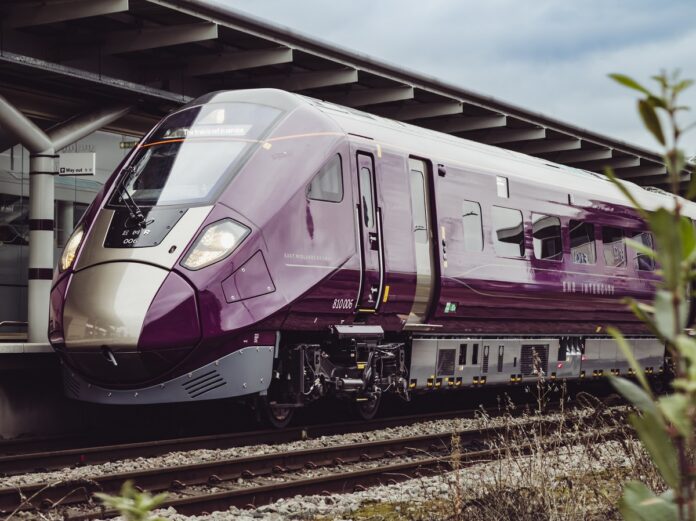
East Midlands Railway has restored five weekday Sheffield services as part of its recovery from recent disruption, but northern leaders are pressing the operator for greater clarity on when its full intercity timetable will return.
Transport for the North’s Rail North Committee heard that timetable changes introduced from 1 September have returned EMR services to around 92% of previous levels, adding 45 trains back into the timetable each week.
The improvement follows a period of reduced intercity services which has affected journeys to and from South Yorkshire and prompted concerns over overcrowding, capacity and passenger information.
EMR Managing Director Neil Grabham acknowledged that recent performance had fallen below the standards expected by both the operator and its passengers and apologised for the disruption.
The operator is now focusing on improving fleet reliability, exploring opportunities to provide additional rolling stock and managing the introduction of its new train fleet.
Pressure for timetable recovery plan
While Rail North Committee members welcomed the restoration of services, they pressed EMR to provide a clearer timetable for returning to the full intercity service.
The committee also stressed that passenger communication and visible support at stations will remain important while the timetable is being rebuilt.
EMR has introduced additional staffed information kiosks at key stations, provided extra travel information and expanded ticket acceptance arrangements with other operators.
Discussions are also continuing between EMR, trade unions and industry partners as the operator works towards restoring the remaining services.
The recovery is particularly important for Sheffield and South Yorkshire, where EMR’s intercity network provides important north-south connectivity towards the East Midlands and London.
Returning services is therefore about more than restoring individual trains. Prolonged reductions in frequency can affect capacity, journey choice and confidence in rail for passengers making longer-distance business and leisure journeys.
Capacity remains a concern
The committee’s scrutiny follows discussions between South Yorkshire Mayor Oliver Coppard, the South Yorkshire Mayoral Combined Authority and EMR over how passenger conditions can be improved during the disruption.
One proposal has been to declassify unused First Class accommodation when services are overcrowded, allowing passengers to make greater use of available capacity while the reduced timetable remains in place.
EMR is also considering other options for increasing capacity as its new trains progressively enter passenger service.
The situation illustrates the operational challenge operators can face when fleet transition programmes coincide with reliability problems. Introducing a new fleet requires training, testing, maintenance preparation and operational assurance to come together while sufficient existing rolling stock remains available to operate the timetable.
Any weakness in that transition can quickly become visible to passengers through cancellations, shorter trains or reduced frequencies.
Wider lessons for new train introductions
Rail North Committee members said the experience also raises wider questions about how new rolling stock is introduced onto the railway.
They agreed to raise the issue directly with government and industry partners to understand whether lessons from EMR’s experience could support future fleet introductions across the North.
That could have wider relevance as operators prepare for significant rolling stock changes over the coming years, including programmes intended to replace ageing diesel trains and support further electrification and decarbonisation.
For EMR, however, the immediate challenge remains restoring passenger confidence and getting the remaining intercity services back into the timetable.
Reaching 92% represents progress, but for passengers affected by weeks of disruption, attention will now be firmly on how quickly EMR can close the remaining gap and return its Sheffield intercity operation to a full and reliable service.
Credit: East Midlands Railway


