


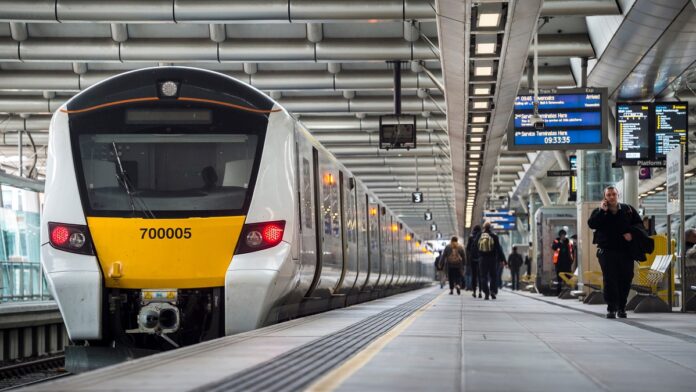
A major programme of upgrades aimed at improving reliability on one of the UK’s busiest stretches of railway is now under way, as Network Rail invests in new technology and infrastructure across the Thameslink core through central London.
The work focuses on the critical section between London Blackfriars and Farringdon, where up to 44 trains per hour operate through a two-track railway connecting destinations across the South East, East Midlands and London.
The investment comes as Thameslink enters a new chapter under public ownership and is designed to strengthen resilience on a route where even minor infrastructure faults can quickly lead to widespread delays affecting passengers travelling as far as Brighton, Cambridge, Horsham and Peterborough.
At the heart of the programme is the installation of a new dual train detection system. Engineers are adding axle counters alongside the existing track circuit technology, creating a back-up system that will allow trains to continue operating if one detection method fails.
Train detection systems are essential for railway signalling, informing the network when sections of track are clear and safe for trains to proceed. While the existing system has operated successfully for many years, occasional failures have caused significant disruption due to the intensity of traffic through the Thameslink core.
The dual detection approach has already delivered positive results north of Farringdon, where it was introduced in 2020 and contributed to a reduction in delays associated with signalling failures.
Alongside the signalling improvements, Network Rail is replacing the 20MW electrical substation located between City Thameslink and Blackfriars. The facility is the largest on Britain’s 750V third-rail network and supports one of the most heavily used sections of railway in the country.
The upgrade is expected to strengthen power supply resilience and reduce the risk of infrastructure-related disruptions.
Network Rail and Thameslink are also exploring the permanent installation of thermal imaging cameras on the front of Thameslink trains following a successful trial. The technology can identify abnormal heat patterns in infrastructure and equipment, allowing faults to be detected and addressed before they develop into service-affecting incidents.
Louise Greaves, Infrastructure Director at Network Rail, said the improvements are focused on reducing disruption and strengthening operational resilience.
“The heart of Thameslink, in central London, is one of the most critical sections of railway in the country, where even small issues can quickly have a big impact on thousands of passengers,” she said.
“By installing a dual detection system, upgrading the power supply and looking at the fitment of train cameras, we’re making a targeted investment in reliability and resilience.”
Jenny Saunders, Customer Service Director at Thameslink, said the programme would help deliver more dependable journeys in the future.
“These upgrades are a really important step towards reducing delays and giving customers a more consistent, dependable service in the future,” she said.
The work forms part of Network Rail’s wider strategy to improve reliability across the network through targeted investment in ageing assets, digital technologies and predictive maintenance.
For rail professionals, the project highlights the growing role of redundancy, condition monitoring and proactive fault detection in managing high-capacity railway operations. As passenger demand continues to recover and networks become increasingly complex, infrastructure resilience is becoming a key focus for operators and infrastructure managers alike.
Installation work will continue throughout the year, with testing planned for autumn 2026 and final commissioning expected before the end of the year.
While passengers will experience some short-term disruption during planned engineering possessions, the long-term objective is a more reliable and resilient railway through one of Britain’s most operationally demanding corridors.


