


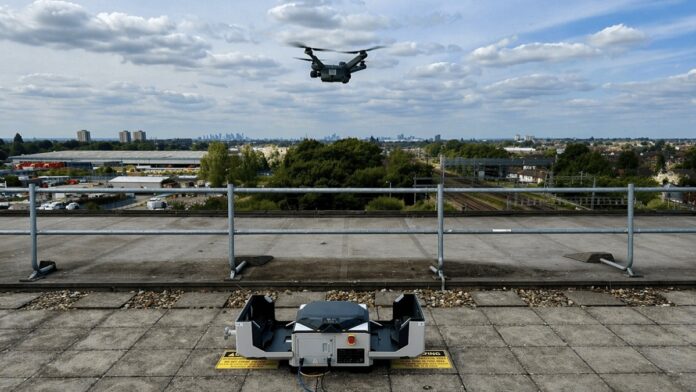
New drone technology capable of operating beyond the pilot’s line of sight is set to be trialled in Romford as part of efforts to reduce disruption caused by trespass, vandalism and cable theft across the Anglia rail network.
The initiative, approved by the UK Civil Aviation Authority (CAA), will see GBR Anglia begin testing beyond visual line of sight (BVLOS) drone operations from late summer 2026, providing railway teams with faster access to live information during incidents and infrastructure inspections.
The move comes as the rail industry marks Rail Safety Week and follows a year in which trespass, vandalism and cable theft generated more than 143,000 delay minutes across the Anglia route, making them among the most significant causes of disruption for passengers and freight operators.
The Romford trial forms part of the growing integration between Network Rail, Greater Anglia and c2c as the region moves towards a more unified railway structure under Great British Railways.
Following 16 months of development work, the drones will be operated by specialist provider heliguy™ on behalf of Network Rail. Unlike conventional drone operations that require pilots to remain within visual range, the new system allows aircraft to operate up to 400 metres from the Romford Rail Operating Centre during the initial trial phase, with ambitions to expand coverage to distances of up to four kilometres.
The technology is expected to improve the speed and effectiveness of incident response by providing real-time aerial imagery directly to operational teams, reducing the need for personnel to enter potentially hazardous locations while improving situational awareness.
Alongside security applications, the drones are equipped with high-resolution thermal imaging cameras capable of identifying emerging defects across railway infrastructure. This includes monitoring track condition, drainage systems, structures and lineside assets to detect abnormalities before they develop into operational failures.
The use of thermal imaging reflects a wider shift within the rail industry towards predictive maintenance, where technology is increasingly being used to identify and address faults before they affect performance.
The Anglia trial will run alongside a similar programme on Network Rail’s Western route in Gloucester, allowing the organisation to evaluate how BVLOS operations can support both security and infrastructure management across different operating environments.
Richard Barke, Route Crime and Security Manager for Network Rail’s Anglia route, said the technology could play an important role in tackling some of the region’s most persistent causes of disruption.
“Trespass, vandalism and cable theft are some of the biggest causes of delay for passengers across the East of England,” he said.
“The learning from Romford will help us understand how this technology could support faster and more effective incident response across the Anglia route in the future.”
The trial also highlights the increasing role of advanced technology in railway operations. As networks seek to improve reliability while reducing costs and safety risks, remotely operated aerial systems are becoming an increasingly attractive tool for both infrastructure monitoring and operational response.
For the wider industry, the Romford trial represents another step towards integrating digital technologies into day-to-day railway management, combining operational efficiency, asset monitoring and security response within a single platform.
If successful, the technology could provide a blueprint for wider deployment across the national rail network, helping infrastructure managers respond more quickly to incidents while improving reliability for both passenger and freight services.


