


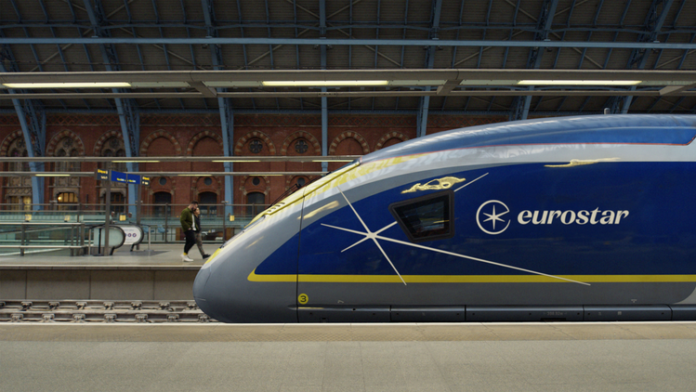
International high-speed rail is generating billions of pounds for the UK economy and supporting tens of thousands of jobs, according to new independent research which argues the sector should be viewed as a strategic national asset rather than simply a transport service.
The report, Fast Track to Growth, produced by consultancy Public First using Eurostar as a case study, estimates the international rail operator currently contributes around £2 billion annually to the UK economy while supporting approximately 23,000 jobs across the country.
The findings come as Eurostar prepares to invest £1.7 billion in a new fleet of double-decker high-speed trains, with the first expected to enter service in 2031 and enable new direct routes from London to Frankfurt and Geneva.
High-speed rail driving productivity
The report describes international rail as a significant driver of productivity, connectivity and inward investment, highlighting its role in supporting Britain’s economic competitiveness.
Researchers found that every direct Eurostar job supports a further 16 jobs across the wider economy, spanning engineering, manufacturing, hospitality, tourism and supply chains.
Those jobs generate an estimated £87,500 in gross value added (GVA) each, around 9% higher than the UK average, underlining the sector’s contribution to high-productivity growth.
Looking ahead, the report forecasts Eurostar’s annual economic contribution will increase to £2.8 billion by 2035, while employment supported by the business is expected to rise to around 40,000 jobs.
Tourism and business connectivity
The research also highlights the wider economic benefits created by international rail connectivity.
According to Public First, Eurostar generates an estimated 500,000 additional tourist visits to the UK each year that would not otherwise occur, contributing around £370 million in additional visitor spending across hotels, restaurants, attractions and the wider hospitality sector.
Business travel also continues to play an important role, with approximately 150,000 additional business travellers arriving annually by rail, contributing a further £115 million to the economy as hybrid working and blended business-leisure travel become more common.
The report also identifies continued modal shift from aviation to rail on routes linking London with Paris, Brussels, Amsterdam and other European destinations.
Expansion plans
Central to Eurostar’s future growth plans is its £1.7 billion investment in a new fleet of Celestia trains.
The higher-capacity double-decker fleet will increase passenger capacity while supporting the launch of new direct international services from London to Frankfurt and Geneva, strengthening rail links with two of Europe’s major financial and business centres.
Eurostar believes further growth will depend not only on private investment but also on expanding supporting infrastructure.
Gwendoline Cazenave, Chief Executive of Eurostar, said: “For Eurostar, travel is about much more than transport. Throughout history, better connections have created stronger economies, greater innovation and deeper understanding between people. Rail has a unique ability to bring cities closer together while offering a journey that is productive, comfortable and sustainable from city centre to city centre. Connection creates opportunity and growth.
“This research shows what Eurostar already delivers – and why international rail is worth investing in for the future. The UK now needs a bold vision to match the private investment on the table – more depot capacity, a bold expansion of St Pancras and a seamless border. Now is the time to act to ensure Britain plays a leading role in Europe’s high-speed rail future.”
Strategic infrastructure
The report argues that international rail should increasingly be recognised as a piece of strategic economic infrastructure rather than solely a passenger transport operation.
Tim Leunig, Director at Public First, said: “We expected to find that Eurostar was good for the UK economy. What surprised us was how much of that value comes through competitiveness – more productive businesses, higher-quality jobs and connectivity that has made King’s Cross one of Europe’s leading investment destinations. The role of international rail in growing the UK economy is clear.”
The findings are likely to add weight to ongoing discussions around expanding international rail capacity from London, particularly as new operators seek access to the Channel Tunnel and St Pancras International. With private investment already committed to new rolling stock and further competition emerging in the market, the report suggests that increasing terminal capacity, enhancing border processes and supporting international rail growth could unlock wider economic benefits well beyond the transport sector.


