


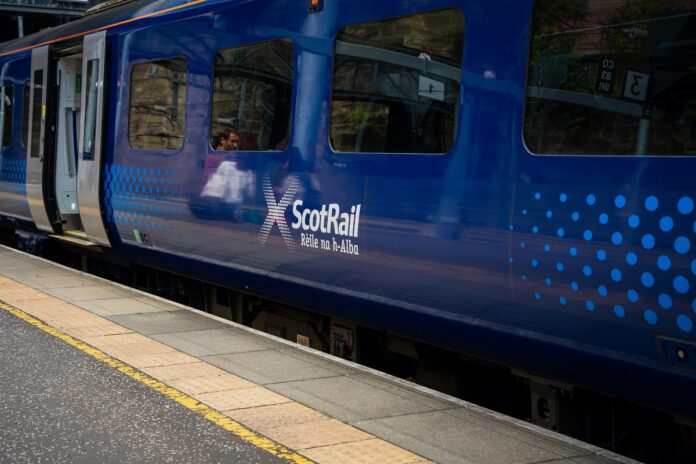
ScotRail has moved procurement of its next-generation suburban fleet into the Invitation to Negotiate stage, with five major train manufacturers competing for a contract covering at least 69 new electric and battery-electric trains.
Alstom, CAF, Hitachi Rail, Siemens Mobility and Stadler have been shortlisted following the pre-qualification stage, taking one of Scotland’s most significant upcoming rolling stock procurements another step towards contract award.
The programme includes an initial fleet of at least 69 trains, with options for up to 37 additional units, potentially taking the order to 106.
The trains are expected to begin entering service in the early 2030s and will replace existing diesel rolling stock across routes including East Kilbride, Fife and the Borders, alongside Glasgow’s inner suburban network.
Five manufacturers progress to next stage
The shortlisted bidders are Alstom Engineering and Services Limited, Construcciones y Auxiliar de Ferrocarriles (CAF), Hitachi Rail Limited, Siemens Mobility Limited and Stadler Rail Schweiz AG.
Moving to Invitation to Negotiate allows ScotRail to develop the technical and commercial propositions with the shortlisted manufacturers as the procurement progresses.
The eventual contract will go substantially beyond the manufacture of trains. It will include design, testing, certification, commissioning and delivery, together with long-term technical support and spare parts arrangements.
For the supply chain, the scale and duration of the programme makes it an important upcoming opportunity, particularly as operators across Britain begin confronting the replacement of ageing diesel fleets.
Battery trains form part of wider electrification strategy
The combination of conventional electric and battery-electric trains is significant because the fleet procurement is being coordinated with Network Rail’s programme to electrify additional parts of Scotland’s railway.
Rather than requiring continuous overhead electrification across every route before diesel trains can be removed, battery capability potentially allows new trains to operate beyond electrified sections using energy stored onboard.
That approach is particularly relevant to routes such as Fife and the Borders, where electrification programmes are already progressing.
The Borders Railway project, for example, will electrify 13km of the route between Edinburgh and Tweedbank specifically to support the introduction of battery-electric rolling stock in the early 2030s.
The alignment between infrastructure and rolling stock investment will therefore be critical. Charging arrangements, timetable requirements, battery range and infrastructure availability will all need to work together if diesel operation is to be successfully removed.
Stephen Flynn MSP, Cabinet Secretary for Economy, Tourism and Transport, said: “The next stage of the procurement process marks a significant milestone as we work towards a new suburban fleet, demonstrating our commitment to economic growth and improved connectivity.
“This will deliver 69 new suburban trains, and alongside the electrification of the Fife and Borders routes, will mean a more reliable, accessible and sustainable railway for communities across Scotland.”
Accessibility and passenger experience central to specification
ScotRail is also targeting improvements beyond traction technology.
The specification includes modern air-conditioning, more reliable passenger connectivity and real-time information systems and improved provision for bicycles and wheelchairs.
Family-friendly areas are also planned, while the trains are intended to reduce the horizontal and vertical distance between platforms and train entrances to improve accessibility.
For passengers, those features could prove just as significant as the transition away from diesel, particularly given the length of time the new fleet will potentially remain in operation.
Joanne Maguire, ScotRail Managing Director, said: “These new modern electric and battery-electric trains will make journeys more comfortable for customers, improve accessibility and reliability, and contribute to a cleaner, more sustainable railway.
“Investment in modern trains is vital to providing a better journey experience and is central to encouraging more people to leave the car at home and travel by rail.”
Major fleet decision for Scotland’s railway
The procurement comes as Scotland attempts to coordinate fleet renewal and infrastructure decarbonisation rather than treating the two as separate programmes.
That makes the eventual selection about more than replacing individual diesel trains. The new fleet will need to accommodate different levels of electrification across a diverse suburban network while providing sufficient flexibility as infrastructure continues to change.
With five of Europe’s largest rolling stock manufacturers now progressing to the negotiation stage and scope for more than 100 trains to ultimately be ordered, the programme will also be closely watched by the UK rolling stock manufacturing and supply chain sectors.
The eventual contract will help determine not only what a significant part of ScotRail’s suburban fleet looks like in the 2030s, but how Scotland makes the transition from diesel operation on routes where full conventional electrification may not be the immediate solution.


