


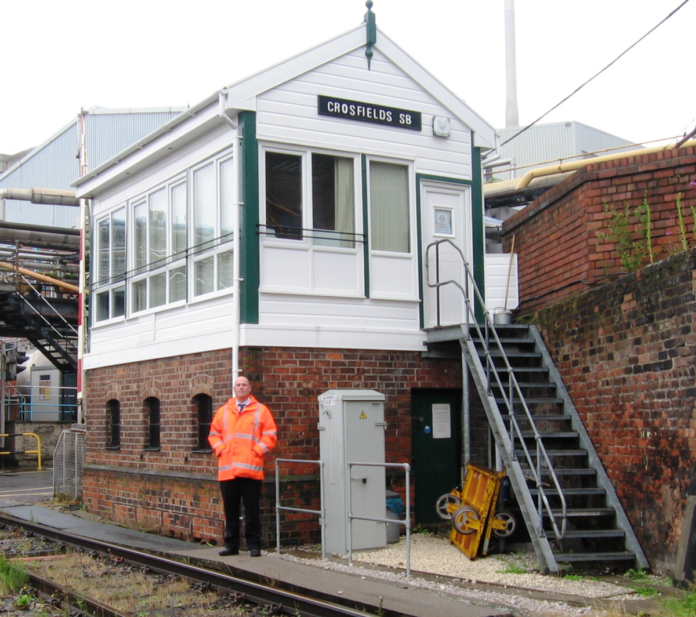
Former Network Rail North West Route Director Phil James has joined railway consultancy AARC Professional Services as Principal Consultant, bringing almost four decades of operational, infrastructure and leadership experience to the business.
James retired from Network Rail earlier this year after a 39-year railway career which began on British Rail’s Youth Training Scheme in 1987 and ultimately saw him take responsibility for 3,600 employees and a £3.4bn Control Period 7 programme across the North West.
A Fellow of both the Chartered Institute of Rail Operators and the Railway Engineering Institution, formerly the Permanent Way Institution, James will now use that experience to support AARC’s clients at a time when the industry is preparing for the transition to Great British Railways (GBR).
His appointment also reflects a wider challenge facing the sector: retaining the operational knowledge of experienced railway professionals as a generation that began its career under British Rail reaches retirement.
From signalling to route leadership
James began his railway career in North Wales, initially learning operational disciplines including shunting and train dispatch before becoming a train recorder at Llandudno Junction.
After signalling school, he worked at locations including Llanrwst, Mostyn and Machynlleth before moving into engineering operations and management.
His subsequent career took him through a series of operational leadership positions spanning signalling, possessions, incident response, maintenance and asset management.
During that period he was involved in projects including the Winsford resignalling scheme, introduction of the Train Protection Warning System at Crewe, development of the national signaller competency programme and elements of the West Coast Route Modernisation.
James also worked on the electrification of the Crewe to Kidsgrove line and signalling schemes including Manchester South, Crewe to Weaver and Norton Bridge to Basford Hall.
By 2010, he was Operations Manager at London Euston, working on one of Britain’s most intensively used sections of railway and leading the operational elements of resignalling schemes at Northampton, Watford and Bletchley.
Moving beyond operations
A significant change came in 2012 when James became Infrastructure Maintenance Delivery Manager at Euston Delivery Unit.
The position broadened his responsibilities from railway operations into maintenance and asset management, including leadership of engineers, frontline managers and maintenance teams.
Among his first major responsibilities was leading the Euston railway delivery plan for the London 2012 Olympics.
He returned to the North West three years later as Current Operations Manager for Network Rail’s LNW North operation, leading around 1,000 people.
James was involved in the strategic recovery from the severe storms of 2015 and the development of Customer Service Level 2 Black following a major overhead line dewirement in Manchester. He also led Network Rail’s national work on managing heavy lever pulls in mechanical signal boxes.
He subsequently became Head of Operations Delivery for the whole London North Western route, with responsibility for delivering performance for passenger and freight operators across what represented around a quarter of the national network.
Leading Network Rail’s North West route
James was appointed Route Director for the North West in 2019, his final position with Network Rail.
The role gave him responsibility for 3,600 employees across Merseyside, Lancashire, Cumbria, Manchester, Cheshire and parts of Yorkshire.
His tenure quickly included one of the industry’s most challenging periods as he led Network Rail’s North West response to the Covid pandemic, maintaining railway operations for key workers while managing the safety of passengers and employees.
He later led development and delivery of the North West’s £3.4bn CP7 plan covering operational and capital expenditure.
James was also asked to lead Network Rail’s national 21st Century Operations programme, covering future and digital operations alongside railway competence.
His regional responsibilities increasingly involved the relationship between the railway and devolved authorities.
In Liverpool, this included working with the Combined Authority around the introduction of a new train fleet and associated platform, power supply and signalling works. In Greater Manchester, his work included supporting the development of the Bee Network and its ambitions for greater integration between rail, tram and bus services.
The position also involved engagement with the two Metro Mayors and 75 MPs covering the North West, alongside relationships with the RMT, TSSA and Unite trade unions.
Retaining railway knowledge through industry reform
Having taken early retirement in 2026, James said he wanted to remain involved with the industry rather than leave the railway completely.
“AARC Professional Services ticks all of those boxes. A collective of rail professionals with a shared desire to give something back, I’m delighted to now be a part of that, particularly when the industry risks losing hard earned knowledge as experienced people step away,” he said.
“I still feel I have something to offer – skills and experience that can benefit others and, most importantly, those that we actually run the railway for – passengers and freight users.”
That transfer of experience could become increasingly important as railway reform gathers pace.
The transition to GBR is taking place alongside significant changes in technology, operating structures, workforce requirements and relationships with devolved authorities. At the same time, the industry faces the retirement of professionals whose careers have spanned British Rail, Railtrack and Network Rail and who carry experience of several generations of operational and organisational change.
James said his focus at AARC will include passing on the whole-system understanding developed during almost four decades on the railway.
“We are ultimately there to make sure people can get from A to B safely and on time and having been doing that since the late eighties, I want to pass that whole system understanding of the railway onto others and their respective projects/organisations to help them succeed.”
For AARC, the appointment adds senior operational and route-level expertise spanning signalling, infrastructure maintenance, performance, incident management, major projects and stakeholder engagement.
For the wider sector, it also illustrates an increasingly important skills challenge: finding ways to retain and transfer decades of operational knowledge as experienced railway leaders leave full-time industry roles during one of the biggest periods of structural change in a generation.


