


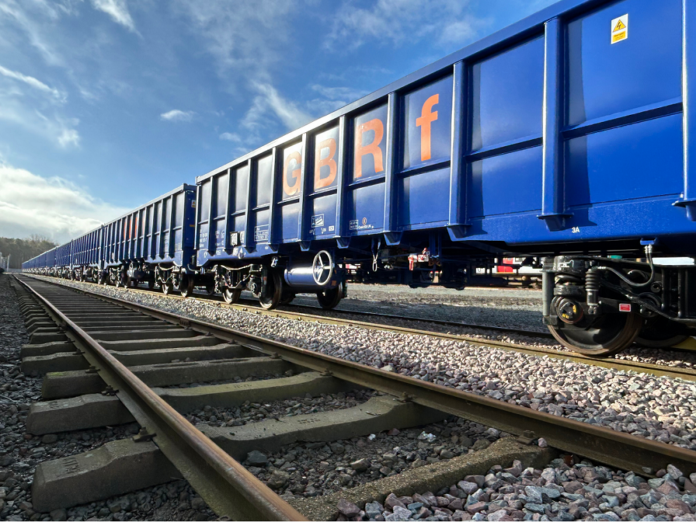
GB Railfreight (GBRf) is set to introduce 56 new British-built freight wagons under an agreement with rolling stock financier Porterbrook, strengthening rail transport capacity for recycled steel materials and supporting domestic manufacturing.
The new high-volume MWA box wagons will be manufactured by WH Davis in Nottinghamshire, with the first unit scheduled for completion in September 2027.
Once operational, the fleet will transport recycled material to 7Steel’s Cardiff facility, where it will be used to produce steel for the UK market.
The agreement brings together rail freight operations, rolling stock investment, manufacturing and steel production in a coordinated supply chain project.
New wagons to increase rail freight capacity
The 56 wagons will feature the latest version of WH Davis’s MWA box wagon design, developed for transporting scrap steel and other recycled materials.
Each wagon will have a capacity of 75 cubic metres, approximately 25% greater than a standard box wagon, according to the companies.
The increased volume is intended to improve freight capacity and operational efficiency when transporting materials to steel production facilities.
The wagons will also be fitted with bogies designed to be compatible with TF25 technology, helping reduce wheel wear and potentially lower maintenance requirements over their operational lives.
Porterbrook will finance the new rolling stock, while GBRf will operate the fleet once the wagons enter service.
Max Ordish, Head of Freight & Commercial Projects at Porterbrook, said the investment would support both domestic rail freight and steel manufacturing.
“By working in partnership with GB Railfreight and WH Davis, we’re helping to ensure the sector can continue to meet the changing needs of customers and the industry,” he said.
Nottinghamshire manufacturing supports domestic supply chain
WH Davis, part of Buckland Rail, will manufacture the wagons at its Nottinghamshire facilities.
The project will support British rolling stock manufacturing and associated engineering skills while providing new equipment for the domestic rail freight sector.
Andy Houghton, Managing Director of WH Davis, said the wagon design had been developed to meet the operational requirements of scrap steel transportation.
“The latest evolution of our MWA box wagon design demonstrates the strength of British engineering and manufacturing, delivering a purpose-built solution for the demanding scrap steel market,” he said.
The manufacturing programme will involve coordination between Porterbrook as financier, WH Davis as manufacturer and GBRf as the eventual fleet operator.
The first wagon is expected to be completed in September 2027, although the companies have not disclosed a timetable for delivery of the remaining units or the fleet’s full entry into service.
The financial value of the agreement has also not been announced.
Rail investment to support Cardiff steel production
The new fleet will support the movement of recycled materials to 7Steel’s Cardiff facility.
The materials will be used in domestic steel production, connecting UK recycling operations with manufacturing supply chains serving infrastructure and construction projects.
Vorn O’Hennessy, Head of Supply Chain at 7Steel, said the partnership would strengthen domestic material flows.
“This partnership showcases UK industry working together to strengthen domestic supply chains, transforming UK scrap into UK melted and poured steel for infrastructure and construction projects,” he said.
The investment is intended to provide additional rail capacity for these movements, supporting the efficient transportation of bulk recycled materials.
Liam Day, Interim Managing Director at GB Railfreight, said the agreement demonstrated the role of rail freight in supporting British industry.
“These wagons will be built in Nottinghamshire, operated by GBRf and used to move recycled material into Cardiff to support steel production,” he said.
Project delivery and whole-life asset performance
The agreement represents a rolling stock manufacturing and deployment project involving several organisations across the rail and steel sectors.
For project delivery teams, the programme will require coordination of wagon design, manufacturing, testing, acceptance and introduction into freight operations.
The specification also places emphasis on whole-life asset performance, with increased carrying capacity and reduced wheel wear intended to improve operational efficiency over the fleet’s service life.
The companies have not disclosed projected cost savings, expected freight volumes or quantified environmental benefits associated with the new wagons.
With the first unit scheduled for September 2027, the project establishes a manufacturing milestone for an investment intended to strengthen the connection between Britain’s rail freight network and domestic steel production.


