


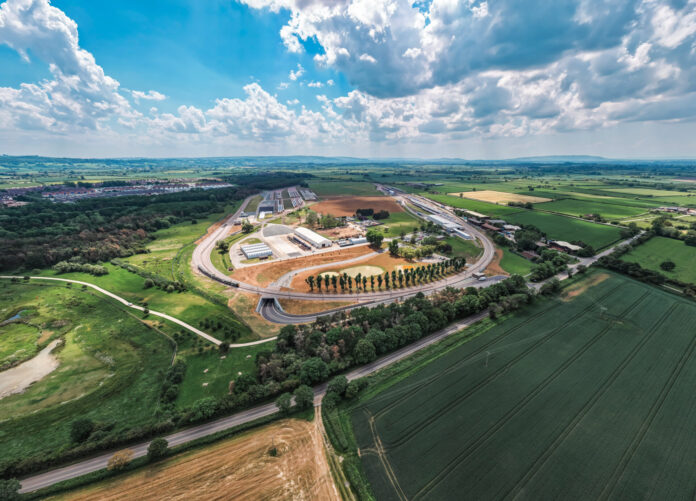
Britain’s first electrified rail testing loop has officially opened at the Long Marston Rail Innovation Centre in Warwickshire, marking a significant milestone for rail innovation, rolling stock development and future railway technology.
Rail Minister Lord Hendy formally launched the new 3.5km electrified test track on 4 June, joined by Porterbrook Chief Executive Mary Grant and rail content creator Francis Bourgeois at a ceremony attended by industry leaders, apprentices and local schoolchildren.
The new facility forms part of a wider £75 million investment by rolling stock financier and asset management company Porterbrook to develop the 135-acre Long Marston site into a national centre for rail research, testing and innovation.
The electrified loop provides a dedicated environment for testing new trains, traction technologies and railway systems under operational conditions, supporting both existing rolling stock programmes and the development of next-generation rail technologies.
Lord Hendy described the facility as an important step forward for the industry as it prepares for the transition to Great British Railways.
“The Rail Innovation Centre at Long Marston is a brilliant initiative which will support the next generation of trains in Britain,” he said.
“It was an honour to launch the centre’s new testing loop today and as a passenger, I look forward to travelling on the trains that have benefitted from being tested at the site.
“This kind of innovation is exactly what we want to see as we move towards Great British Railways so we can build a railway fit for the future which the public can rely on, and be proud of.”
The opening strengthens the UK’s rail testing capability at a time when the sector is facing growing demands around decarbonisation, digitalisation and fleet modernisation.
Until now, access to electrified testing facilities within the UK has been limited, often requiring manufacturers and operators to undertake testing on the operational railway or overseas facilities. The Long Marston loop provides a dedicated domestic environment where technologies can be developed, refined and validated before deployment.
For manufacturers, train operators and supply chain businesses, the facility is expected to reduce development timescales, support innovation programmes and strengthen the UK’s position as a centre for rail engineering expertise.
Mary Grant, Chief Executive of Porterbrook, said the investment reflects the company’s long-term commitment to supporting the future of the railway beyond its traditional role as a rolling stock financier.
“Long Marston is for the benefit of the whole industry. A site tailor-made for innovation that demonstrates how private capital can work hand-in-hand with Great British Railways to deliver an exceptional service to the travelling public,” she said.
“We’re making clear, long-term commitments to UK rail, not just as a financier, but as a genuine partner adding value now and for the future.”
The opening of the testing loop forms part of a broader investment strategy by Porterbrook, which has deployed more than £1 billion across the rail sector during the past five years.
Projects have included investment in new rolling stock, fleet modernisation programmes, infrastructure upgrades and alternative traction technologies. Among the most notable initiatives is the HydroFLEX programme, the UK’s first hydrogen-powered passenger train, which has received more than £14 million of investment to support development and testing.
The company has also strengthened its involvement in the rail manufacturing supply chain through its acquisition of a 49% stake in Scottish engineering specialist Brodie Engineering.
Alongside the opening of the new facility, Porterbrook unveiled refreshed corporate branding intended to reflect its evolving role within the industry and its emphasis on collaboration across the rail sector.
The Long Marston development arrives at a critical time for Britain’s railway as operators, manufacturers and infrastructure organisations seek solutions to support decarbonisation, improve operational performance and prepare for future passenger and freight demands.
For the wider rail industry, the facility represents more than just a testing track. It provides a dedicated environment where emerging technologies, alternative traction systems and future rolling stock designs can be developed within the UK, supporting innovation, skills development and supply chain growth.
As Great British Railways continues to take shape, facilities such as Long Marston are expected to play an increasingly important role in helping the sector deliver safer, greener and more efficient rail services for future generations.


