


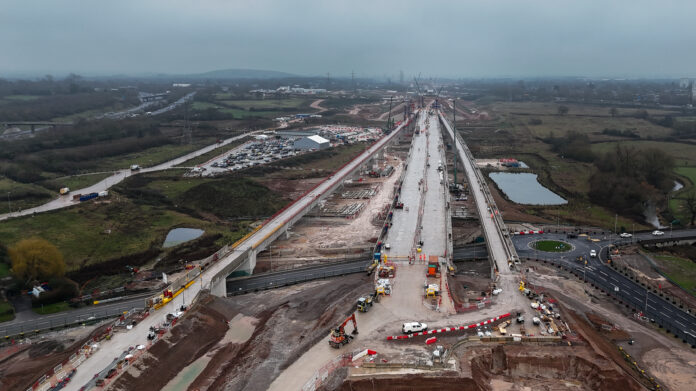
HS2 has reached a further construction milestone in the Midlands with the completion of deck assembly on four parallel viaducts at Coleshill, forming a key part of the Delta Junction to the east of Birmingham.
The viaducts stretch for more than 600 metres across the B4114 Birmingham Road and the floodplain of the River Cole, between the M6 and M42. Together, they form the southern section of the triangular Delta Junction, a complex network of flyovers and underpasses that will carry high-speed trains over existing roads, railways and waterways.
Two parallel spans will carry the four-track mainline running north and south, while two narrower structures on either side will serve trains travelling to and from Birmingham Curzon Street. In total, the Coleshill structures account for 2.4km of viaduct deck across the junction.
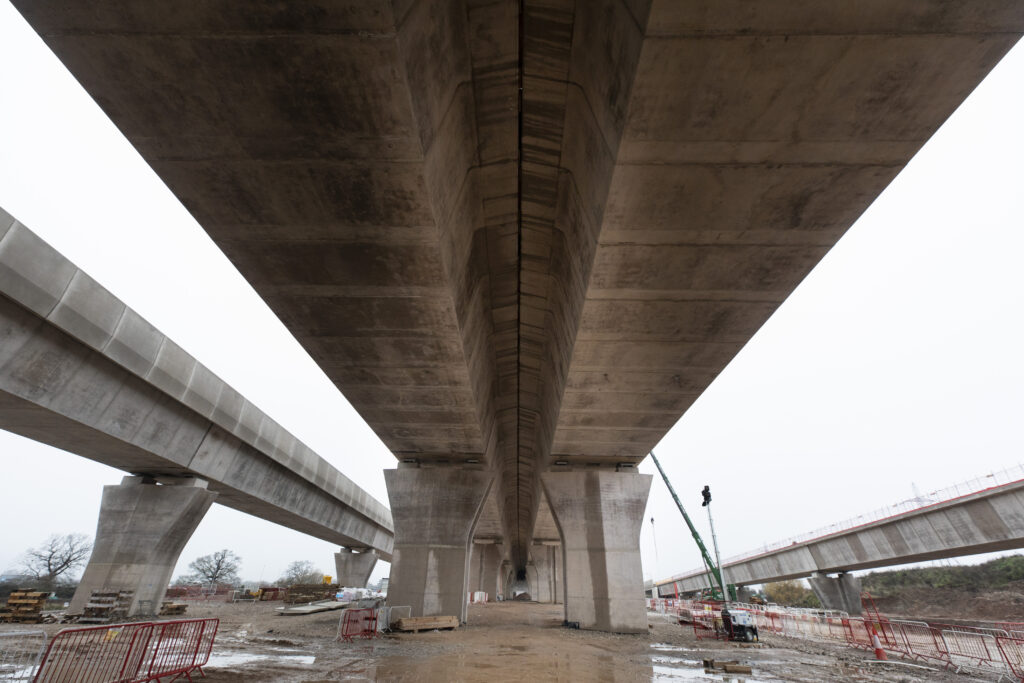
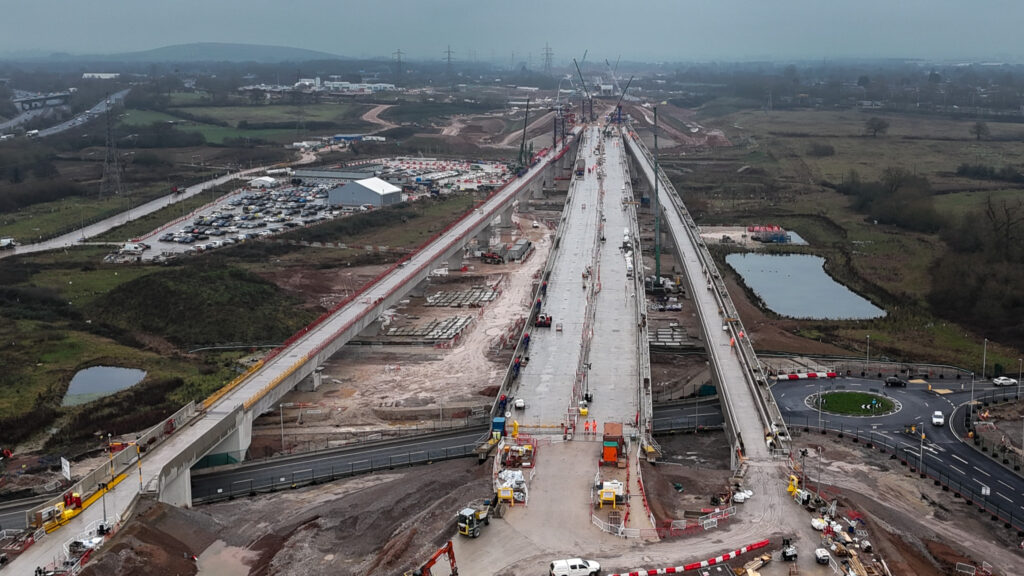
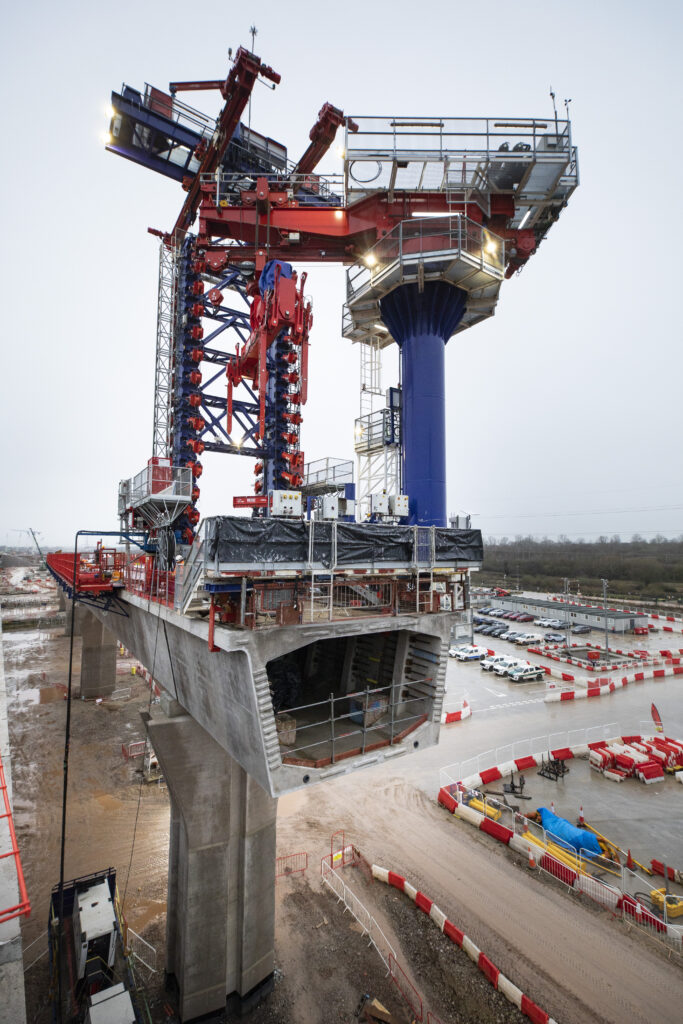
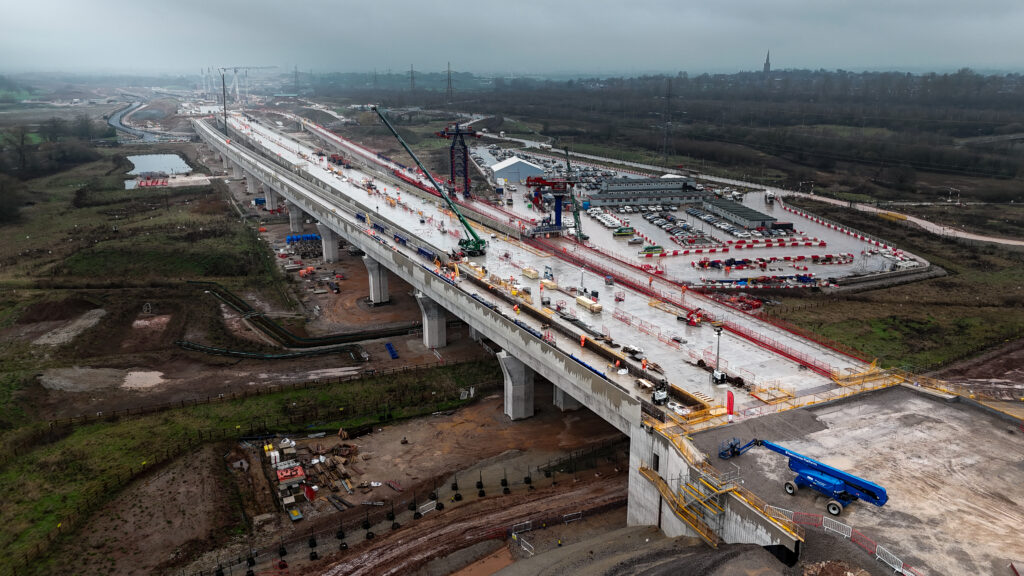
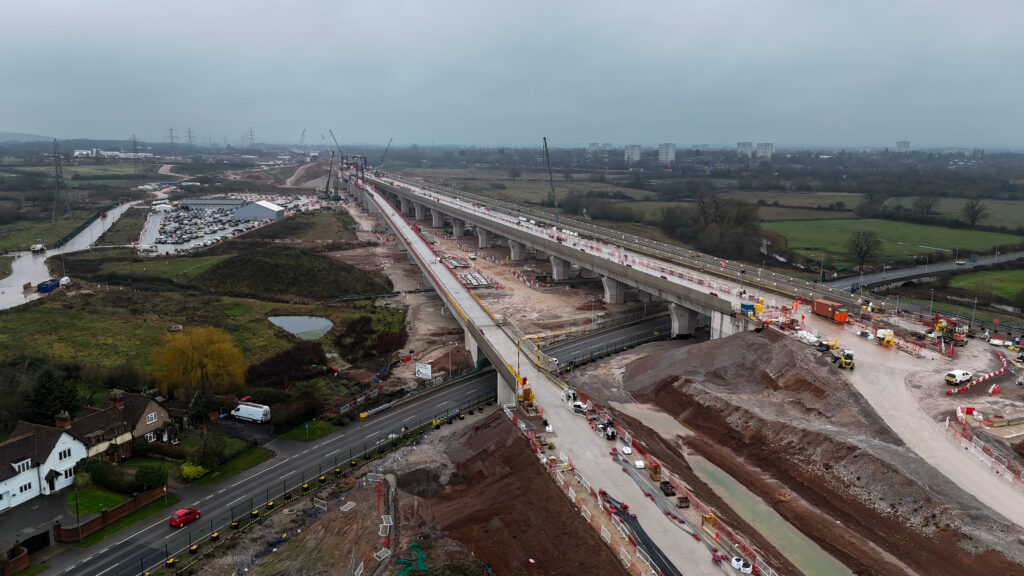
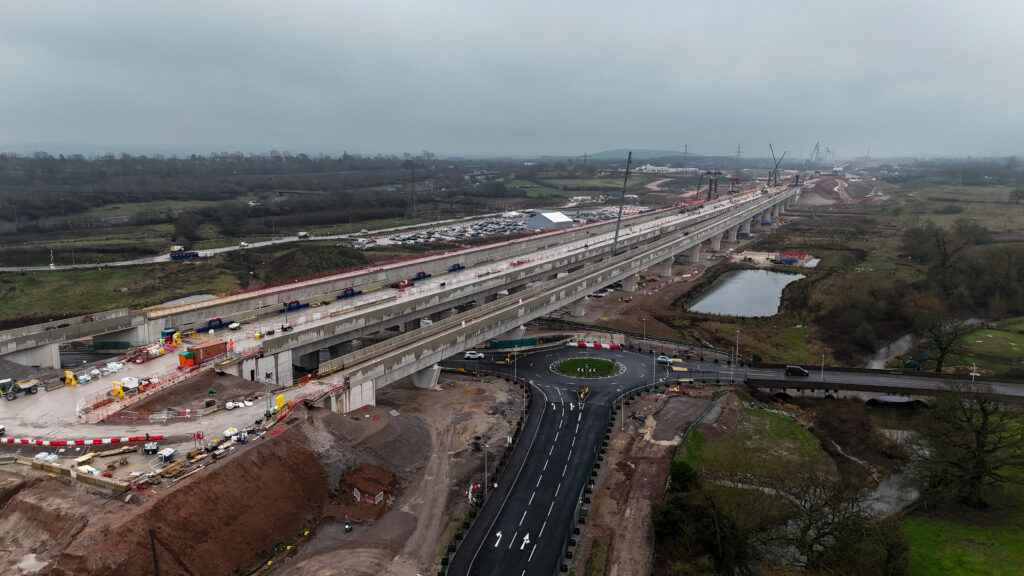
The decks are made up of 1,024 precast concrete segments, manufactured at a purpose-built facility in Kingsbury before being transported to site. The central 22-metre-wide deck comprises two rows of 11-metre-wide segments, each weighing 60 tonnes. The single-track viaducts use smaller 44-tonne segments. All four structures are supported by 54 reinforced concrete piers, rising up to 12 metres high.
Balfour Beatty VINCI, HS2’s main works contractor in the Midlands, used a cantilever construction method. Each segment was temporarily supported by steel cables until a full span was complete, after which permanent post-tensioned cables were installed through the hollow core of the deck to provide structural strength.
Caroline Warrington, HS2 Ltd’s Head of Delivery, said the Delta is a critical component of the wider scheme, which aims to transform journeys between London and Birmingham while releasing capacity on the West Coast Main Line for freight and regional services.
With deck assembly complete, attention now turns to finishing works, including the installation of robust kerbs and parapets.
The milestone comes as HS2 continues a comprehensive programme reset under Chief Executive Mark Wild, focused on sequencing construction effectively and driving greater cost certainty across the remaining 140-mile route between London and Birmingham.
For the Midlands section, the completion of the Coleshill decks marks visible progress on one of the most technically demanding elements of the project; a reminder that, while policy debate continues, the physical railway is steadily taking shape.