


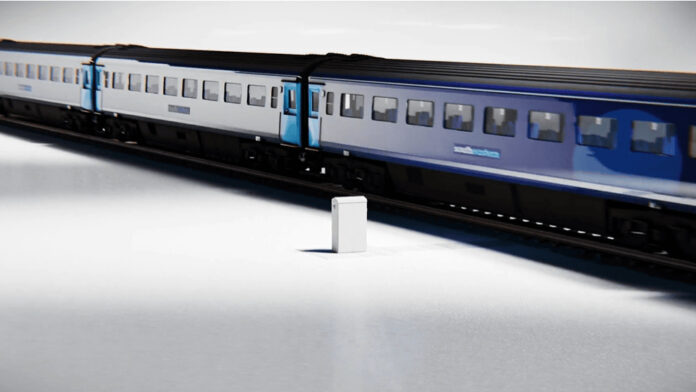
South Eastern Railway has begun trialling a new thermal technology on the Tonbridge to Hastings railway line to help keep trains running reliably during hot weather. The initiative is a partnership with UK green-tech start-up Flint Engineering, and it aims to combat excessive heat in railway signalling cabinets.
The new system, called IsoMat, is a passive heat exchanger that mounts to the roofs of signalling cabinets. It requires no power, maintenance, or internal modifications, and can be installed in under an hour. According to early trials, the technology can reduce peak temperatures by over 21% on the hottest days, helping to prevent system failures that cause train delays and service disruptions.
This summer, the IsoMat technology is being deployed on 10 of the Kent Route’s highest-risk cabinet locations. Following a successful pilot, Flint Engineering is preparing to deliver an increased number of units for deployment in time for summer 2026.
David Davidson, chief operating officer for the South Eastern Railway, said: “As extreme weather events become more common, we need innovative solutions to protect our infrastructure, and most importantly keep our passengers and freight customers on the move. Flint’s IsoMat technology provides a simple, effective solution to a complex problem, helping us maintain service reliability even during heatwaves without requiring power, maintenance or complicated installation procedures.”
The partnership is part of a wider exploration by Network Rail into sustainable solutions to combat the effects of climate change.
Mark Robinson, CEO of Flint Engineering, said: “Our partnership with Network Rail represents a perfect application of our technology where it can make a real difference to critical infrastructure. The IsoMat demonstrates how innovative engineering can address climate resilience challenges while delivering significant operational benefits. This collaboration highlights exactly the kind of practical applications we envisioned when developing this breakthrough technology.”
The IsoMat system works by using a revolutionary flat aluminium sheet design with an internal network of sealed channels. When exposed to extreme heat, a liquid inside the channels rapidly evaporates and condenses, transferring thermal energy thousands of times more efficiently than traditional metals like copper or aluminium. The technology has potential applications across multiple industries, including construction, commercial refrigeration, and electrification.