



Insight from Chris Morgan
Firstly, I’d like to say thank-you for all the positive comments and feedback on my last opinion column. I’ve genuinely been overwhelmed by the number of people who have taken the time to write in, comment, like, etc.
This month, building on the concept that we might be missing warning signs, I’d like to look at benchmarking safety performance with other industries. Sometimes it too easy to look only at organisations that do the same as us and feel warm cozy about how we’re doing. What do I mean by that? Well, take invoicing as a concept. We might be as good at invoicing as the next best rail organisation, but is that really a benchmark for improvement? How would we compare to an organisation that has invoicing at the heart of what it does? A major bank, perhaps. We might find that out of class operators have a better way of performing specific activities and we could learn from it.
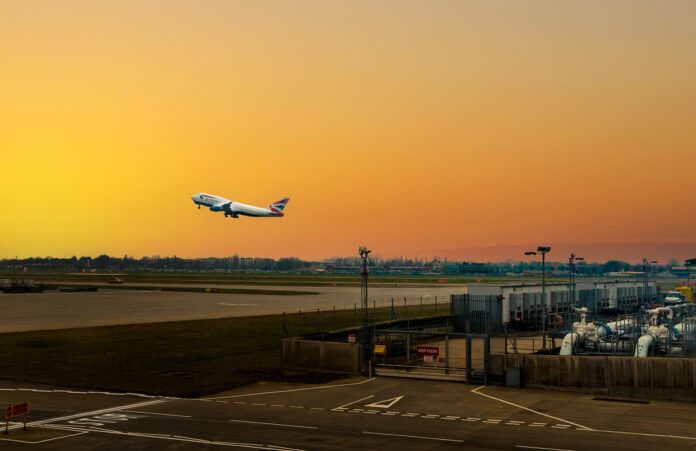
Leading on from that concept, let’s look at the airline industry as a safety comparator. The widely held belief is that rail is safer than air travel. Mostly, this is because of the paradigm that when something goes wrong in the air, it tends to go very wrong. Conversely, in rail, when things go wrong, they don’t tend to be catastrophic. Bear with me.
In his book, Foolproof, Grep Ip introduces an interesting theory and supports it with some fascinating statistics: fundamentally, the airline industry recognises that what it does is dangerous and does everything it can to make what it does safe. But, planes still crash, don’t they? Well, yes, they do. However, hardly ever and (I’m using Greg’s statistics here), over a lifetime, an average American is 1,330 times as likely to die in a car accident than in a plane crash; an American that flies to another city for an operation is 20,000 times more likely to die from a mistake made by the hospital than from their flight; and, here’s the one that hit me between the eyes: an American kid at the airport is as likely to grow up to be the president as to perish on that day’s flight.
I wonder what we, in the rail industry are able say about our potential safety performance? I’d love to hear similar relatable statistics, wouldn’t you?


