


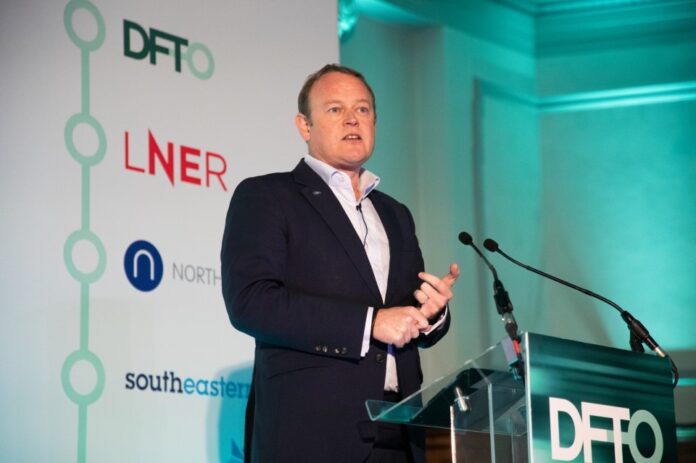
Great British Railways will deliver practical, everyday improvements for passengers by unifying track and train under one accountable structure, according to Alex Hynes, Chief Executive of DfT Operator.
Speaking at the George Bradshaw Address, the rail industry’s annual lecture, Hynes argued that integration is not a structural abstraction but a route to fewer cancellations, simpler ticketing and better accessibility.
Under the current model, responsibility is split. When disruption occurs, passengers must look to both the train operator and Network Rail. In a unified structure, integrated business units would place one leader in charge of both infrastructure and operations, with aligned incentives focused on service and long-term value rather than shareholder return.
“The quicker we start acting as one railway, the quicker we can start delivering the changes passengers really want,” Hynes said, highlighting reliability, ticketing reform and improvements to trains and stations as early priorities.
He stressed that integration would strengthen accountability rather than dilute it. With track and train managed as one system, decision-making can be more coherent and performance management clearer.
Hynes also pointed to tangible evidence of growth under public ownership. In December, publicly owned operators introduced more than 76,000 additional seats per week as part of the new timetable, including 60,000 on the East Coast Main Line. That extra capacity, he said, is already supporting higher revenue and a better customer offer.
The comments come as the number of operators in public ownership continues to rise. There are now eight: c2c, Greater Anglia, LNER, Northern, Southeastern, South Western Railway, TransPennine Express and West Midlands Trains. Govia Thameslink Railway is scheduled to transfer on 31 May 2026.
Hynes shared the platform with Transport Secretary Heidi Alexander, Network Rail Chief Executive Jeremy Westlake and Rail Freight Group Director General Maggie Simpson OBE. The discussion underlined the scale of reform ahead as legislation to establish Great British Railways progresses through Parliament.
For Hynes, the central argument is straightforward. Structural reform must translate into visible change for passengers. Integration, he suggested, is the mechanism by which a complex system becomes a single railway again, one that is safer, more sustainable and better able to grow.


