


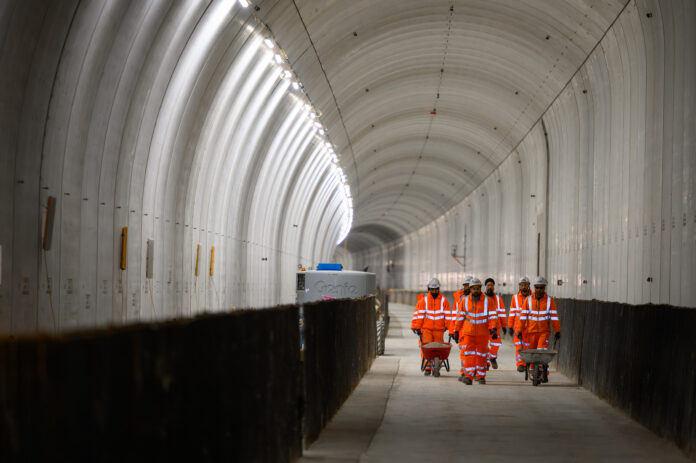
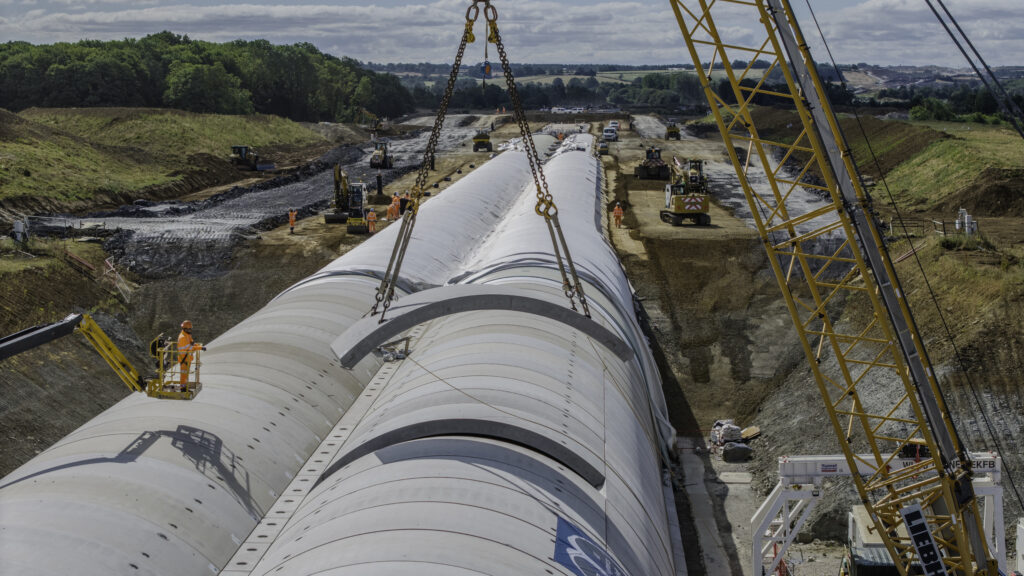
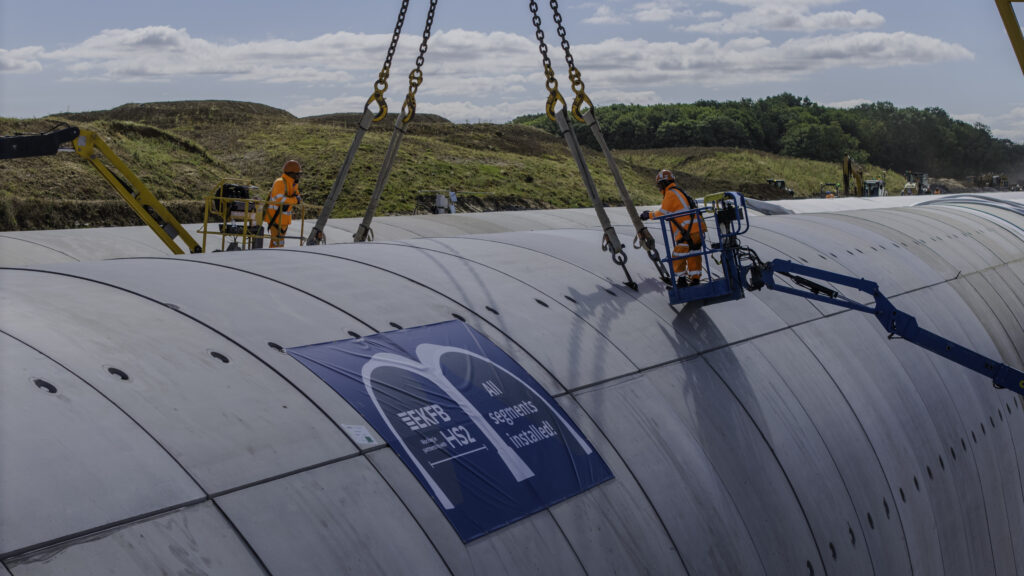
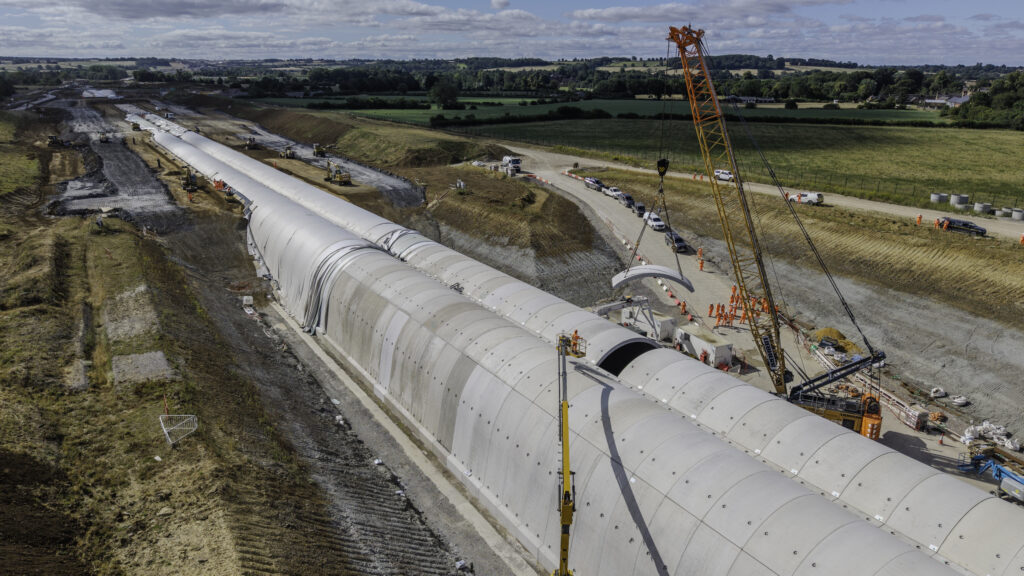
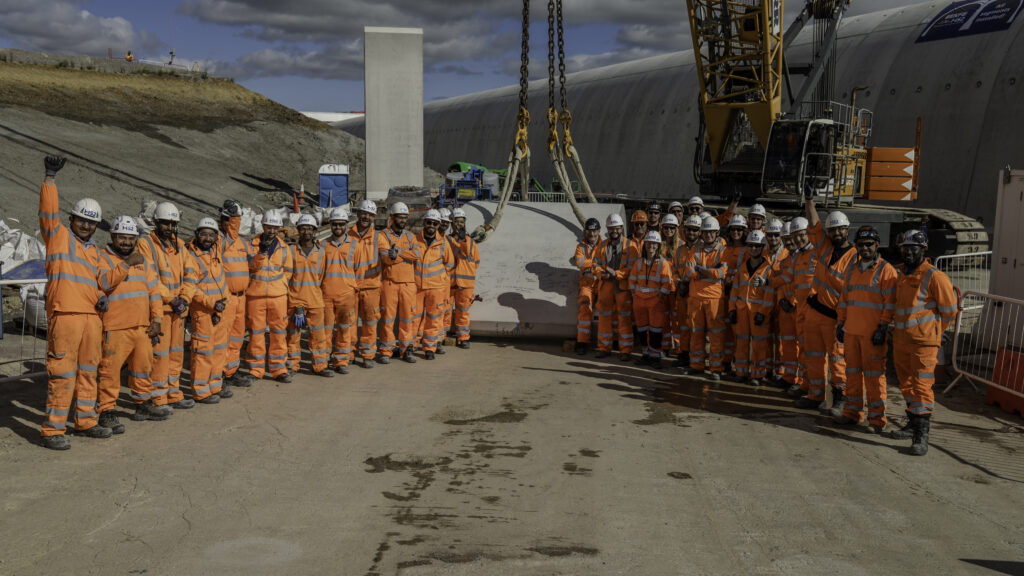
Construction of one of HS2’s longest cut-and-cover tunnels has reached a major milestone after the final reinforced concrete segment was installed at Chipping Warden in Northamptonshire.
The completion of the tunnel’s structural shell marks significant progress on the 2.5km-long Green Tunnel, which is being built to reduce the visual and environmental impact of the high-speed railway by allowing the line to pass beneath a landscaped earth covering.
The tunnel is one of five green tunnels being constructed between London and the West Midlands and follows the recent completion of the Copthall Green Tunnel near West Ruislip. Work is also advancing on similar structures at Burton Green and Greatworth.
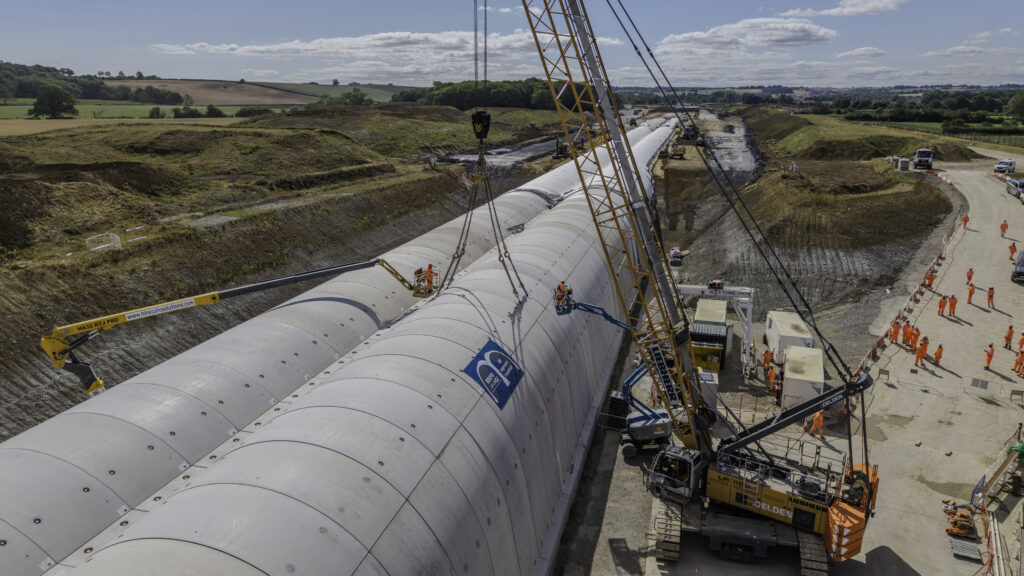
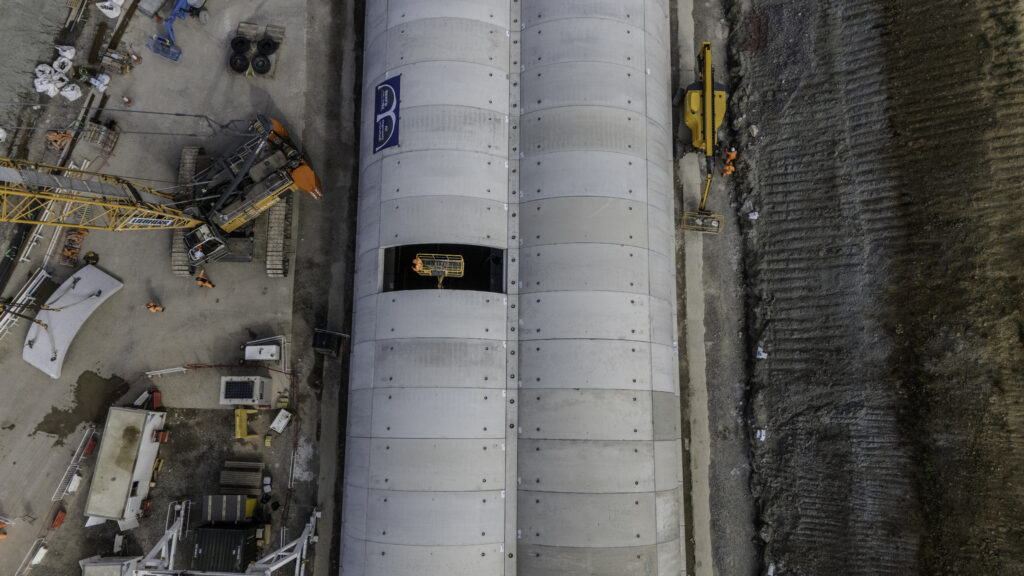
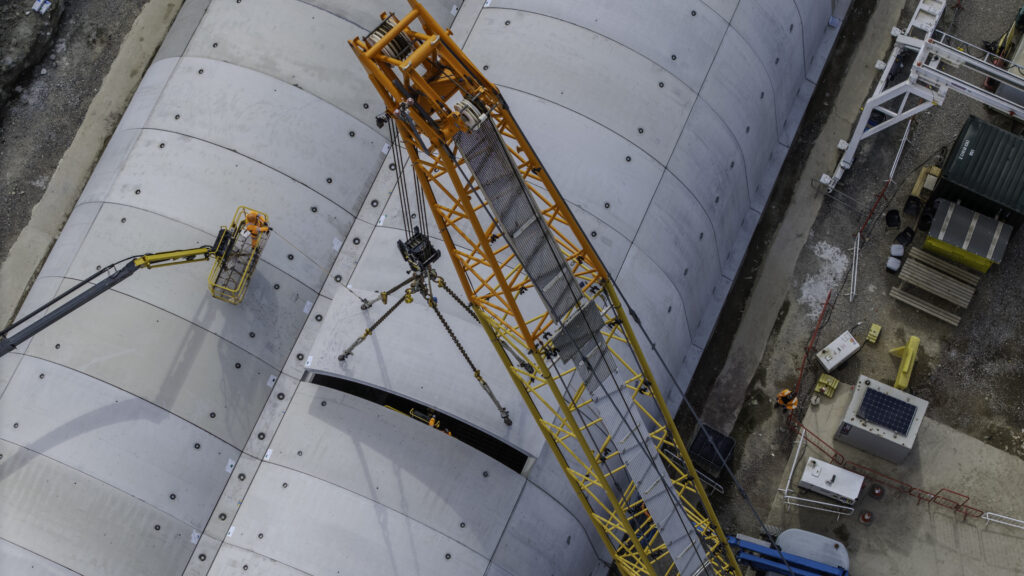
Built by HS2’s main works contractor EKFB, a joint venture comprising Eiffage, Kier, Ferrovial Construction and BAM Nuttall, the tunnel has been assembled from 5,020 precast reinforced concrete segments.
Designed in an ‘M’ shape, the structure provides separate bores for northbound and southbound trains while creating the strength needed to support the reinstated landscape above.
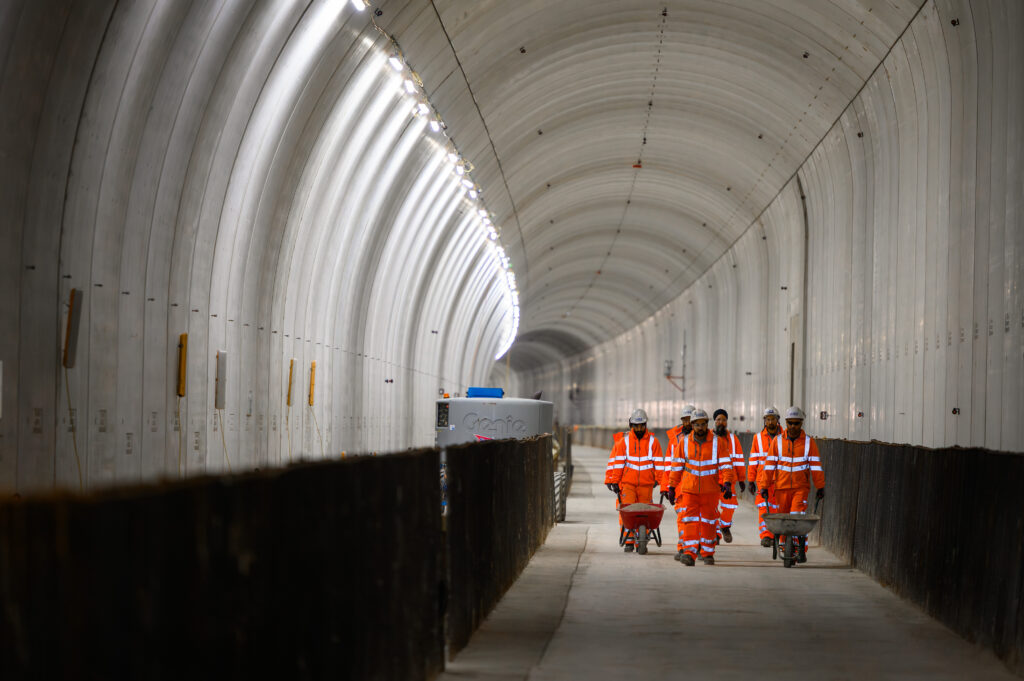
With the final segments now in place, construction teams are turning their attention to waterproofing, internal floor slabs, emergency walkways and finishing works before the structure is fully backfilled.
Faster construction through innovation
The project has benefited from a series of engineering and construction improvements that have significantly increased productivity.
Rather than building the tunnel sequentially, excavation, structural assembly and backfilling have taken place simultaneously at different locations along the route, allowing multiple phases of work to progress at the same time.
In total, more than two million cubic metres of excavated mudstone have been retained on site and are now being carefully compacted above the tunnel to recreate the surrounding landscape, avoiding the need to remove material by road while reducing environmental impacts.
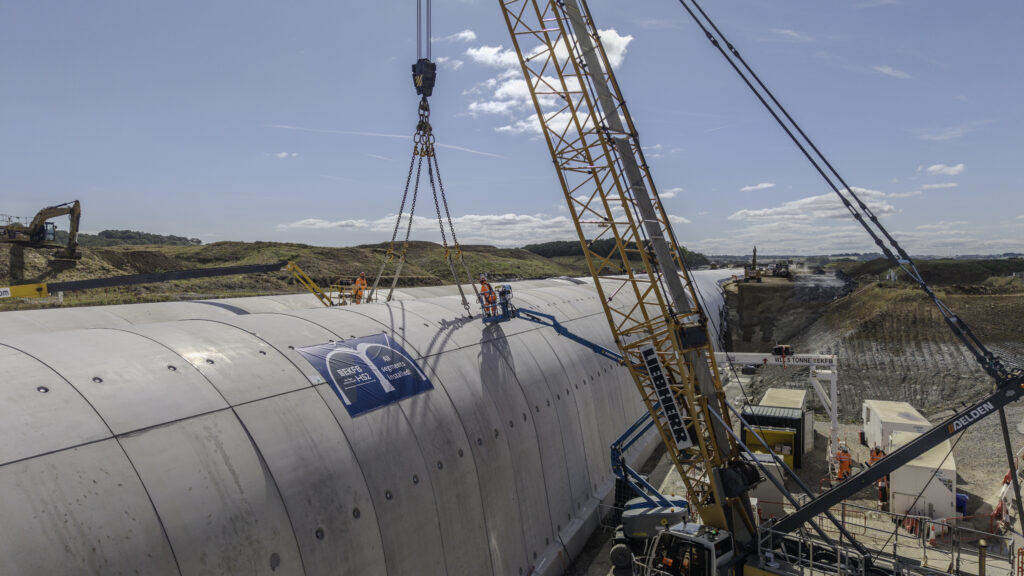
HS2 Senior Project Manager Sam Arrowsmith said: “It’s great to see the final segment slotted into position at Chipping Warden and I’d like to thank everyone who pulled together to find ways to optimise all the stages of construction, from excavation, tunnel construction and backfilling.
“We’ve still got a long way to go, but with the tunnel precast structure complete, we can now focus on finishing the interior works and the earthworks and landscaping that will blend the railway into the surrounding countryside.”
Productivity doubles
EKFB says continuous improvements to construction methods have more than doubled installation rates since work began.
A purpose-built trial tunnel allowed engineers to test new construction techniques before introducing them on the live project.
Among the innovations were prefabricated reinforcement systems, revised concrete delivery methods, improved logistics and redesigned installation processes that increased the average tunnel segment installation rate from around two segments per day in 2022 and 2023 to more than five per day this year.
The use of larger construction equipment for backfilling has also accelerated progress after extensive testing confirmed heavier machinery could safely operate above the completed structure.
EKFB Senior Project Manager Chris Barrett said: “Watching the final tunnel segment being lifted into place is the outcome of 18 months of rewriting the playbook, learning, innovating and putting the right solutions forward when challenged, all of which have boosted on-site productivity.
“This success has allowed EKFB to safely work at twice the speed compared with the start of construction works in 2023.
“Now our focus shifts to completing waterproofing and internal works as well as backfilling earth around the tunnel and by the end of winter, it’ll be buried and largely out of sight.”
Blending the railway into the landscape
Once construction is complete, the reinstated land above the tunnel will be landscaped with new trees and restored hedgerows to help integrate the railway into the surrounding countryside and reduce visual and noise impacts for nearby communities.
The Chipping Warden structure forms part of a wider programme of tunnels and major earthworks along the HS2 route designed to balance engineering requirements with environmental considerations.
While the completion of the tunnel shell represents another important milestone, substantial work remains across the 140-mile railway as HS2 continues its programme-wide reset under Chief Executive Mark Wild, aimed at improving productivity and delivering the project as efficiently as possible at the lowest reasonable cost.