


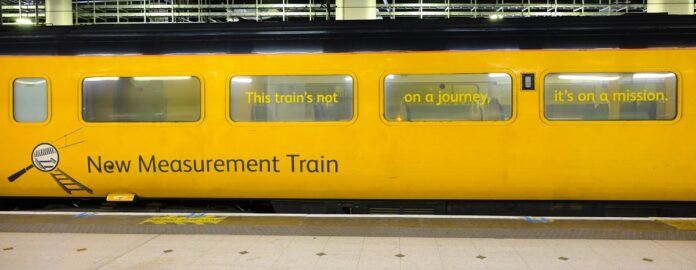
Network Rail’s New Measurement Train has covered more than two million miles since entering service in 2003, using track-monitoring technology to identify developing faults before they affect safety or train services.
Known as the ‘Flying Banana’ because of its yellow exterior, the train inspects track at speeds of up to 125mph. Lasers, cameras and real-time image analysis provide information that engineers use to target maintenance.
The milestone comes as railway teams prepare for autumn and winter disruption, with drainage work, vegetation management, railhead treatment and weather monitoring taking place across the network.
High-speed inspections help target maintenance
The New Measurement Train provides a regularly updated assessment of track condition, helping engineers identify changes that require investigation or repair.
That information supports maintenance planning throughout the year. During autumn and winter, it forms part of the railway’s response to additional pressures from heavy rainfall, strong winds and leaf fall.
Heavy rain can overwhelm drainage systems, flood tracks and contribute to instability in embankments and cuttings. Strong winds can bring trees, branches and other debris onto railway lines.
Wet leaves create a separate operational problem. When crushed onto rails by passing trains, they form a slippery layer that reduces grip, making braking and acceleration more difficult.
Network Rail says approximately 13 million trees stand on or beside railway land. Managing the effects of leaf fall therefore requires treatment of the rails as well as vegetation work.
Weather response combines monitoring and work on the ground
Lisa Angus, Network Rail’s Industry Weather Response Director, said:
“The NMT is a brilliant example of how technology helps us understand what is happening on the railway, spotting developing problems early so our teams can take action before they affect passengers.
“But it is just one part of a much bigger effort taking place across the railway this autumn and winter. From leaf-busting trains and drainage work to weather monitoring and better forecasting, we are using data, technology and the expertise of our people to understand where the risks are greatest and act earlier.
“We can’t prevent severe weather and there will be times when we need to slow or change services to keep people safe. But by preparing carefully and targeting our response where it is needed most, we can help keep as many passenger trains and freight services moving safely and reliably as possible.”
Teams are monitoring locations vulnerable to flooding and landslips alongside drainage and vegetation work. Control rooms have also introduced seasonal timetables where necessary to support operations during more difficult conditions.
The measurement train supports this wider programme by providing track-condition data. Its inspections complement, rather than replace, monitoring and maintenance of drainage, earthworks and lineside vegetation.
Railhead treatment fleet to cover one million miles
The railway’s 67 railhead treatment trains are expected to travel more than one million miles across the network this autumn.
These trains use high-pressure water jets to remove leaf contamination before applying treatment to help wheels maintain grip. Their work addresses rail-surface conditions, while the New Measurement Train checks for developing track faults.
The wider rail industry is investing £2.6 billion between 2024 and 2029 in weather and climate resilience. The programme is intended to improve the network’s ability to withstand extreme conditions and recover more quickly after disruption.
Network Rail said preparation and earlier intervention could reduce disruption, although speed restrictions or service changes may still be required during severe weather.
Passengers are advised to check journeys before travelling when difficult conditions are forecast and follow updates from their operator and National Rail Enquiries.


