


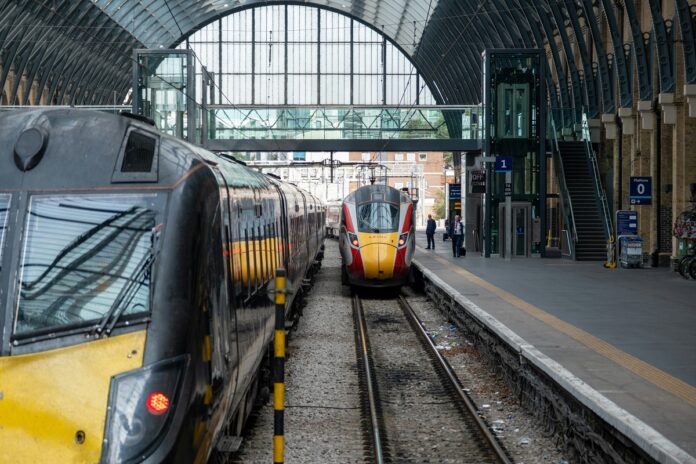
2025 has been a pivotal year for the UK rail industry, marked by significant project milestones, a rebound in ridership, and sweeping reforms. In this bicentenary year of the railway, passenger numbers climbed back above pre-pandemic levels while the sector embarked on an ambitious transformation of its infrastructure and governance.
Below, we review the year’s major developments – from multi-billion-pound upgrades to policy shifts – and how they have shaped a rail network striving to be greener, more reliable, and future-ready.
Major Projects and Network Upgrades
Transpennine Route Upgrade (TRU): The flagship Transpennine Route Upgrade made tangible progress. By early 2025, 25% of the York–Manchester line had been fully electrified, including newly-wired sections from Manchester Victoria to Stalybridge and York to Church Fenton. The £9bn programme also delivered community benefits – from introducing carbon-saving composite sleepers to creating nearly 4,000 work experience days and funding local initiatives. These works aim to cut journey times across the Pennines and improve reliability for passengers in the North.
Midlands Rail Hub (MRH): The year saw a breakthrough for the long-awaited Midlands Rail Hub. An alliance of four major firms (VolkerRail, Laing O’Rourke, AtkinsRéalis, Siemens) was confirmed to design and develop this £1.75 billion upgrade centred on Birmingham. Work will include new track chords at Bordesley to link Moor Street and Camp Hill lines, unlocking capacity for more services. Early wins are targeted before the decade’s end – such as reopening Snow Hill’s unused Platform 4 and expanding Cross City line service at Kings Norton. With initial government funding of £123 million now in place, MRH is moving from plan to reality, promising transformative capacity and connectivity improvements by the early 2030s.
Northern Powerhouse Rail (NPR): Political support coalesced around NPR’s vision of high-speed East–West links between northern cities. The project – often dubbed “HS3” – was re-energised with pledges in the autumn budget to “forge ahead” on a core Liverpool–Manchester–Leeds route. However, an expected detailed plan was delayed to 2026 as stakeholders push for a full Liverpool-to-Hull line. Northern leaders and mayors have been vocal in calling for a complete NPR, including new high-speed lines via Bradford, to truly rebalance connectivity. While funding classifications sparked debate (the Westminster government classed NPR as an “England & Wales” project, controversially excluding Wales from Barnett rail funding), 2025 ended with consensus that enhanced cross-Pennine rail remains a top strategic priority.
High Speed 2 (HS2): Construction continued on Phase One of HS2 from London to Birmingham, achieving major engineering milestones. Notably, a 4,600-tonne viaduct span was launched across the M6 without disrupting motorway traffic – a visible sign of progress on Britain’s biggest infrastructure project. Yet HS2’s scope was fundamentally reshaped this year. Following 2023’s decision to cancel the Manchester leg, the high-speed line will now terminate in the Midlands, saving an estimated £36 billion. This Network North plan pledged to reinvest those funds into dozens of regional transport upgrades. Industry groups, however, warned that axing the northern portion could hinder long-term economic growth and undermine confidence in the UK’s project delivery. With the eastern leg to Leeds already shelved, HS2’s future phases remain uncertain. As 2025 closes, pressure builds on government to clarify how high-speed rail will integrate with NPR and other Northern upgrades, ensuring the North and Midlands still reap the benefits of faster intercity links.
Urban and Light Rail Developments
City regions saw important strides in their transit networks. In London, plans to extend the Docklands Light Railway gained momentum. A proposed DLR branch to Thamesmead – crossing the Thames from Beckton – received backing in principle, but by late 2025 funding arrangements were still being negotiated among Transport for London, the Greater London Authority and central government. The parties set a 3-month timetable to finalise financing for this project, which would bring much-needed connectivity to southeast London’s growth areas. The commitment to break ground on the DLR extension reflects a broader push to bolster urban rail capacity in the capital.
In Wales, the South Wales Metro neared a watershed moment. After years of construction across the Cardiff valleys, the first tram-trains are slated to enter service in the second half of 2025. Transport for Wales made significant progress electrifying core Valley Lines: over 15 km of track on the Rhymney branch were upgraded and hundreds of new overhead line masts installed during intensive summer works. Multiple prolonged line closures, though disruptive, enabled engineers to overcome difficult ground conditions and cut the electrification foundation failure rate from 50% to near zero. As of year-end, brand-new Stadler Class 398 tram-trains were undergoing testing, with full metro operations expected to commence by early 2026. This modern integrated Metro (combining heavy rail, light rail and buses) promises faster, greener travel across South-East Wales, with higher frequencies and new stations set to transform regional mobility.
Other urban rail projects progressed as well. In the West Midlands, the decade-long expansion of Midland Metro light rail continued (with Wolverhampton’s extension nearing completion), and Manchester began planning future Metrolink routes to serve growing suburbs. On the national rail network, new stations – from Cambridge South to Beaulieu Park in Essex – secured funding, aiming to improve city access and catalyse development. These investments in local rail and rapid transit underscore a 2025 focus on inclusive growth: ensuring towns and cities outside London benefit from better public transport links.
Freight: Growth and Modal Shift Momentum
Rail freight in 2025 solidified its role in the UK’s transport mix, even as economic headwinds affected some volumes. Freight operators moved 4.10 billion net tonne-km of goods in the July–September quarter, only slightly (2%) below the same period last year. Over the full year to March 2025, Network Rail reported a 5.1% rise in freight tonnage moved, marking a return to growth. Key drivers have been higher intermodal traffic from booming port volumes and new flows of aggregates and construction materials to support infrastructure projects. The uptick comes despite a sluggish economy, indicating a continued modal shift from road haulage to rail wherever logistics allow.
Government policy strongly supports this rail freight growth trend. The Department for Transport set an ambitious target of 75% growth in rail freight by 2050 as part of its decarbonisation and congestion relief agenda. To enable this, 2025 saw the extension and reform of grant schemes that incentivise shifting freight off roads. A comprehensive review of the Mode Shift Revenue Support (MSRS) programme was launched ahead of its March 2025 expiry, seeking industry evidence on how to enhance subsidies for rail and water freight. These grants (around £20 million per year) currently remove nearly 1 million lorry journeys annually from Britain’s roads. The review’s goal is to design a more flexible, effective successor scheme under post-Brexit state-aid rules, encouraging even more container and bulk flows onto rail.
Operationally, the rail freight sector worked to boost efficiency and capacity. Network Rail highlighted that timetable tweaks and targeted investments have unlocked over 100 additional weekly freight paths on the network, supporting growth in intermodal trains serving ports. Private initiatives, like DP World’s expanded rail incentive program at its Southampton terminal, also helped drive record volumes by offering discounts for containers moved by rail. By year’s end, several new freight terminals and sidings were in development – including a revived plan for a rail freight hub near Warrington on the Manchester Ship Canal – reflecting confidence in the sector’s long-term prospects. With the government and industry aligned on the need for modal shift, 2025 can be seen as a springboard for a rail freight renaissance, setting the stage for sustained growth in the coming decade.
Rail Reform and Governance Changes
This year brought the most significant rail governance shake-up in a generation. After repeated delays, the government finally introduced the long-awaited Railways Bill in November 2025 – legislation to establish Great British Railways (GBR) as a new guiding mind for UK rail. The Bill delivers on the 2021 Williams-Shapps Plan recommendations, aiming to reunify track and train operations under a single strategic body. Under the proposals, GBR will be a publicly owned agency responsible for both managing rail infrastructure and contracting passenger services, replacing Network Rail and overseeing operators in a more integrated structure. It will set timetables, collect fare revenue, and have a statutory duty to focus the railway on customers and cost-efficiency. Crucially, GBR is mandated to promote freight growth and unlock housing development around stations as well, reflecting a broader vision of rail as an enabler of economic growth.
The Railways Bill also lays out a new 30-year strategic framework for the network. The Transport Secretary will publish a long-term rail strategy, while GBR will create 5-year business plans aligned to government funding cycles. In practice, this means more coordinated planning of investments, moving away from the fragmentation of the past. Another key reform is devolving decision-making to the regions: GBR will establish regional operating divisions that combine infrastructure and trains, each led by a local team empowered to drive performance improvements and meet local needs. Pilot “railway localities” are already being set up – for example, integrating South Western Railway’s services with Network Rail’s Wessex route management – to provide a one-stop “local face of the railway” for passengers. Meanwhile, the Office of Rail and Road (ORR) will shift to an oversight and appeals role, as GBR takes over network access decisions and fare system regulation.
The path to GBR’s launch is now clearly underway. Industry stakeholders welcomed the Bill’s introduction, seeing it as a chance to end the “vacuum of leadership” and clarify accountabilities. However, they also urge quick implementation: even optimistically, GBR will not be fully operational until 2026 or later, and uncertainties remain around how existing contracts and staff will transfer. Throughout 2025, the Rail Transition Team (set up within DfT) continued preparatory work, and a “shadow” GBR leadership has been engaging with operators and unions to manage the change. In parallel, government confirmed that a new Passenger Advocacy Body will be created (merging Transport Focus and London TravelWatch) to strengthen consumer representation under the GBR regime. By year-end, the Commons Transport Committee had opened an inquiry into the Railways Bill’s provisions, indicating active parliamentary scrutiny. All told, 2025 will be remembered as the year rail reform moved from concept to concrete action – a bid to simplify fares, improve service integration, and rebuild public trust in a network that has often felt fragmented. The industry is cautiously optimistic that Great British Railways can deliver the coordinated, customer-focused railway that has long been promised.
Ridership, Revenue and Performance Trends
Passenger rail ridership surged in 2025, continuing its post-pandemic recovery and providing a much-needed financial boost to the industry. There were 1.7 billion journeys made in Great Britain in the 2024–25 fiscal year – a 7.2% increase from the previous year. By the spring of 2025, monthly passenger numbers even exceeded 2019 levels, with May seeing an average 104% of pre-Covid daily ridership. Importantly, fare revenues climbed as well: total passenger income reached £11.5 billion in 2024–25, up 8% year-on-year. Commuter travel continued its gradual return (aided by more hybrid work patterns), but it was leisure and discretionary trips that led the growth, filling trains on weekends and off-peak times. Major events like the Eurovision contest in Liverpool and a summer of sporting fixtures helped drive record intercity patronage, while the Elizabeth Line (Crossrail) in London celebrated carrying its 200 millionth passenger during the year, reflecting strong demand for new high-capacity services.
On the financial front, the government took an unprecedented step to ease pressure on passengers. In the November budget, the Chancellor announced that regulated rail fares would be frozen for 2024/25 – the first fare freeze in over 30 years. This historic intervention means no increase in annual season ticket costs or other regulated fares in 2026, breaking the usual formula of inflating fares each January. Officials estimate this will save frequent commuters several hundred pounds each and also help contain inflation more broadly. The freeze was packaged as part of the reforms tied to GBR, with ministers noting it “delivers real savings for millions” while the new publicly-owned railway structure is built. For train operators, government will compensate the lost farebox revenue, effectively increasing subsidy in the short term. The move was widely welcomed by passenger groups and businesses concerned about the cost of commuting, although operators cautioned that long-term fare policy should still align with service improvements and investment needs.
Train performance and reliability saw a mixed picture. With more trains running and higher ridership, punctuality settled back to pre-pandemic norms: about 84.8% of station stops occurred on time (within 3 minutes) in 2024–25. This is on par with the 84–85% on-time rate typical before 2020, after an anomalously high 93% was recorded during the lockdowns when the network was quiet. In short, as congestion returned, so did minor delays. More concerning was the rise in cancellations – the industry’s cancellations score hit 4.1% of services cancelled in 2024–25, the highest on record. This was partly due to lingering effects of industrial action and staff shortages early in the year, as well as extreme weather incidents over the winter. Unplanned crew absences and infrastructure failures led to noticeable disruption on some operators; for instance, TransPennine Express and Avanti West Coast both struggled with below-par reliability in the first quarter, drawing passenger complaints. (Indeed, “train punctuality/reliability” remained the single biggest source of passenger complaints at 19%.) The good news is that by autumn 2025, service reliability was improving – the late-year cancellation rates eased as new driver training programs bore fruit and schedules were trimmed to more realistic levels. Network Rail’s performance data confirmed that by summer, 86% of stops were on-time (within 3 minutes), showing modest improvement over the year’s start.
In terms of passenger experience, the trends were positive. The latest National Rail Passenger Survey results (autumn 2024) showed overall satisfaction rebounded above 80%, with especially high marks for staff helpfulness and train cleanliness. However, crowding is creeping back in some regions; load factors in London and other city peaks are rising, which underlines the need for ongoing investment in capacity (as projects like MRH and NPR aim to address). Financially, the railway’s trajectory is improving with ridership – but it remains delicately balanced. By 2025 the farebox was covering around 70% of operating costs, up from barely 50% in 2020, easing but not eliminating the burden on government budgets. Cost control and efficiency efforts by operators have continued, with a number of franchise-turned-contract operators (now under National Rail Contracts) managing to cut their unit costs. Yet the industry enters 2026 still reliant on substantial public funding, and the coming reform to GBR is anticipated to further streamline costs and revenue collection.
Workforce, Skills and Supply Chain
The rail industry’s workforce and suppliers experienced both challenges and opportunities in 2025. A longstanding skills crisis looms, driven by an aging workforce and years of stop-start investment. According to a National Skills Academy for Rail survey, an estimated 12,000 new workers will be needed by 2028 to meet demand and replace retirees. More than one-third of frontline rail staff will reach retirement age by 2030, a demographic wave that intensifies the urgency to attract young talent. However, recruiting has proven difficult in recent years – a point echoed by many rail business owners – due to perceptions of industry uncertainty and competition from other sectors. Inflationary pressures and wage competition have also made it harder for rail companies to fill technical roles, even as unemployment remains low nationally.
This year brought some relief with a clearer investment pipeline, but not before a dip in work for suppliers. At the start of 2025, many rail contractors faced a lull as Control Period 7 (CP7, 2024–29) projects ramped up more slowly than hoped. An end-2024 survey by the Railway Industry Association found 75% of supply firms had a significant gap in their order books, and 42% were considering redundancies. Indeed, industry employment data showed the rail workforce shrank by ~9.4% over the past year, with job losses concentrated in the supply chain (engineers, site managers, etc.) due to this hiatus in work. The delay in confirming CP7 funding – tied to the mid-year government spending review – exacerbated the sector’s notorious “boom and bust” cycle. Skilled staff leaving during busts creates shortages in the next boom, driving up costs. Rail leaders have warned that without smoother investment profiles, these skill shortages will only worsen and could undermine future delivery.
Fortunately, the second half of 2025 brought signs of improvement. The government’s Spending Review (announced in Q3) committed to a sustained pipeline of rail enhancements, giving suppliers more certainty to plan ahead. Major projects like HS2 and East West Rail continued (or, in HS2’s case, were rescoped but with substantial regional works to deliver), meaning “shovel-ready” contracts for the supply chain. The kickoff of Midlands Rail Hub’s development and new electrification schemes (e.g. on Transpennine and in South Wales) are set to provide steady work for years, helping retain specialised teams. An encouraging example was the electrification workforce: previously facing layoffs when no new schemes were in sight, crews are now needed for planned wiring of routes such as Leeds–Manchester and the Midland Main Line. Still, calls persist for a rolling programme of electrification to avoid losing hard-won expertise.
On the labour relations front, 2025 saw a tentative thaw in the industrial disputes that disrupted the railway in 2022–24. After multiple strikes, the Rail, Maritime and Transport union (RMT) reached revised pay deals with Network Rail and some train operating companies by mid-2025, leading to a marked reduction in strike days. However, driver union ASLEF’s contract negotiations remained ongoing at several operators, occasionally affecting services with over-time bans. Overall, while not fully resolved, the climate improved enough that the network operated normally for the majority of the year – a relief to passengers and businesses. There is cautious optimism that a more stable management structure under GBR, along with multi-year funding deals, will facilitate longer-term pay agreements and workforce planning, thereby reducing the adversarial flashpoints of recent years.
Lastly, talent and training initiatives gained momentum. The industry expanded apprenticeship and graduate recruitment programs to tackle the skills gap. Notably, the TRU programme spearheaded PlanBEE Rail, the UK’s first collaborative rail higher apprenticeship, bringing in nearly 100 apprentices and graduates who rotate across different employers. The scheme has been lauded as a model for building a multi-skilled next-generation workforce. Companies like Siemens Mobility also highlighted their investments in UK rail education – in 2025 Siemens spent £466 million with UK suppliers and supported thousands of training hours, as detailed in a social value report.
Meanwhile, supply chain collaboration took new forms: rail SMEs began partnering in clusters to bid for CP7 contracts together, sharing skills and resources. This trend, encouraged by organisations like Midlands Connect, should strengthen the resilience of smaller suppliers. In sum, though the rail industry faces a wave of retirements and still competes for engineering talent, 2025’s initiatives show a sector moving to safeguard its human capital and supply chains. By stabilising investment and championing skills, the industry aims to ensure it has the people and partners needed to deliver the railway of the future.
As the year draws to a close, be sure to explore our Top Ten Stories of 2025 – a curated list of the most-read headlines and pivotal moments that defined the past 12 months. From landmark project breakthroughs and policy shake-ups to the memorable highs and lows on the network, these stories capture the essence of 2025 in rail.
We invite you to revisit these key milestones and policy pivots that shaped the industry, as we look ahead to another year of progress in 2026.
1. CP7 slowdown hits rail suppliers as trading conditions tighten
Lower-than-expected activity in Control Period 7 has led many rail businesses to report a downturn in trading, raising concerns about workload visibility and confidence across the supply chain. We spoke to Christian Fry to discuss further.
2. Winning green: how strong sustainability answers can strengthen bids
The article explores how clear, credible sustainability responses are becoming decisive factors in winning rail tenders, moving beyond compliance to demonstrable value.
3. Improving frontline welfare: putting people first on rail sites
An interview with Welfare Hire Nationwide’s Sarah Butcher highlights how improved welfare provision for frontline workers can drive better wellbeing, productivity and safety across rail projects.
4. Tackling rail recruitment challenges through technology
This story with Connected Railway’s Daniel Merritt examines how digital tools and data-led approaches are being used to address persistent recruitment and skills shortages in the rail industry.
5. Protecting railway communications from growing security threats
With cyber and physical risks increasing, the article sets out why securing rail communications networks is now critical to operational resilience and passenger safety.
6. New colour vision test could unlock thousands of rail careers
A breakthrough in colour vision testing could remove unnecessary barriers to entry, opening up rail roles to a wider and more diverse talent pool.
7. Network Rail reveals procurement pipeline under new legislation
Network Rail’s procurement pipeline offers suppliers greater transparency and foresight, reshaping how the market prepares for upcoming work after the Procurement Act was launched earlier this year.
8. Rail reform plans raise concerns over potential job losses
Government rail reform proposals signal significant restructuring, with industry leaders warning of possible job reductions and disruption during transition.
9. Fast-track routes aim to boost train driver recruitment
New initiatives are set to accelerate entry into train driving careers, supporting service reliability while creating clearer pathways into skilled rail roles.
10. UK-developed AI rail maintenance technology goes global
A home-grown AI maintenance solution is gaining international traction, showcasing the UK’s growing influence in rail innovation and digital engineering.