


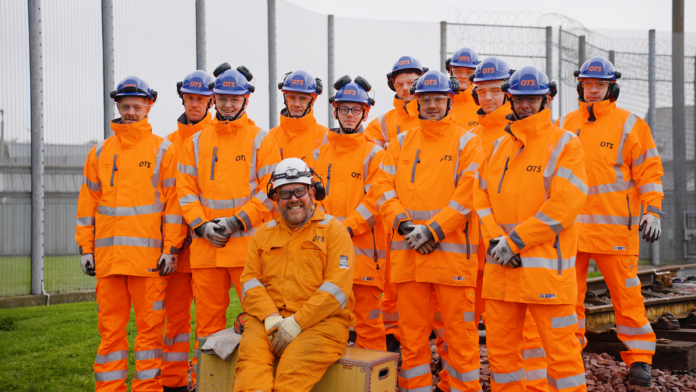
Network Rail has constructed a railway track within HMP Kilmarnock as part of an innovative training programme designed to equip people in custody with practical railway skills, recognised qualifications and potential employment opportunities following their release.
Delivered in partnership with QTS Training, the Scottish Prison Service, Reconnect Scotland and East Ayrshire Council, the initiative is the first programme of its kind to be delivered inside a Scottish prison through the Rail Skills Academy.
The programme demonstrates how collaboration between railway employers, training providers and public sector organisations can help widen access to rail careers while supporting rehabilitation and addressing workforce skills requirements.
Practical training using recycled railway infrastructure
Since September, participants have been working towards industry-recognised qualifications through a combination of classroom learning and practical training.
The railway track has been constructed using materials recovered from Network Rail’s £13.5 million upgrade of Kilmarnock station, giving redundant infrastructure a new purpose within a practical learning environment.
The first cohort is approaching the completion of its in-prison training. Following their release, participants will attend the QTS training centre to undertake four weeks of Network Rail-accredited training alongside work experience placements, with qualifications expected to be awarded in February 2027.
Sameena Yousaf, Head of Resourcing for Scotland at Network Rail Scotland, said: “Everyone deserves the opportunity to build a better future. Through the Rail Skills Academy, participants can gain practical skills, recognised qualifications and a direct connection to careers in the railway industry.
“By bringing together expertise from across the rail industry, training sector and Scottish Prison Service, we’ve created a programme that opens doors, develops talent and helps people realise their potential.”
Widening access to railway careers
Following completion of the programme, candidates will have opportunities to engage with rail employers and explore potential careers across Scotland’s Railway.
For an industry seeking to attract talent and develop its future workforce, initiatives such as the Rail Skills Academy offer an alternative recruitment pathway, reaching individuals who might otherwise face significant barriers to employment.
Lorna Gibson, Managing Director of QTS Training, said: “It has been incredibly rewarding to work alongside HMP Kilmarnock, Network Rail and Reconnect Scotland to develop and deliver this innovative Rail Skills Academy. Throughout the programme, we have been impressed by the commitment, enthusiasm and determination shown by every participant.
“They have truly embraced the opportunity to gain recognised rail industry skills, competencies and qualifications, demonstrating both dedication and a genuine desire to build a positive future. Seeing their confidence grow and aspirations develop over the course of the academy has been truly inspiring. We are proud to have played a part in helping create new pathways into employment within the rail industry.”
Delivering social value through industry collaboration
Beyond workforce development, the programme demonstrates how railway organisations can deliver wider social value through training, employment and community partnerships.
Justice Secretary Neil Gray said: “Supporting people with skills to help them secure stable, meaningful employment after a period in prison can help to reduce reoffending and improve long-term outcomes.
“The Network Rail Skills Academy is a good example of how partnership working can create opportunities, strengthen skills, help individuals realise their potential and support safer communities.”
The programme provides a practical example of how the railway can contribute to rehabilitation while developing new sources of talent, combining vocational training with recognised qualifications and direct engagement with prospective employers.


