


Britain’s rail industry must move beyond reactive mental health support and address the underlying workplace causes of stress, according to research from the Rail Safety and Standards Board (RSSB).
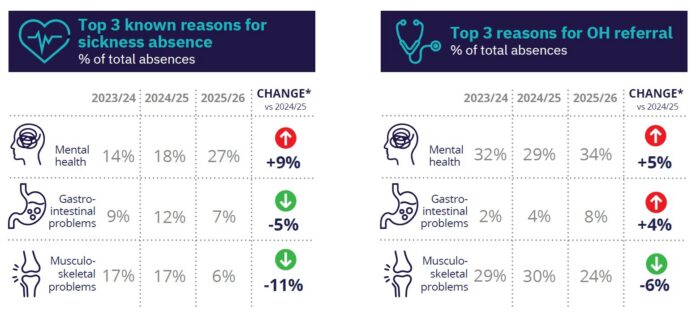
Data from RSSB’s Health Insights platform consistently identifies mental health as a leading contributor to sickness absence and occupational health referrals, presenting a growing challenge for both workforce wellbeing and operational performance.
However, research suggests that many rail organisations continue to focus on supporting employees once problems emerge, rather than identifying and addressing the working conditions contributing to poor mental health.
RSSB’s report, Managing work-related stress in the rail sector: Challenges and opportunities, draws on interviews with 19 organisations spanning passenger operations, freight, infrastructure and the wider supply chain.
Prevention remains an industry weakness
The research highlights several concerning findings among participating organisations:
- 63% reported taking a reactive approach to stress management, focusing on individual cases rather than organisational prevention.
- Only three of the 19 organisations conducted formal organisational-level stress risk assessments.
- Approximately 58% lacked a formal, centralised system for recording exposure to potentially traumatic events.
- Around 26% had limited or no awareness of ISO 45003, the international standard addressing psychological health and safety at work, while 53% were aware of it but had not implemented it.
The findings point towards a disconnect between growing awareness of mental health and the practical measures being taken to manage workplace risks.
While employee assistance programmes, counselling and mental health first aiders provide valuable support, RSSB argues that these interventions alone are insufficient to address the underlying causes of work-related stress.
Employers already have a legal responsibility to assess and manage workplace health risks, including those associated with stress.
Railway reform could compound existing pressures
The research also identifies the transition to Great British Railways (GBR) as a potential contributor to workforce stress.
Uncertainty surrounding future organisational structures, job roles and employment security could increase pressure on employees, while making it more difficult for businesses to commit resources to long-term preventative health initiatives.
Redundancies and changing workloads were also identified as potential stressors.
One organisation interviewed had introduced a stress-reduction plan in response to redundancy-related pressures, including reallocating workloads to prevent burnout. Another had begun communicating contract wins across its workforce to help alleviate concerns about job security.
However, RSSB found that such preventative approaches remain relatively uncommon among the organisations interviewed.
Cultural barriers also persist, with concerns that employees may be reluctant to disclose stress because of perceived consequences for their employment or fitness for duty.
Making mental health an organisational responsibility
RSSB is recommending a more structured approach to managing work-related stress, including standardised data collection, organisational risk assessments, improved line manager training and more comprehensive trauma reporting.
Greater integration between human resources and occupational health data could also help businesses identify recurring workplace stressors and evaluate the effectiveness of interventions.
RSSB is collecting more detailed information on the causes of poor mental health through its Health Insights platform, strengthening the evidence base and developing benchmarks against which industry progress can be measured.
Although the research involved a relatively small sample of organisations, its findings raise important questions for railway leaders.
The challenge is not simply to provide better support when employees experience poor mental health, but to examine whether management practices, workloads, working environments and organisational decisions are contributing to the problem in the first place.
As the railway undergoes significant structural change, treating psychological health with the same rigour as physical safety will be increasingly important to protecting employees, retaining skills and maintaining operational resilience.


